Wugong Flag-Flower Noodles are an aristocratic Guanzhong delicacy from Wugong County in the Xianyang region: hair-thin handmade noodles served in small portions across multiple bowls, afloat in a clear, vinegar-sharpened bone broth garnished with diamond-cut egg pancake, kelp, day lily flowers, and scallions—each garnish piece trimmed to resemble a small flag. The dish's seven-character quality standard (汪·煎·清·稀·细·软·工) encodes centuries of banquet-kitchen refinement, and locals commonly eat a dozen or more of these small bowls at a single sitting.




Wugong Flag-Flower Noodles are traced to the Ming Dynasty imperial kitchen. During the Hongzhi era (1488-1505), Empress Zhang, consort of Emperor Xiaozong, reportedly fell ill from excess rich food and lost her appetite entirely. A court chef of peasant origin prepared a bowl of thin noodles in a light, vinegar-flavored broth; the empress recovered her appetite and her health. The recipe later reached Wugong County through Kang Hai (1475-1540), the top-ranked jinshi of the 15th year of Hongzhi (1502) and a native of Wugong, who learned the imperial method while serving as a Hanlin Academy compiler in the capital. After Liu Jin's fall from power in 1510, Kang Hai was dismissed from office as a Liu Jin associate—he had befriended the powerful eunuch in order to secure the imprisoned Li Mengyang's release—and returned home with his chef, who brought the recipe to Wugong, where it has circulated in the Guanzhong region for more than five hundred years. The name comes from the diamond-shaped cuts applied to each garnish—egg pancake, kelp, scallion leaves—which resemble small fluttering flags (旗), hence 'flag-flower noodles.'
Each bowl holds no more than a chopstick-twirl of noodles—one or two bites at most. The strands are almost weightless in the broth, yet their surface clings to the oil-enriched, vinegar-bright soup. After a few bowls you grasp the genius: the restraint of each serving keeps the palate perpetually fresh, and the gentle acidity of the broth quietly whets appetite rather than satisfying it—explaining how local diners routinely consume twenty or more bowls without fatigue.
The seven-character standard encodes real food science. 'Fragrant oil' (汪): pork lard floats on the broth—lower density than water—forming an insulating film that retains heat and carries fat-soluble aroma compounds to the palate. 'Scalding hot' (煎): serving above 90°C causes instant surface gelatinization of the noodle starch, creating a silky sheen. 'Clear' (清): long, slow simmering coagulates proteins into particles that settle, leaving a translucent stock. The aged vinegar component lowers pH to around 4-5, which inhibits starch retrogradation so noodles remain tender through repeated reheating, while acetic acid simultaneously stimulates salivary amylase—explaining why diners can eat twenty or more bowls without losing appetite.
Variations
Yangling Qihua Noodles: the version from Yangling Agricultural Demonstration Zone, reportedly served at a national banquet, featuring black wood ear mushrooms, day lily flowers, and Chinese yam as primary garnishes. Ceremonial version: served at weddings and funerals with noodles rolled to almost hair-width and garnish cuts of extreme precision, representing the host family's sincerity. Home everyday version: vinegar broth replaces the long-simmered bone stock; egg pancake, scallions, and ginger strips form the basic garnish.
On the Palate
Where Wugong Flag-Flower Noodles sits in the Chinese flavor cloud
Ingredients
Serves 4


How it's made
7 steps · 30 min
- 130 min
Knead high-gluten wheat flour with water and a pinch of salt into a very stiff, smooth dough; cover with a damp cloth and rest for 30 minutes
- 2120 min
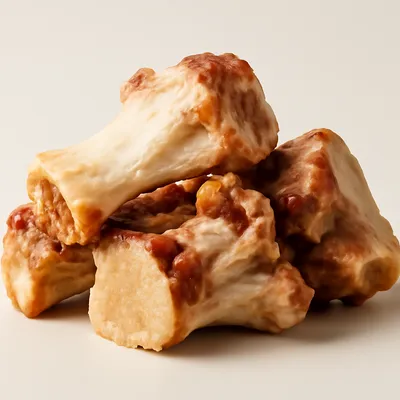
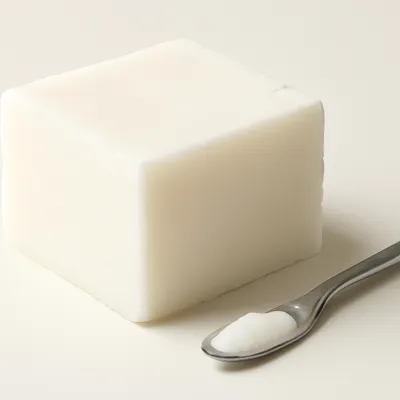
Simmer chicken bones and pork bones in cold water, skimming foam carefully; add scallions and ginger; reduce to a gentle simmer for 2 hours; season with aged vinegar, soy sauce, white pepper, and melted pork lard until the broth is rich, clear, and assertively sour
Watch outSkim the foam patiently and hold a gentle simmer, never a boil — a rolling boil emulsifies the fat and turns the broth cloudy instead of clear.
- 315 min
Beat eggs with a pinch of salt and fry into very thin pancakes over low heat; cut into small diamond-shaped pieces; shred kelp and blanch briefly; soak day lily flowers and squeeze dry; trim scallion leaves into fine diamond-shaped pieces matching the other garnishes
- 45 min
Sauté all garnish ingredients briefly in a little oil until fragrant; add to the simmered broth and cook together for 5 minutes so flavors meld
- 515 min
Roll rested dough paper-thin (under 1mm) on a well-floured board; fold and cut into very fine noodle strands (1-2mm wide); shake apart on a floured tray to prevent sticking
Watch outRoll the dough until you can almost read through it, under a millimeter — any thicker and the 'flag' strands cook up doughy instead of silky.
- 62 min
Bring a large pot of water to a rolling boil; cook noodles for 60-90 seconds only; transfer to small individual bowls, adding just one small ladle per bowl
Watch outSixty to ninety seconds and no more — these threads are paper-thin and go mushy in a blink if you turn away.
- 75 min
Ladle piping-hot broth over noodles in each bowl, ensuring a visible film of oil floats on top; garnish with a few pieces of each diamond-cut ingredient; serve at once, replenishing each small bowl as the diner finishes it
Archive tool suggestions — not reviewed
These legacy suggestions have not been evidence-reviewed and are not presented as required tools.


