A Jining classic born at the Grand Canal's edge: slow-braised pork belly, tofu skin, gluten rolls, kelp knots, and soft-boiled eggs simmered together in a spiced dark-soy broth inside a round-bellied black clay pot (甏), then ladled generously over a bowl of steamed white rice.


Jining sits at a pivotal node of the Grand Canal; in 1281 (Yuan Zhiyuan 18th year) the court ordered construction of the Jizhou River linking Jining southward, opening the city's wharves to rice-laden cargo ships from the Yangtze Delta. Southern merchants unable to stomach millet carried clay-pot braised meat aboard their ships; the combination of southern rice and northern slow-pot pork captured local palates at the dockside. By the late Ming and early Qing, vendors commercialized the dish: they shouldered two baskets — one of steamed rice, the other a charcoal-warmed clay pot of braised meat — through Jining's busy streets. By the mid-Qing, fixed stalls and named shops had appeared. The defining vessel, the 甏 (bèng), is a round-bellied, small-mouthed black clay pot descended from Song-dynasty ceramic traditions.
Rice grains absorb the burnished soy broth; thick slabs of pork belly yield first with caramelized skin and then melt into silky fat. The gluten roll soaks up even more gravy, and the braised egg offers a firm white around a custardy yolk — each component enriched by the same long-simmered sauce.
The black clay pot (甏) is thick-walled and slightly porous, moderating temperature swings and enabling gentle convective simmering without scorching. During 90–120 minutes of low-heat braising, collagen from the pork skin and connective tissue converts to gelatin at around 70–80 °C, enriching the broth and coating each component with a glistening glaze. The rock sugar and soy sauce together contribute Maillard reaction products that deepen the amber color and add faint caramel sweetness to the broth.
Variations
Restaurants in Yanzhou add seasonal lotus root slices or pickled mustard greens to the pot; a halal version (清真版) in Jining's canal-quarter Muslim community substitutes beef brisket for pork, retaining the same spiced-broth structure. Modern shops sometimes add pork trotters for extra gelatin richness.
On the Palate
Where Beng-Pot Braised Pork Rice sits in the Chinese flavor cloud
Ingredients
Serves 4

How it's made
7 steps · 30 min active + 1 hour 40 min waiting
- 110 min
Cut pork belly into 5 cm × 3 cm rectangles; blanch in boiling water for 5 minutes, skim foam, and drain.
- 25 min
Heat oil in the clay pot over medium-low heat; add rock sugar and stir until amber caramel forms; add pork pieces and turn to coat evenly.
Watch outMelt the rock sugar just to an amber caramel that smells nutty — take it one shade too dark and the whole pot turns bitter.
- 35 min
Add soy sauce, dark soy sauce, and enough water to cover; bring to a full boil, then reduce to a low simmer.
- 460 min
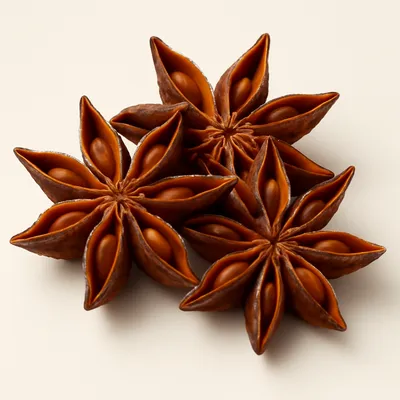
Add spice bundle (star anise, cassia bark, white cardamom, tsaoko, white angelica root, fennel seeds, bay leaf), whole scallion, and ginger knots; cover and simmer 60 minutes.
- 540 min
Add rehydrated tofu skin rolls, gluten rolls, kelp knots, and peeled hard-boiled eggs; continue simmering 35–40 minutes until pork is yielding and the broth is deep amber.
Watch outBraise until a chopstick slides through the pork with no resistance and the broth deepens to dark amber — that's collagen turned to glaze.
- 65 min
Taste and adjust salt; transfer pork and accompaniments to a serving bowl and ladle generous broth over the top.
- 75 min
Serve alongside a bowl of freshly steamed short-grain white rice, with pickled garlic or chili on the side.
Archive tool suggestions — not reviewed
These legacy suggestions have not been evidence-reviewed and are not presented as required tools.



