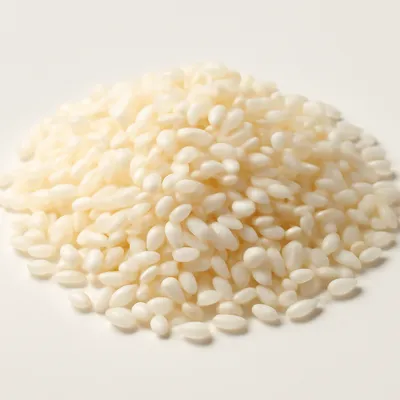
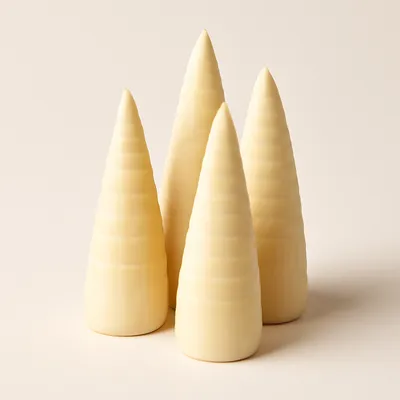
A golden, chewy Hakka rice cake from Pingyuan County, Meizhou, made by infusing glutinous rice with alkaline lye rendered from burned yellow bark tree (Huangcha tree) branches. After double steaming the dough is pounded in a stone mortar until elastic and glossy, then shaped into rolls and served stir-fried with dried squid, shredded pork, bamboo shoots, and shiitake mushrooms. A 2009 Meizhou intangible cultural heritage.




Tracing back three to four centuries, Pingyuan Yellow Rice Cake originated in Meishe Village, Sishui Township, carried southward by Hakka ancestors migrating from the Central Plains. A local mountain ballad celebrates the craft: 'A Hakka girl pounds huang ban, relying on her strong back; she pounds until the rice grows stretchy, and it melts fragrantly on the tongue.' In 2009 the traditional craft was inscribed on Meizhou's second batch of municipal-level intangible cultural heritage representatives.
Springy and slippery all at once — the glutinous rice resists, then yields, releasing a faint earthy woodsmoke from the plant-ash lye, before giving way to the savory punch of dried squid and crispy pork shreds.
The golden color and springy texture stem from the alkaline lye of burned yellow bark tree wood. The ash water raises the pH of the glutinous rice starch, promoting deeper gelatinization and more thorough breakdown of granule structure. The alkaline environment also accelerates Maillard browning between gelatinized starch and trace proteins under heat, yielding the amber-gold hue and nutty fragrance. A second steaming locks in the color, while prolonged stone-mortar pounding mechanically aligns the gelatinized starch chains into a dense, cross-linked network — producing the characteristic elastic, chewy texture the Hakka call 绕绕韧 (winding and tenacious).
Variations
Steamed plain and drizzled with syrup or condensed milk; boiled in clear broth with dried squid and minced pork; deep-fried until crispy and hollow inside; air-dried into thin slices for shelf snacks.
On the Palate
Where Pingyuan Yellow Rice Cake sits in the Chinese flavor cloud
Ingredients
Serves 6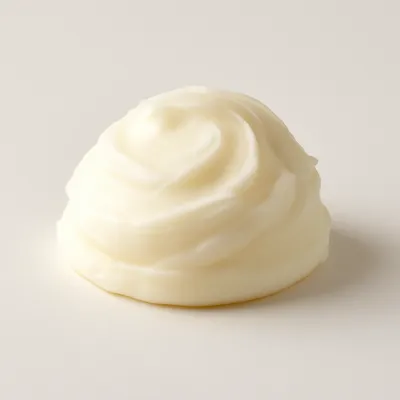

How it's made
7 steps · 1 hour 30 min active + 11 hours waiting
- 1720 min
Soak glutinous rice in cold water for at least 12 hours overnight until grains swell and turn opaque white.
- 230 min
Prepare alkaline lye: burn yellow bark tree branches to ash, steep ash in cold water for 4 hours, then filter twice through a clean cloth until liquid runs clear and golden.
Watch outFilter the ash lye twice until it runs clear and golden — grit or ash left in stains the cake and gives it a harsh, gritty bite.
- 330 min
Drain soaked rice thoroughly; spread evenly in a bamboo steamer lined with cheesecloth; steam over high heat for 30 minutes until half-cooked.
- 430 min
Drizzle warm ash lye gradually over the steamed rice, fold and mix until all grains are coated and turn deep golden-yellow; return to steamer and steam another 30 minutes until fully cooked and fragrant.
- 530 min
Transfer hot golden rice to a stone mortar; pound rhythmically with a wooden pestle for 20–30 minutes, folding the dough back into the center after each strike, until the mass is smooth, glossy, and stretches without tearing.
Watch outPound the hot rice a solid 20 to 30 minutes, folding it back each strike, until it's glossy and stretches without tearing — that pounding is the whole springy texture.
- 630 min
Wet hands with cold water; shape pounded dough into long cylinders or round blocks; wrap in banana leaves or plastic wrap and allow to cool and firm at room temperature for 30 minutes.
- 710 min
Slice cooled rice cake into 1 cm rounds; heat lard or oil in a wok over high heat; stir-fry dried squid, shredded pork, bamboo shoots, and shiitake mushrooms for 2 minutes; add rice cake slices, season with soy sauce, toss until heated through and fragrant.
Archive tool suggestions — not reviewed
These legacy suggestions have not been evidence-reviewed and are not presented as required tools.


