A Xiamen specialty with a silky betel-nut taro wrapper around a savory filling of pork, shrimp, shiitake, and bamboo shoots. Steamed in lotus-leaf-lined bamboo baskets and served with sweet chili and satay sauce, it is the Minnan answer to the northern New Year dumpling.
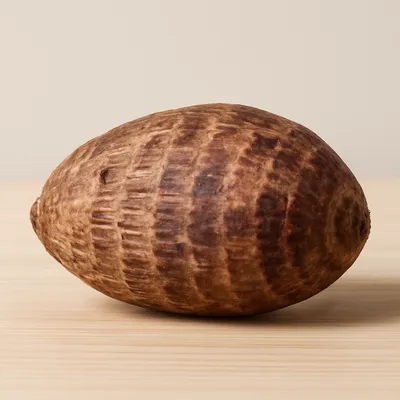




Taro dumplings are rooted in Xiamen's Tong'an district, where betel-nut taro grown in the volcanic red-soil hills produces a particularly starchy and aromatic tuber. By the early 20th century the dish had become inseparable from Xiamen New Year celebrations — older residents recall it as 'the northern dumpling's Minnan answer.' Three shops have kept the craft alive across multiple generations: the stall known as 'Yubao Sao' (芋包嫂), tracing to the 1920s; 'Yubao Wang' (芋包王), founded 1940; and the state-recognised old brand Wu Zaitian (吴再添), established 1959 and still serving the dumpling as its signature.
The wrapper yields with gentle pressure — soft, silky, faintly perfumed with taro — then a savory filling of pork, dried shrimp, and mushroom spills out. A swipe of satay sauce ties the richness together.
Betel-nut taro starch (~22% dry weight, dominated by amylopectin) gelatinises fully during steaming, forming an irreversible gel that holds the wrapper together. Blending in 25–30% tapioca starch reinforces elasticity — tapioca's long-chain amylopectin resists retrogradation, keeping the wrapper supple even after cooling. The pork-mushroom-shrimp filling releases inosinate (from pork) and guanylate (from shiitake) nucleotides that synergise to amplify umami several-fold beyond either ingredient alone.
Variations
Vegetarian versions replace the meat filling with dried tofu skin, daikon, and glass noodles. Some Minnan households blend taro with yam for a denser wrapper. The Hakka mountain variant uses fresh bamboo shoots more heavily and omits shrimp, yielding a cleaner, forest-flavoured bite.
On the Palate
Where Xiamen Taro Dumpling sits in the Chinese flavor cloud
Ingredients
Serves 4

How it's made
7 steps · 35 min active + 35 min waiting
- 120 min
Peel and cube 500g betel-nut taro; steam 20 minutes until fully soft, then mash to a smooth paste while still hot.
- 210 min
Knead 150g tapioca starch into the warm taro paste in batches until a pliable, non-sticky dough forms; season with a pinch of salt.
Watch outKnead the tapioca starch into the taro while it's still warm until the dough turns pliable and non-sticky — cold taro won't bind and the wrapper cracks.
- 38 min
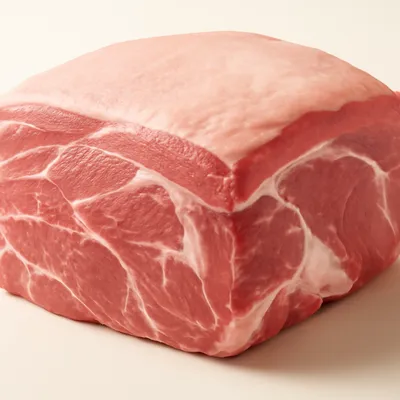
Stir-fry diced pork shoulder (150g), soaked dried shiitake (30g), shrimp (80g), and winter bamboo shoots (60g) in oil; season with soy sauce, five-spice, and salt; cool completely.
- 45 min
Divide the dough into balls of about 60g each; press each into a round disc roughly 10 cm across.
- 510 min
Place a heaped tablespoon of filling at the centre; gather the edges upward and pinch closed, shaping into a rounded oval.
- 62 min
Line a steamer basket with dampened gauze or lotus leaf; arrange the dumplings with gaps between them.
- 715 min
Steam over high heat for 12–15 minutes until the skins turn slightly translucent; serve hot with sweet-chili sauce and satay sauce.
Watch outSteam twelve to fifteen minutes until the skins turn slightly translucent — that see-through look is the cue the starch has fully gelled.
Archive tool suggestions — not reviewed
These legacy suggestions have not been evidence-reviewed and are not presented as required tools.
