A dense, faintly yellow steamed rice cake from Meizhou's Songkou area, made by soaking fresh rice overnight in alkaline water, then grinding it to a batter and steaming until set. The alkaline treatment gives it a uniquely elastic, slightly chewy bite and the clean, mineral quality that marks all Hakka alkaline foods — eaten sweet with soy or stir-fried until charred at the edges.


Weijiao ban is rooted in the Songkou district of Meixian county, where it has been made at the turn of the early rice harvest each autumn. Families traditionally prepared it as an offering to the gods upon bringing in the new crop — an act of gratitude expressed through the rice itself, transformed by the alkaline water drawn from wood ash into something texturally distinct from ordinary steamed rice. The dish is also associated with the folk customs of the sixth day of the sixth lunar month, when Hakka communities prepare special foods believed to ward off summer ailments. The name 酵 (ferment, leaven) reflects the colloquial Hakka understanding of the alkaline swelling process, which visually resembles leavening.
Stir-fried into batons, the rice cake chars to a lightly crisped shell at the cut edges while the core stays tender and springy — an elastic resistance that makes each chew satisfying rather than soft. The clean alkaline note — mild, mineral, faintly soapy in the most pleasant sense — is the flavor signature of all Hakka alkaline rice preparations.
The alkaline water — traditionally drawn from filtered wood-ash solution, primarily potassium carbonate — raises the soaking water to a high alkaline level (roughly 9 to 11 on the alkalinity scale). At this alkalinity, the branched starch chains of rice undergo partial structural modification: the linkage points in amylopectin become more susceptible to the alkaline environment, and when the batter is steamed, the starch gelatinizes into a denser, more tightly cross-linked network than neutral-pH rice would produce. This gives the cake its characteristic elastic, non-crumbly texture and its resistance to breaking apart during stir-frying. The alkaline environment also suppresses enzymatic browning reactions, keeping the cake a clean pale yellow. Minerals in the wood-ash solution — chiefly potassium and calcium — form weak ionic associations with starch chains, further reinforcing the gel network.
Variations
Sweet versions drizzle thick sweet soy sauce or honey into the carved grooves on the cake surface, eaten as a snack or dessert. The savory stir-fried version cuts the cake into batons and woks it with pork strips, bean sprouts, and scallion until the edges char lightly, seasoned with salt and soy sauce. Modern vendors at Meizhou markets sell versions tinted green with pandan juice, appealing to younger buyers while keeping the alkaline base technique unchanged.
On the Palate
Where Alkaline Rice Cake sits in the Chinese flavor cloud
Ingredients
Serves 6
How it's made
7 steps · 1 hour 10 min active + 8 hours 20 min waiting
- 110 min
Dissolve a generous amount of clean wood ash (or food-grade lye water) in cold water, stir well, and let settle for 30 minutes. Carefully pour off the clear alkaline liquid from the top, discarding the sediment. The liquid should smell clean and slightly mineral.
- 2480 min
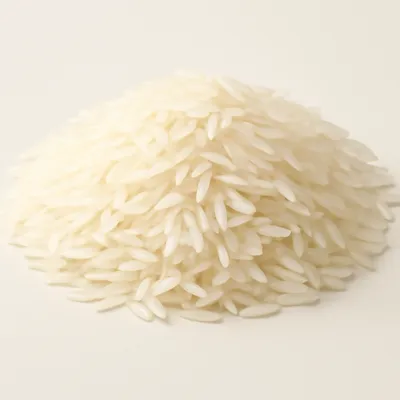
Rinse long-grain rice, then submerge in the alkaline liquid. Soak at room temperature for 8 hours or overnight. The grains will turn a faint yellow and smell clean-alkaline when ready.
Watch outSimmer the bones gently, never at a rolling boil — low heat melts the collagen into a silky, full broth; a hard boil just clouds it and drives off the richness.
- 315 min
Drain the soaked rice and transfer to a blender with just enough fresh alkaline water to cover. Grind to a smooth, thick batter with the consistency of thick yogurt. Adjust water if needed.
Watch outSoak the glass noodles only until pliable, not soft — they finish cooking in the hot broth, and over-soaked ones go slimy and fall apart.
- 45 min
Brush a square baking tin or bamboo mold with a thin film of vegetable oil. Pour the batter in to a depth of about 1.5 cm. Tap the mold gently on the counter to release air bubbles.
- 525 min
Steam over high heat for 20–25 minutes until fully set. Test with a bamboo skewer — it should emerge clean. Remove the lid carefully to avoid condensation dripping onto the cake surface, which causes dimpling.
- 620 min
Leave the cake to cool completely at room temperature before unmolding. Once fully cooled and firm, slice into rectangles or finger-width batons.
- 715 min
Serve sweet with a drizzle of sweet soy sauce. For the stir-fried version, heat a wok until smoking, add a small amount of oil, and stir-fry the batons with garlic, pork strips, and bean sprouts over high heat until the edges char golden. Season with salt and a dash of soy sauce.
Archive tool suggestions — not reviewed
These legacy suggestions have not been evidence-reviewed and are not presented as required tools.


