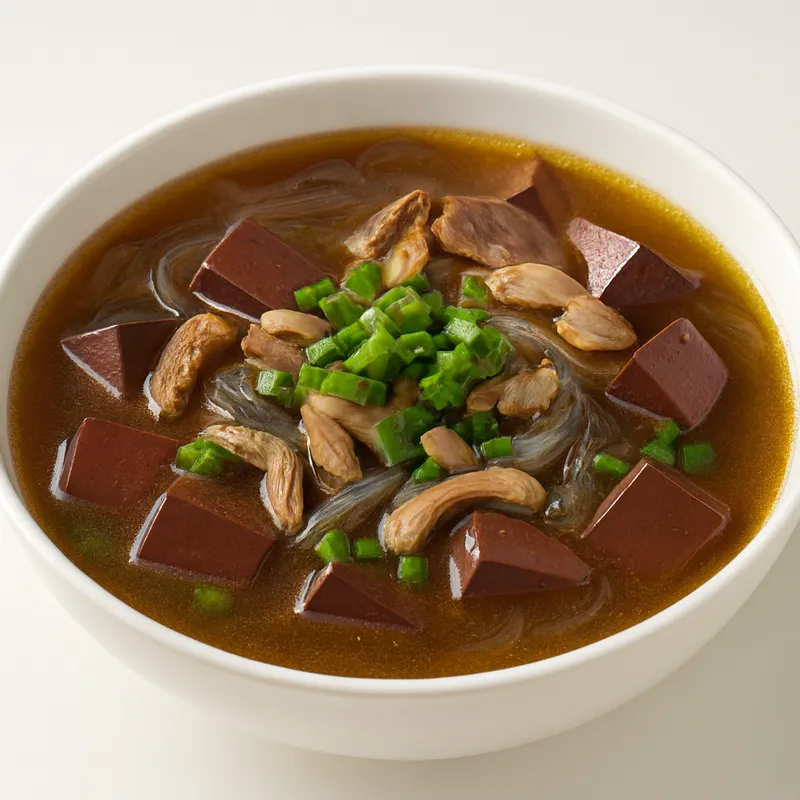
Crystalline pork-meat wontons from Putian's Xitianwei township, where both wrapper and filling are made from pounded pork and tapioca — "meat wrapping meat" — served in clear pork-bone broth.




Putian's swallow-skin (yanpi) wrapper tradition is said to trace to the late Qing dynasty, when artisans first pounded pork with tapioca starch into translucent sheets — though no documented date has been firmly established. The specific Xitianwei variant was built into a township staple in the 1930s–40s by a vendor known as A-Zhao and his mother at their stall near Longqiao village in western Putian; they adapted Fuzhou and Quanzhou yanpi techniques, used pork-bone broth, and selected local Xinghua rice noodles as an accompaniment, making the dish famous across the Muxian region. The all-handmade tradition — pounding more than ten jin of pork daily — has been passed down across subsequent generations of craftsmen.
Silky and delicate with a tender chew; the pork broth is clean and deep; each wonton feels like eating velvet folded around a burst of fresh pork.
Pounding pork for an hour breaks down sarcomere structure and releases myosin strands, forming a cohesive protein sol. Combining this meat paste with tapioca starch creates a gel-protein matrix that turns translucent when boiled. Collagen in the connective tissue partially dissolves into gelatin during cooking, giving the wrapper its characteristic silky-firm bite that holds even through prolonged simmering.
Variations
Variations include clear-soup wontons served with pork-bone broth and rice-noodle combinations (扁食烫米粉) where the wontons float alongside Xinghua rice noodles. Some makers add minced scallion to the filling; sweet potato starch (地瓜粉) is the traditional starch in many other Fujian yanpi styles, giving a slightly earthier wrapper, while Xitianwei craftsmen use tapioca (木薯粉) for a cleaner translucence.
On the Palate
Where Xitianwei Wontons sits in the Chinese flavor cloud
Ingredients
Serves 2

How it's made
8 steps · 1 hour 52 min active + 1 hour waiting
- 160 min
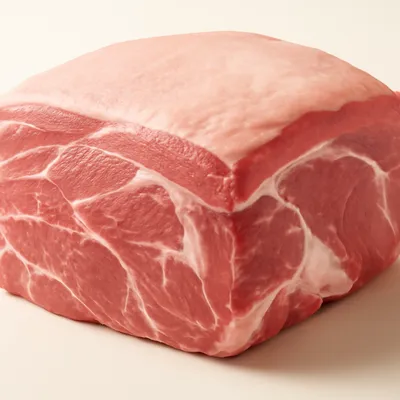
Remove meat from pork ribs; pound vigorously with a flat wooden mallet for about 60 minutes until the meat becomes smooth and paste-like with no visible fibers.
Watch outPound the pork a full hour until it turns to smooth paste with no visible fibers — this is what makes the wrapper translucent and springy, not the shortcut.
- 210 min
Gradually incorporate tapioca starch into the meat paste, continuing to pound and fold until the dough is smooth, non-sticky, and holds its shape.
- 310 min
Roll the meat dough on a floured board using a wooden rolling pin until paper-thin; cut into 6 cm squares (the yanpi wrappers).
Watch outRoll the meat dough paper-thin — too thick and the wrappers turn dense and rubbery instead of silky.
- 410 min
Mince front-leg pork with dried shrimp until fine; season with salt, scallion oil, and white pepper to make the filling.
- 515 min
Place a teaspoon of filling at the center of each wrapper; fold diagonally to form a triangle and press edges firmly to seal.
- 660 min
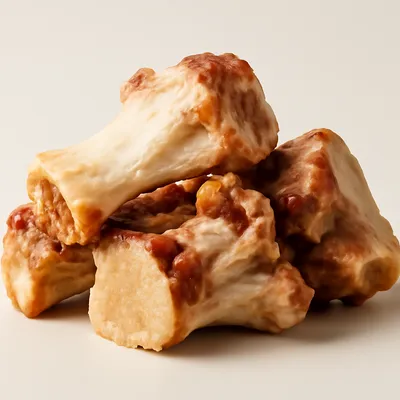
Simmer pork bones in cold water for 1 hour over low heat, skimming foam; season with salt to finish a clear broth.
- 75 min
Boil wontons in salted water until they float and the wrappers turn translucent, about 2 minutes; transfer to serving bowls.
Watch outWontons are done the moment they float and the wrappers turn translucent — about two minutes; boil on and the delicate skin goes mushy.
- 82 min
Ladle hot broth over the wontons and garnish with chopped scallion greens and a few drops of sesame oil.
Archive tool suggestions — not reviewed
These legacy suggestions have not been evidence-reviewed and are not presented as required tools.