A dense, mahogany-brown pressed tofu from Jieshou township in Gaoyou, its 32-step production process distinguished from all other Chinese spiced tofu by the addition of dill seed, which contributes a clean, faintly sweet anise note absent from standard five-spice formulas.



Made in Jieshou township, Gaoyou, Yangzhou. According to tradition, Emperor Qianlong was passing through by canal when an unusual fragrance drifted from the bank; on enquiry, the source was found to be five-spice pressed tofu cooking at Jieshou. Qianlong reportedly designated it a tribute product and ordered a plaque inscribed — the plaque was lost during the Cultural Revolution. The technique won gold medals at the West Lake Expo in both 1911 and 1927. Jieshou pressed tofu production technique was listed as Yangzhou intangible cultural heritage in 2008 and Jiangsu intangible cultural heritage in 2009.
Dense as firm cheese, mahogany-brown throughout and not merely surface-dyed — cut a slice and the spice opens up: star anise, clove, then the clean, faintly sweet dill note that marks Jieshou from every other pressed tofu in China.
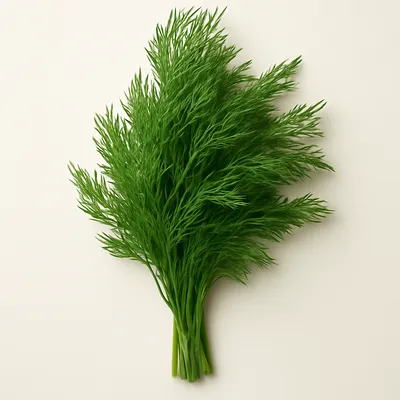
Dill seed is the proprietary spice: its volatile oil is roughly half carvone and a quarter limonene, producing a clean, faintly sweet anise-adjacent aroma absent from standard five-spice. The pressing stage drives moisture below around 40%, creating a dense protein-lipid matrix that resists crumbling during long braising and survives transport. Fat-soluble aromatics from clove (eugenol) and cinnamon (cinnamaldehyde) penetrate deeply through repeated simmering cycles in the aged master stock. Standard production involves 32 steps; the premium grade adds four more for an even denser result.
Variations
Plain fresh pressed tofu from the same area omits the full spice formula and is sold for quick home cooking. A smoked variant adds a light wood-smoke step after initial pressing, common in rural teahouses. The premium grade undergoes four extra finishing steps, producing a denser piece reserved for gift packaging. All variants retain the signature dill-seed formula.
On the Palate
Where 界首茶干 sits in the Chinese flavor cloud
Ingredients
Serves 6
How it's made
7 steps · 30 min
- 115 min
Soak dried yellow soybeans overnight; grind with filtered water to produce smooth soy milk; strain through muslin to remove the okara.
- 215 min
Heat soy milk to 85°C; slowly add food-grade magnesium chloride solution while stirring in gentle circles until soft, fine curds form; remove from heat and rest for 10 minutes.
Watch outAdd the magnesium chloride slowly, stirring in gentle circles, until fine soft curds just form — dump it in and the curd turns coarse and grainy.
- 330 min
Ladle the soft curds into small cattail-rush pouches lined with bean-curd skin; twist each pouch shut; stack on wooden boards, add heavy weights and press for 30 minutes until each cake is firm.
- 410 min
Remove tofu cakes from the pouches; soak in lightly salted boiling water for 10 minutes to remove the raw-bean taste.
- 510 min
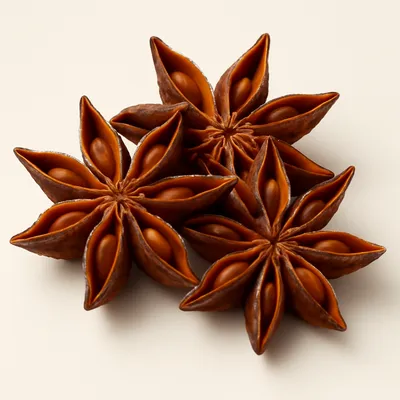
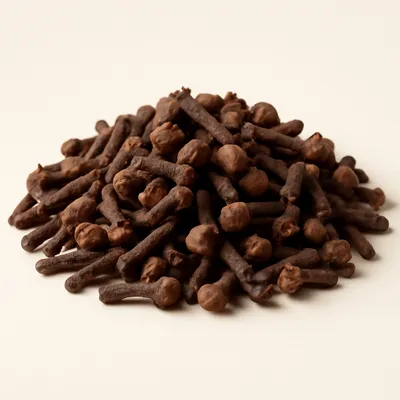
Prepare master stock: combine star anise, cloves, cinnamon, fennel seeds and dill seeds in water with soy sauce, rock sugar and salt; bring to a steady simmer.
- 6150 min
Add tofu cakes to the master stock; simmer over low heat for 2–3 hours, turning occasionally, until the surface is deep mahogany-brown and the aroma has fully penetrated the interior.
Watch outSimmer low for the full two to three hours until the surface is deep mahogany and the aroma has soaked to the center — hurry it and the core tastes bland.
- 730 min
Leave tofu to cool in the stock; remove and air-dry briefly; serve at room temperature sliced thinly, or refrigerate for up to two weeks.
Archive tool suggestions — not reviewed
These legacy suggestions have not been evidence-reviewed and are not presented as required tools.