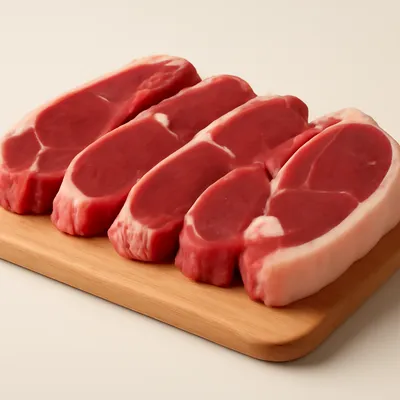
Xi'an's Muslim Quarter cured beef and mutton is a Hui-style slow-cured meat — bone-in cuts soaked in brine for days, then simmered for hours in a fragrant old spice broth until the meat is crimson, fork-tender, and saturated with five-spice warmth. Eaten thinly sliced as a cold platter or tucked into sesame flatbread, it is one of the defining flavors of the ancient Islamic food corridor that has operated in Xi'an for over a millennium.




The Hui Muslim community settled in Xi'an's 'Fanfang' district during the Tang dynasty, when Arab and Persian merchants established the Western Market along the Silk Road and brought halal slaughter and spice-curing techniques with them. By the early Qing dynasty, the Tong family had established a cured-meat operation in the 北广济街 area, and the shop had been operating for several generations by 1900. According to local legend, when Empress Dowager Cixi fled the Boxer Rebellion through Xi'an that year, her carriage paused on the slope outside the shop, drawn by the aroma of simmering lamb; she tasted the cured meat and praised it highly, after which her retinue had the name '辇止坡老童家' written by a scholar onto a golden plaque hung above the door — the slope taking its name from the occasion, and the shop's fame spreading from there. The Jia Yongxin (贾永信) house, founded in 1928 at Qiaozikou, is the other major surviving lineage, recognized as a Chinese Time-Honored Brand in 2011.
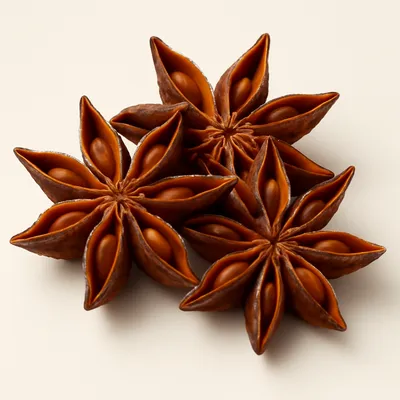
The first slice releases a wave of five-spice warmth — star anise, Sichuan pepper, cinnamon — before the meat's own savory depth takes over. The lean parts are butter-tender without stringiness; fatty edges dissolve without grease. A trace of natural sweetness lingers, the signature of patient hours of simmering.
Salt in the initial brine draws moisture from muscle cells via osmosis, then diffuses back in carrying saline and spice molecules, equilibrating slowly through the bone-in cut over 3-5 days. During the long simmer kept just below boiling at around 90°C, collagen in connective tissue hydrolyzes into gelatin, lubricating the fibers and producing the melt-tender quality without dryness. Myoglobin in the muscle reacts with nitric oxide generated in the reducing spice environment to form stable nitrosomyoglobin, locking in the deep crimson color. Sichuan peppercorn's hydroxysanshool and star anise's anethole contribute the characteristic warm, mouth-filling top note.
Variations
Thinly sliced cold as a platter dish is the traditional presentation; shredded and tucked into a split sesame flatbread (肉夹馍) is the street-food version. Some halal shops cure beef and mutton in separate vats then blend their broths for a layered spice profile. A winter variant simmers glass noodles in the residual broth alongside the meat.
On the Palate
Where Xi'an Cured Beef and Mutton sits in the Chinese flavor cloud
Ingredients
Serves 6
How it's made
7 steps · 30 min
- 1120 min
Submerge 1kg bone-in fresh mutton or beef in cold water for 2 hours, changing the water once to draw out blood.
- 24320 min
Dissolve 40g salt in 1 litre cold water. Submerge meat fully, refrigerate and cure 3 days, turning once daily. The meat will turn pink throughout.
Watch outCure three days, turning daily, until the meat is pink all the way through — that even color means the salt has reached the center.
- 35 min
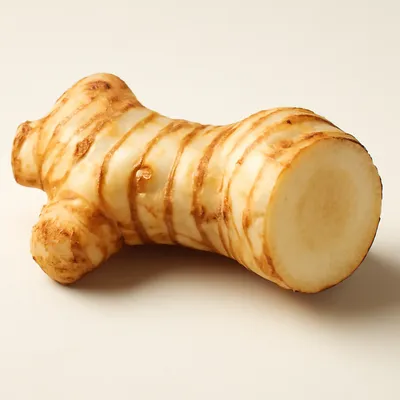
Tie a spice bundle: Sichuan peppercorns, star anise, cinnamon stick, fennel seeds, cao guo (草果), bay leaves, and galangal in cheesecloth.
- 415 min
Bring old spice broth or fresh water to a full boil. Add the cured meat and spice bundle. Return to boil over high heat, then skim all foam thoroughly.
- 5270 min
Reduce to a gentle simmer at around 90°C. Cook uncovered for 4-5 hours, turning the meat once, until fork-tender and deep crimson throughout.
Watch outSimmer at around 90 degrees, never a hard boil — this melts the collagen into gelatin so the meat turns tender, not dry and stringy.
- 635 min
Remove meat and ladle hot broth over it repeatedly to glaze the surface. Return meat to broth off heat and rest 30 minutes.
- 710 min
Remove, cool to room temperature, and slice thin across the grain. Serve cold as a platter or tucked into warm flatbread.
Archive tool suggestions — not reviewed
These legacy suggestions have not been evidence-reviewed and are not presented as required tools.

