Zigong's defining cured beef — the standard-bearer of Sichuan salt-merchant cuisine. Hindquarter beef is pared into near-translucent sheets using a specialist rolling-knife technique, marinated, air-dried, then smoked for an hour over a smoldering fire of dried cow-dung cakes, and finished in a fifteen-spice white brine and glossy chili oil. The result is an amber-red piece you can hold to a lamp and see through — impossibly thin, crumbling at the first bite into dry-fragrant, numbing-spice flavor that lingers long after the last sliver.




Fire-Edge Beef grew directly from Zigong's centuries-old salt industry. At its Qing-dynasty peak the Zigong salt fields kept some 30,000 draft cattle; roughly 6,000 retired annually, yielding over 100 kg of beef apiece at a third of pork's price. That abundance of cheap raw material gave salt-field workers every incentive to turn ordinary beef into something exceptional. Tradition traces the dish to the Qianlong era (1735–1796), though the precise founding is undocumented. Two origin stories circulate: one credits itinerant beggars near Gongjing's Leigong Shoals, who pared beef into thin strips and roasted them over campfires, gradually refining the cow-dung micro-fire technique; the other attributes it to salt-works cooks who dried surplus draft-cattle beef on the residual heat of brine-evaporation furnaces, then seasoned and improved it over time. Both accounts agree on the fundamentals: salt-field workers transforming cheap, plentiful beef into a preserved delicacy. By the late Qing and early Republic the beef was celebrated alongside Zhangfei Beef and Taihe Beef as one of the 'Three Great Beef Specialties of Sichuan' (川中牛肉三杰). The name 'fire-edge' (火鞭子, now commonly written 火边子) derives from the oil-soaked bamboo-rope torches that salt porters lit when walking the ten-plus li between Gongjing and Ziliujing wells at night — like those torches held against the dark, the cured meat glows translucent when backlit; 边子 is a later graphical variant of 鞭子. The dish entered the 1964 Chinese Famous Dishes Compendium; won a Commerce Ministry quality award in 1988 and a silver medal at the inaugural Chinese Food Expo in 1989; in 2011 the production craft was named a Sichuan provincial intangible cultural heritage, and the product received national geographic indication protection.
Each piece is a deep-red amber slab barely a millimeter thick — held up to a lamp, light passes through and traces the grain of the meat. In the mouth it is nothing like jerky: it shatters at the first bite and dissolves without chewing, the Sichuan ideal of 化渣 (huà zhā, 'crumbles to nothing'). The dry-fragrant base carries the depth of the spiced brine; then Seven-Star Tianchao chili builds slow heat; Sichuan peppercorn's buzzing numbness follows and lingers long after the sliver is gone. A cold snack eaten in small pieces alongside baijiu, without tearing or gnawing.
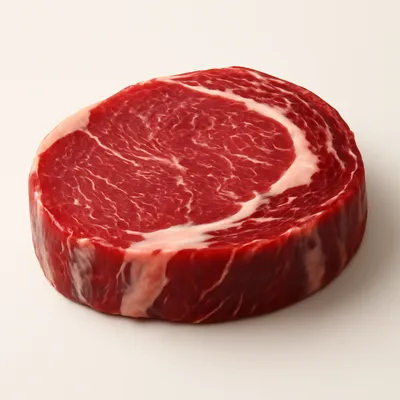
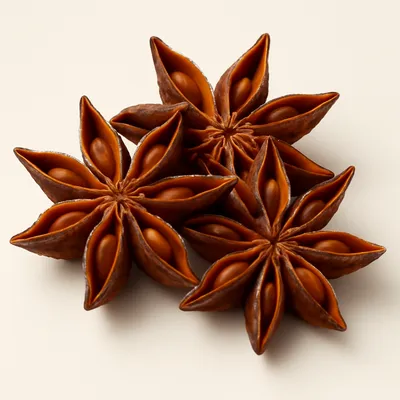
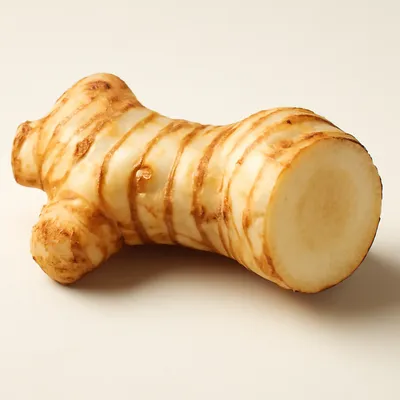
Two techniques define the dish: knife work and fire control. The knife demands that hindquarter beef, cleaned of every trace of sinew, be pared in rolling or folding cuts into sheets 0.2 cm thick, each one 4 feet or longer — any puncture causes splitting and curling during drying, ruining the piece. This is the craft's unreplicable core skill. The fire demands dried cow-dung cakes (牛粪粑, low-odor because the cattle grazed on grass), burned in a brick furnace with the meat racked 30 cm above. This 'fire-edge' heat — the gentle periphery of the smoldering cake rather than direct flame, which is the literal meaning of 火边子— holds a sustained low temperature for roughly an hour, driving out every molecule of moisture without scorching the wafer-thin sheets; the result is dry-fragrant rather than burnt. The 化渣 texture follows from two conditions meeting: all connective tissue removed, so there are no tough fibers to chew through; and near-zero residual moisture, so the pure muscle fiber rehydrates almost instantly in the mouth's warmth and scatters. The final white-brine stage layers in galangal, star anise, clove, and a dozen other aromatics; chili oil adds heat, color, and a protective gloss that keeps the sheets from drying out further.
Variations
The traditional craft — hand-pared sheets, cow-dung micro-fire, white-brine braise, chili oil finish — survives in a handful of artisan workshops; Li Yubin (born 1968, apprenticed to master Zhan Xicheng in 1985) is widely cited as one of the last craftsmen making it purely by hand. The Changming (长明) brand, founded by intangible-heritage practitioner Lei Benjiang, is the most recognized commercial label. Modern factories replace the cow-dung fire with hot-air industrial drying, which sacrifices some smoky depth for consistent output and shelf life. A milder five-spice (五香) version exists for those who cannot take the full mala heat. Fire-Edge Beef should not be confused with Lantern Shadow Beef (灯影牛肉) from Dazhou — both belong to the Sichuan tradition of translucent thin-sliced cured beef, but Dazhou's version ends with deep-frying and a sesame-oil soak for a shattering crispness; Zigong's is smoked only, its character defined by dry fragrance and 化渣 dissolution. Historically the two names overlapped in nomenclature, with Zigong merchants consistently preferring their older local name.
On the Palate
Where Zigong Fire-Edge Beef sits in the Chinese flavor cloud
Ingredients
Serves 4

How it's made
7 steps · 2 hours 30 min active + 6 hours 40 min waiting
- 115 min
Trim the hindquarter beef of all sinew and connective tissue; shape into neat rectangular blocks about 15 cm long.
- 230 min
Using a rolling-knife or folding technique, pare the beef along the grain into large sheets roughly 0.2 cm thick — maintain even thickness and leave no holes; any puncture will cause the sheet to split and curl during drying.
Watch outPare the sheets to an even 0.2 cm with no punctures — any hole splits and curls the sheet as it dries, and that piece is ruined.
- 3120 min
Lay the sheets flat and rub evenly with salt, soy sauce, ground Sichuan peppercorn, and minced ginger; stack loosely and marinate for 2 hours.
- 4300 min
Drape or pin the marinated sheets onto bamboo racks or boards propped at a 45° angle in a well-ventilated spot; air-dry for 4–5 hours until the surface firms and turns deep red.
- 560 min
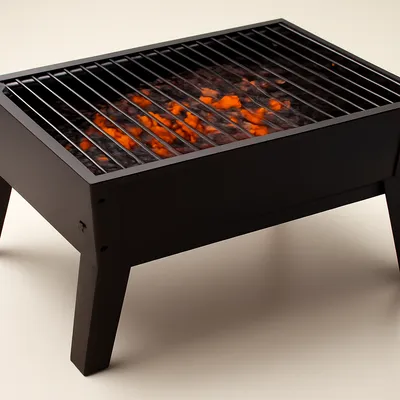
Transfer the semi-dried sheets to a rack set 30 cm above a brick firebox; burn dried cow-dung cakes (or hardwood charcoal) below for about 1 hour at gentle, sustained low heat, turning the meat once at the midpoint, until completely dry and fragrant.
Watch outKeep the fire gentle and to the side, not licking the meat — direct flame scorches it black before it dries; you want slow, steady low heat.
- 620 min
Lower the smoked beef into a white brine simmered with galangal, star anise, clove, and aromatics; cook at a gentle simmer for 15–20 minutes to absorb the spiced-brine character.
- 710 min
Remove, drain, and while still warm brush all surfaces with Seven-Star Tianchao chili oil and a light drizzle of sesame oil; cool to room temperature, slice thin, and serve cold.
Archive tool suggestions — not reviewed
These legacy suggestions have not been evidence-reviewed and are not presented as required tools.