Zhang Fei Beef is a celebrated cured-meat specialty from Langzhong, Sichuan—unmistakable for its jet-black surface and vivid pink interior, a visual paradox that earned it the name of the dark-faced, loyal Three Kingdoms general. Beef shank is kneaded with salt and Sichuan pepper, packed into sealed clay jars to cure for two weeks, coated in fine baicao soot (百草霜), then boiled until fully flavored throughout. The fibers pull apart in long silk-thread strands carrying a subtle smoke, brine, and spice fragrance. Served cold and sliced thin, it is the quintessential opening cold course at Langzhong banquets, dressed with garlic paste and chili oil.



The product's ancestor is Baoning dried beef (保宁干牛肉), developed by the Muslim community of Langzhong's Libaisi Street during the late Ming and early Qing dynasties as a preserved festival meat. The Langzhong County Commercial Records (《阆中县商业志》) document that the beef was already "famous far and wide" during the Qianlong era (c. 1767). During the Republic period it was awarded "superior food" at the Chengdu Industrial Encouragement Conference. The name Zhang Fei Beef was coined in the 1980s by Wang Zhengqiu, director of the Langzhong beef and mutton processing factory, who noted that the meat's black-outside, red-inside appearance resembled the dark-faced, loyal Shu general Zhang Fei. The name caught on immediately; folk legends linking Zhang Fei personally to the recipe emerged later as commercial mythology. The traditional production technique was listed as a Langzhong City intangible cultural heritage in 2010.
Slicing into Zhang Fei Beef reveals a genuinely startling cross-section: the matte-black crust gives way to a bright pink interior of tightly packed, uniformly aligned fibers. Pulled apart by hand, the meat separates into long strands like silk threads and pine needles. The first sensation is a firm, honest chew; then a slow release of salt and the woody tingle of Sichuan pepper, with a faint smokiness from the soot crust threading through. Almost no fat, long clean fibers, a lingering savory finish. A dab of garlic paste and chili oil—or a shot of baijiu alongside—is how Langzhong locals eat it.
The black exterior comes from baicao soot (百草霜)—fine carbon-rich ash collected from the base of wood-burning woks, long used in Chinese medicine as an astringent. Rubbed repeatedly over the salt-cured surface, the soot carbonizes under high heat into a thin protective shell that blocks oxidation and imparts the characteristic smoke note. The two-week salt cure works by osmotic pressure, drawing free water out of the muscle fibers while Sichuan pepper compounds penetrate deep and suppress spoilage bacteria. Beef shank is rich in collagen; prolonged boiling converts it to gelatin, which resets within the fiber network on cooling—producing the signature texture: dry but not hard, moist but not soft, with that silk-and-pine-needle tear.
Variations
Commercial Zhang Fei Beef comes in three styles: original (salt-cured, soot-coated), five-spice, and málà (extra Hanyuan Sichuan pepper and dried chili). Some home cooks substitute cypress or pine-branch smoking for the soot coating; the browning is similar but the aroma shifts toward resinous pine. Modern factory production uses vacuum aluminum packaging and high-temperature sterilization for shelf life; traditional artisans still regard hand-rubbed baicao soot and clay-jar curing as the authentic standard.
On the Palate
Where Zhang Fei Beef sits in the Chinese flavor cloud
Ingredients
Serves 6

How it's made
8 steps · 1 hour
- 110 min
Select beef shank and cut into 400–500 g blocks; trim and discard surface sinew and excess fat.
- 215 min
Combine coarse salt, whole Sichuan peppercorns, five-spice powder, and crumbled dried chili; rub the spice mix forcefully into every surface of the beef for 10 minutes, kneading firmly to expel blood and begin moisture removal.
Watch outKnead the salt and spices in hard for the full 10 minutes until blood weeps out — this forceful massage starts the moisture removal the two-week cure depends on.
- 321600 min
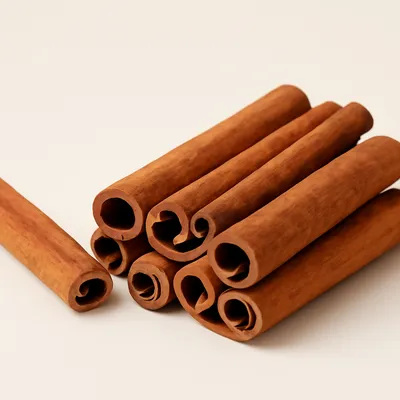
Pack the seasoned beef tightly into a ceramic jar; tuck in ginger slices and cinnamon; press a weight on top, seal the jar mouth with cloth, and cure at room temperature for 14–15 days, turning the blocks every 3–4 days.
- 4360 min
Remove beef from the jar; rinse briefly to remove excess surface salt, then air-dry on a rack for 6 hours until the surface feels tacky and slightly dry.
Watch outAir-dry until the surface feels tacky and slightly dry — that skin lets the soot grip; a wet surface won't hold the black coating evenly.
- 520 min
Collect fine baicao soot (百草霜—ash from a wood-burning wok); rub multiple thin layers evenly over all surfaces of the beef until the exterior is completely matte black.
- 690 min
Lower the soot-coated beef into a pot of cold water; bring to a rolling boil over high heat and cook for 90 minutes, replenishing water as needed to keep the beef submerged.
Watch outKeep it at a rolling boil the full 90 minutes and top up water so the beef stays submerged — any part that surfaces cooks unevenly and dries out.
- 7120 min
Remove beef; cool completely to room temperature, then refrigerate for at least 2 hours.
- 810 min
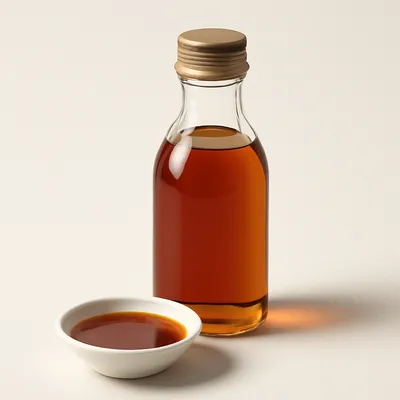
Slice very thin across the grain to reveal the pink interior; arrange on a plate and dress with minced garlic, sesame oil, and chili oil to serve.
Watch outSlice very thin across the grain — chilled first, the shank firms up so you can shave it paper-thin and the pink interior shows clean against the black rim.
Archive tool suggestions — not reviewed
These legacy suggestions have not been evidence-reviewed and are not presented as required tools.