A daily staple of China's Yanbian Korean minority: well-fermented kimchi simmered with silken tofu and pork belly into a warming, ruby-red broth. Bracingly sour, spicy, and restorative — eaten at breakfast as readily as at dinner, always with a bowl of short-grain rice.
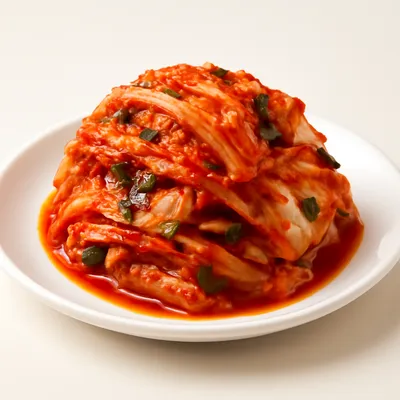


China's Korean minority — the 朝鲜族 — migrated from the Korean peninsula in successive waves from the 1860s onward, with the largest influx occurring after Japan's 1910 annexation of Korea. Settlers found new homes in the mountain valleys and river plains of Jilin and Heilongjiang provinces, in the region now designated Yanbian Korean Autonomous Prefecture — established September 3, 1952 as the Yanbian Korean Autonomous Region and redesignated an Autonomous Prefecture in 1955. They brought kimchi-making as a core household skill: fermented napa cabbage was the essential winter preservation strategy in both homelands, and replicating it required only the abundant Manchurian cabbages, Korean chili, garlic, and salt. The pairing of soured kimchi with locally produced soybean tofu was a natural adaptation — the tofu absorbed the fermented broth's sourness and heat, creating a warming soup perfectly suited to Yanbian's brutal winters.
The broth is bracingly sour with a deep fermented funk and building chili heat. Silken tofu cushions each sip — cool and yielding where the soup is aggressive. Pork fat rounds the sharpness into something almost soothing. The sourness keeps the appetite sharp across an entire bowl of rice.
Mature kimchi carries lactic acid produced by Lactobacillus plantarum at pH 3.5–4.0. When heated, CO2 and volatile short-chain acids dissipate, mellowing raw sourness into a rounder fermented depth. Tofu's calcium-sulfate protein gel softens slightly in the acidic environment, creating a more yielding texture the longer it simmers. Glutamates from fermented cabbage, pork-belly collagen hydrolyzed by heat, and soy protein synergize to produce a deeply savory broth without additional seasoning. The capsaicin in kimchi's chili coating activates TRPV1 heat receptors on the tongue, amplifying the sensation of warmth.
Variations
Silken egg version: replace firm tofu with the softest silken variety and crack in a raw egg at the end for a richer finish. Chicken broth base: use whole-chicken stock instead of water — a more festive version. Seafood version: add manila clams or shrimp for a kimchi and seafood soup common on the Yanbian-coast route. Pure vegetarian: omit pork, use mushroom broth base.
On the Palate
Where Korean-Chinese Kimchi and Tofu Soup sits in the Chinese flavor cloud
Ingredients
Serves 3
How it's made
7 steps · 15 min
- 15 min
Use fully fermented kimchi — at least two weeks old and deeply sour. Chop into 3 cm pieces; reserve the kimchi brine separately.
Watch outUse kimchi that's at least two weeks old and genuinely sour — young kimchi gives a thin, sharp broth with no fermented depth.
- 25 min
Slice pork belly into 3 mm strips. Cut firm tofu into 2 cm cubes.
- 33 min
Heat a clay pot or heavy saucepan over medium-high; add a thin film of neutral oil and stir-fry the pork belly until lightly browned and fat is rendered.
- 42 min
Add the chopped kimchi and stir-fry together for 2 minutes until steaming hot and fragrant.
Watch outStir-fry the kimchi with the pork for a couple minutes until it smells fragrant — this cooks off the raw sourness and builds the deep base flavor.
- 53 min
Pour in 800 ml water plus the reserved kimchi brine; bring to a rolling boil over high heat.
- 615 min
Add tofu cubes, reduce to a medium simmer, and cook uncovered for 12–15 minutes until the tofu has absorbed the broth's ruby color and flavor.
Watch outSimmer the tofu uncovered until it takes on the broth's ruby color — that color soaking in means it's carried the flavor all the way through.
- 72 min
Taste and adjust with a pinch of salt or a spoon of gochugaru if needed; scatter thinly sliced scallion over the top and serve immediately in the pot.


