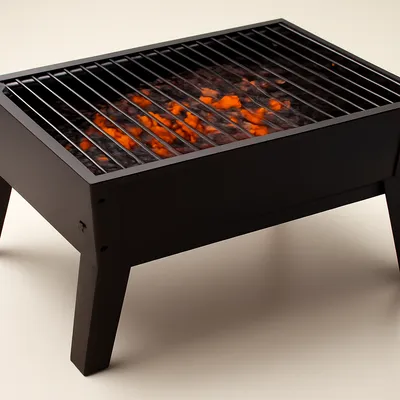
A prized cured pork from Zhenba County in the Qinba Mountains of southern Shaanxi—salt-packed for ten days with Sichuan pepper, star anise, and five aromatics, then slow-smoked over cedar and Chinese toon branches, then aged in mountain air until the skin is mahogany and the lean flesh a brilliant crimson. China's first pork product to receive national geographic indication protection.



Curing pork in the Hanzhong basin has a documented history spanning over two thousand years. Historical accounts record that Zhang Lu, the Daoist leader who administered Hanzhong as Han Ning Commandery for nearly thirty years until Cao Cao's conquest in 215 CE, was welcomed with cured pork by local people during his southward retreat. Three Kingdoms lore adds that Shu Han general Zhang Fei, campaigning in Zhenba, demanded a smoked pork knuckle at every meal. In the 26th year of the Guangxu reign (1900), when Empress Dowager Cixi and the Guangxu Emperor fled Beijing for Xi'an, local officials of southern Shaanxi presented Zhenba cured pork as tribute—giving rise to its epithet 'imperial tribute pork'. Formal geographic indication protection was approved by the National General Administration of Quality Supervision on 3 December 2010; in December 2013 it was registered as a GI certification trademark, making it China's first GI-protected cured pork.
A thin slice of lean meat reveals a deep garnet-red cross-section; the first bite offers firm, pleasantly chewy resistance, then yields and floods the palate with concentrated smoke, salt, and spice; the fat, rendered silk-soft through weeks of cold-smoking and ageing, carries the cedar-and-toon resin's woody perfume without a trace of greasiness.
During the brine cure, salt draws moisture out of the muscle fibres by osmosis; natural nitrates present in the spices bind with the meat's myoglobin, converting it to nitrosomyoglobin, which fixes the characteristic deep-crimson colour even after cooking. Smoke from cedar branches releases guaiacol and syringol (phenolic compounds), which deposit on the meat surface and form an antimicrobial film that simultaneously locks in moisture and imparts woody aroma. Chinese toon branches contribute their own volatile oils, adding a resinous-herbal dimension. The low smoking temperature (40–60°C) drives slow lipid oxidation, producing long-chain aldehydes including nonanal that define the signature cured-pork fragrance. The subsequent air-drying phase lowers water activity below the threshold for microbial growth, enabling storage for months without refrigeration.
Variations
Hanzhong-area cured pork from the broader prefecture is stylistically similar but the degree of smoking varies by village. Sichuan-style cured pork favours heavier smoking and more chilli pepper in the cure. The most ubiquitous home preparation stir-fries thin slices with green garlic shoots; steamed whole pieces, cooled then thinly sliced cold, open traditional Hanzhong banquets as a prized first course.
On the Palate
Where Zhenba Cured Pork sits in the Chinese flavor cloud
Ingredients
Serves 6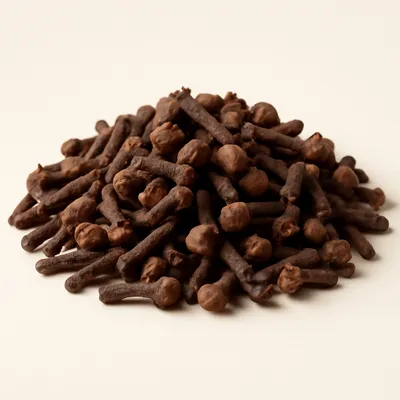
How it's made
8 steps · 1 hour
- 120 min
Select and trim: choose skin-on pork belly or leg from Hanjiang black pig; cut into strips 30cm long and 5–8cm wide; score the skin lightly to help the cure penetrate.
- 210 min
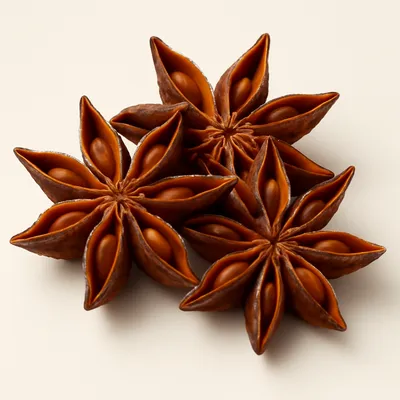
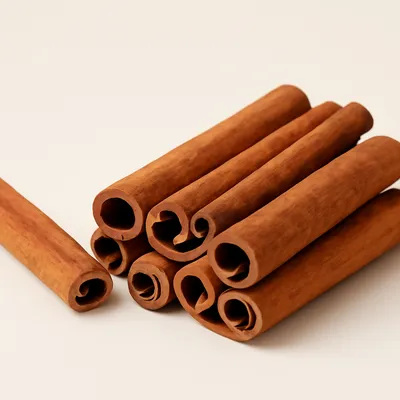
Make the cure mix: dry-roast coarse salt with Sichuan peppercorns, star anise, cinnamon, large and small fennel, and cloves in a dry pan until fragrant, about 3 minutes; cool and grind coarsely.
- 314400 min
Cure in the vat: rub the spiced salt firmly into all surfaces of the pork, ensuring full coverage; pack tightly into a ceramic vat, skin side down; press with a stone weight; cure in a cool dark place for 10 days, turning every 3 days.
Watch outToast the salt and spices only until fragrant, about three minutes — push them to browning and the cure turns acrid instead of aromatic.
- 4180 min
Remove and drip-dry: take the pork from the vat; rinse the surface brine off with cold water; hang the strips on hooks for 2–3 hours until no longer dripping.
- 52880 min
Pre-warm drying: suspend the strips at a height of about 50cm over a very low fire (40–50°C) for 2 days to firm the surface and drive off free moisture before smoking begins.
- 67200 min
Cedar-and-toon smoke: ignite fresh cedar branches and Chinese toon branches to produce a cool, fragrant smoke; cold-smoke the pork at 40–60°C for 3–5 days, turning and repositioning the pieces daily until the surface is a deep mahogany-red.
Watch outHold the smoke cool, 40–60°C — this is drying, not cooking; too hot and the fat renders out and the meat cooks rather than cures.
- 743200 min
Air-cure: move the smoked pieces to a shaded, well-ventilated spot; hang for 20–30 days until the surface is firm, the skin translucent-brown, and the overall weight has reduced by roughly 30%.
Watch outAir-cure until the skin is firm and translucent-brown and the piece has dropped about a third of its weight — that shrink is the cure done.
- 825 min
To serve: steam the whole piece over high heat for 20–25 minutes; cool slightly; slice thinly across the grain and serve directly, or stir-fry with green garlic shoots.
Archive tool suggestions — not reviewed
These legacy suggestions have not been evidence-reviewed and are not presented as required tools.