Songhua River carp, dispatched to order and braised in a clay pot with wild 把蒿 herb, soy sauce, and dried chili — the signature fish dish of Qingling Town, Jiaohe, Jilin Province, known throughout the northeast for the 把蒿's irreplaceable wild fragrance.
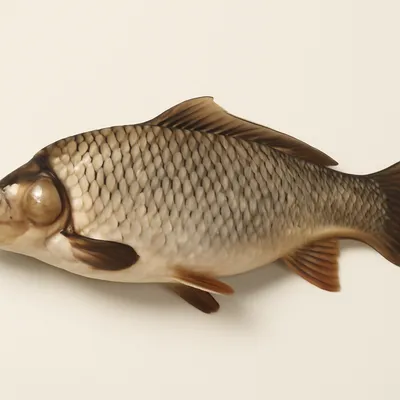




Qingling Town (庆岭镇) sits along the Songhua River valley in Jiaohe City, Jilin Province, where the river runs cold and clear through forested hills, producing carp of exceptional sweetness. The Hezhe people (赫哲族) and Manchu settlers long fished this stretch of the Songhua, developing simple braised-fish preparations that drew on locally gathered riverside herbs to tame the muddy aftertaste of river carp. The defining ingredient — 把蒿, a wild aromatic herb that grows along the Songhua's banks — is not cultivable and is unavailable outside the region, giving the dish its irreproducible identity. As the Jilin–Yanji highway developed during the reform era, restaurants lining the Qingling roadside attracted travelers who came specifically for the dish; 庆岭活鱼 became a recognized place-name dish (地名菜) attached to the entire Jiaohe region, with the word 活 (live) serving as a quality pledge that the fish is dispatched only moments before cooking.
The carp flesh is silky and sweet, with none of the muddy earthiness that marks farmed river fish. The 把蒿's wild herbal warmth — impossible to describe without tasting — perfumes every mouthful, backed by the clean heat of dried chili and a deep, glossy savory broth.
Live carp, killed immediately before cooking, retain near-peak levels of ATP in their muscle tissue; the enzyme-driven conversion of ATP to inosinate (IMP, 肌苷酸) accelerates sharply in the minutes after death, producing a surge of umami that diminishes rapidly if the fish is held on ice. The river carp's characteristic muddy off-flavours — primarily geosmin and related volatile compounds produced by benthic cyanobacteria absorbed into the fish's flesh — are thermally unstable and largely volatilize during the prolonged braise. 把蒿's indigenous terpene volatile compounds (萜类挥发物) further mask any residual earthiness, acting as an aromatic screen specific to this locale. Extended braising for 25–30 minutes draws collagen from the skin and bones into the broth as gelatin, producing the sauce's characteristic glossy, coating consistency.
Variations
Clear-braise style (清炖庆岭鱼): reduced soy sauce and more water let the carp's natural sweetness lead, with 把蒿's fragrance more prominent. Sour-spicy variant (酸辣版): a splash of rice vinegar and extra dried chili sharpen the flavour profile, a popular style in winter.
On the Palate
Where Qingling Live Fish sits in the Chinese flavor cloud
Ingredients
Serves 4
How it's made
7 steps · 30 min active + 25 min waiting
- 110 min
Dispatch the live carp; immediately scale, gut, and clean. Score the flesh on both sides diagonally at 2 cm intervals, cutting almost to the bone.
- 25 min
Blanch the whole fish in a pot of boiling water for 30 seconds; remove and rinse under cold water to firm the skin and remove surface impurities.
Watch outThirty seconds in the boil, no more — you want the skin just set and taut so it won't shred later, not the flesh cooking through.
- 35 min
Heat lard or vegetable oil in a clay pot or heavy iron pot over medium-high heat; sear the fish on both sides, 2 minutes per side, until lightly golden.
Watch outDon't move the fish while it sears — let it sit until the underside releases from the pan on its own and shows a golden face, or the skin sticks and tears.
- 42 min
Add sliced ginger and smashed garlic cloves; stir-fry around the fish for 30 seconds until fragrant. Add the dried chili pieces.
- 53 min
Pour in dark soy sauce, light soy sauce, and cooking wine; add enough cold water to reach halfway up the fish. Lay a generous bundle of fresh 把蒿 over and around the fish.
- 625 min
Bring to a vigorous boil, then reduce to a steady medium simmer; cover and braise for 25 minutes, basting the exposed fish with the braising liquid twice during cooking.
Watch outKeep it at a steady medium simmer, not a hard boil — spoon the sauce over the exposed back so it colors evenly and the flesh stays whole.
- 75 min
Remove and discard the 把蒿. Taste the sauce and adjust salt. Serve the fish in the clay pot at the table, or transfer to a deep plate with all the braising liquid poured over.
Archive tool suggestions — not reviewed
These legacy suggestions have not been evidence-reviewed and are not presented as required tools.

