Hand-pounded beef meatballs from Tangkeng, Fengshun County, Meizhou — made by beating fresh beef with iron rods until the muscle breaks down into a dense, elastic gel. Each ball is round and bouncy, releasing a concentrated flood of beef flavor with every bite. The roundness carries symbolic weight: 圆 (round) echoes 缘 (fate and connection), making meatballs an auspicious Hakka gift. Inscribed on Meizhou's municipal intangible cultural heritage list in 2013.




Tangkeng, a market town in Fengshun County, has maintained a tradition of making beef meatballs since ancient times, according to local elders. Some families have passed the craft through unbroken generational lineage, each guarding a proprietary seasoning ratio as closely held family knowledge. The symbolic power of the round shape — 圆 echoing 缘 (fate and connection) — made meatballs an expected gift at festivals, weddings, and Hakka gatherings, sustaining the craft commercially across generations. The technique was inscribed on Meizhou's municipal-level intangible cultural heritage register in 2013.
Dense and springy — the meatball resists the bite for a split second before releasing a concentrated flood of beef umami; the snap and elasticity are unlike anything machine-ground, a direct product of hours of hand-pounding.
Hand-beating with iron rods physically shreds the beef muscle fiber bundles and liberates myosin and actin from their sarcomere structures. Prolonged mechanical force unfolds and partially denatures these myofibrillar proteins, enabling them to cross-link and build a continuous, dense protein gel network when the paste is later heated. This gel — far more uniform and tightly knit than machine-ground paste — traps water efficiently, producing the characteristic snap and bounce. Temperature control during poaching is critical: keeping water at a gentle simmer around 85°C rather than a rolling boil allows the protein network to set gradually without over-contracting, preserving maximum juiciness.
Variations
Served in clear beef bone broth; in beef meatball rice noodle soup (牛丸粿条汤); skewered and flash-grilled with chili dipping sauce; braised in soy-spice stock as stewed meatballs.
On the Palate
Where Tangkeng Beef Meatballs sits in the Chinese flavor cloud
Ingredients
Serves 4

How it's made
7 steps · 1 hour 10 min active + 50 min waiting
- 110 min
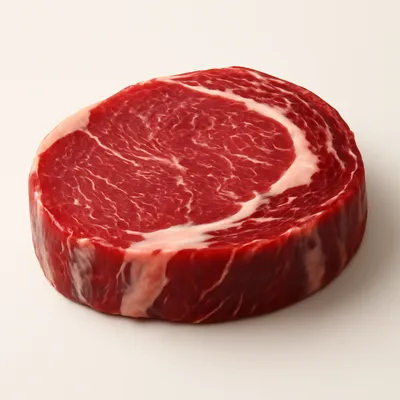
Select fresh lean beef (top round or shin); trim all sinew and connective tissue; cut into fist-sized chunks.
- 240 min
Hold one iron rod or heavy mallet in each hand; alternate-beat the beef chunks for 30–40 minutes, turning the meat constantly so every section is broken down evenly into a smooth, glossy paste.
Watch outBeat until the paste is glossy and elastic — a smooth sheen means the protein has broken down enough to give the trademark bounce; grainy paste stays crumbly.
- 35 min
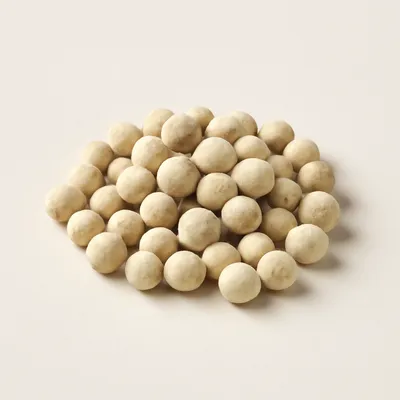
Transfer paste to a large bowl; add salt, ground white pepper, and fish sauce; mix thoroughly.
- 410 min
Slap the seasoned paste hard against the bowl wall repeatedly for 10 minutes, working in ice water a tablespoon at a time, until the mixture is glossy and cohesive and a small ball dropped in cold water floats.
- 530 min
Cover the bowl and refrigerate the paste for 30 minutes to allow the protein network to stabilize.
- 610 min
Fill a pot with water and heat to 80°C (no visible boiling); wet your dominant hand, squeeze the paste through your fist, and use a wet spoon to scrape off walnut-sized balls directly into the warm water.
Watch outPoach at eighty degrees with no rolling bubbles — a real boil toughens the balls and blows them apart; you want just a faint tremble.
- 715 min
Poach at 80–85°C for 8–10 minutes until meatballs float and are cooked through; briefly transfer to cold water to firm, then reheat in clear beef bone broth before serving.
Watch outFish them out the moment they float and firm up — the float tells you the center's set; leave them and the bite goes wooden.
Archive tool suggestions — not reviewed
These legacy suggestions have not been evidence-reviewed and are not presented as required tools.



