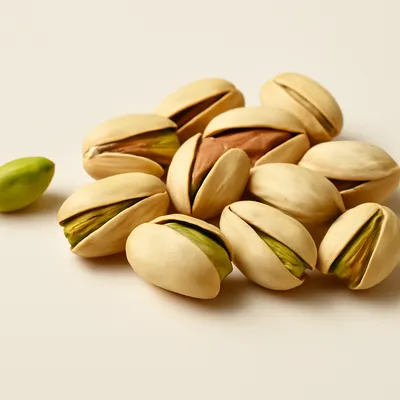
Kahramanmaraş-style stretchy ice cream thickened with salep (wild orchid flour) and gum mastic, churned and pounded until it turns elastic, chewy and resistant to melting. So dense it is traditionally eaten with a knife and fork, and famously sold by costumed vendors who tease customers by snatching the cone away on a long metal paddle. The base flavor is plain milk, often dusted with crushed pistachio.



Dondurma in its dense, elastic form is identified with the southern city of Kahramanmaraş (formerly Maraş), where the surrounding highlands supply the goat milk, wild orchid tubers for salep, and gum mastic that define the local style. The chewy texture is reinforced by dövme dondurma — pounded ice cream — worked with a long-handled paddle in a chilled metal churn. The drink salep had carried powdered orchid tuber into Anatolian kitchens for centuries; folding it, with mastic, into a frozen milk base gave Maraş its signature elastic dessert. Maraş dondurma carries a registered Turkish geographical indication, and the city remains the reference point for the style sold from carts across the country.
Stiff, taffy-like and chewy rather than soft and creamy — a scoop stretches into ropes before it breaks. It melts far more slowly than ordinary ice cream, so it stays cold and intact in the hand. The flavor is clean and milky with a faint resinous edge from the mastic; crushed pistachio on top adds toasted, buttery crunch. You bite and pull rather than spoon and swallow.
Two thickeners give dondurma its elasticity. Salep flour is rich in glucomannan, a gum that binds water into long elastic chains; gum mastic adds further chew and a resinous note. Pounding the freezing mixture with a paddle, rather than simply churning, develops these gums and beats out large ice crystals, so the mass turns stretchy and stable instead of grainy. The same glucomannan that lets salep coat a spoon is what lets a vendor pull a scoop into ropes and keeps the cone from melting fast.
Variations
The Kahramanmaraş original is plain milk (sade), eaten with a knife and fork in its densest pounded form. Pistachio-coated and chocolate-dipped versions are common at parlors. Lighter, scoopable styles soften the gum content for a more conventional texture, while the firmest dövme dondurma is cut into slices. Outside the southeast, vendors across Turkey sell a softer cart version under the same name.
On the Palate
Where Dondurma sits in the Turkish flavor cloud
Ingredients
Serves 6How it's made
5 steps · 1 hour active + 3 hours waiting
- 115 min
Warm milk with sugar, then whisk in salep flour and a little crushed gum mastic, stirring constantly until the mixture thickens and turns glossy without boiling.
Watch outWhisk constantly as the milk thickens and turns glossy but never let it boil — a boil breaks the salep gum and you lose the stretch.
- 2120 min
Cool the base fully, chilling it in the refrigerator so it sets to a thick, stretchy consistency.
- 320 min
Transfer to a deep chilled metal vessel and work it hard with a long-handled paddle, pounding and folding to develop the gums and break up ice crystals.
Watch outPound and fold the freezing mass hard, don't just stir — that beating develops the gums and smashes big ice crystals, turning it stretchy instead of grainy.
- 430 min
Continue pounding as it freezes until the mass turns elastic and pulls into ropes when lifted.
Watch outKeep pounding until a lifted scoop pulls into long ropes — that stretch means the glucomannan has fully developed.
- 55 min
Pack firmly, scoop or slice, and finish with crushed pistachio; serve very cold with a knife and fork for the densest style.
Archive tool suggestions — not reviewed
These legacy suggestions have not been evidence-reviewed and are not presented as required tools.