A fairy-floss confection of fine sugar threads, made by repeatedly stretching and folding a sweet dough into thousands of silky strands and tossing them through roasted flour. The result is a soft, cottony bundle that dissolves on the tongue. Most associated with the Kocaeli province city of İzmit in the Marmara region, where it is a celebrated local specialty.




Pişmaniye belongs to the wider family of hand-pulled sugar-floss sweets that stretches across West and Central Asia, and within Turkey it is the signature confection of İzmit (Kocaeli). The technique is laborious: a cooked sugar syrup is set, then worked with roasted flour into a ring and pulled by hand through repeated stretch-and-fold cycles, each doubling the number of strands until the dough becomes a mass of hair-fine threads. The name is popularly tied to the Persian word for regret, peşiman, a nod to the patience the craft demands. İzmit's confectioners turned it into a regional trademark, and boxed pişmaniye remains a standard gift from the city.
Light as cotton wool, it collapses the instant it touches the tongue into pure sweetness with a faint toasted-flour, nutty warmth. The texture is dry, fibrous and clinging — the strands catch on your fingers and lips. Sweet but not cloying when freshly made; it grows sticky and clumps if it sits in humidity.
The transformation rests on stretching crystalline sugar into ultrafine amorphous strands. The cooked syrup is brought to the right firmness, then a butter-and-roasted-flour mixture coats the strands as they are pulled, keeping them separate and dry so they do not fuse back together. Each stretch-and-fold roughly doubles the strand count, so a handful of doublings yields thousands of threads. The roasted flour also carries a gentle nutty flavor and absorbs surface moisture, which is why the floss must be kept sealed against humid air.
Variations
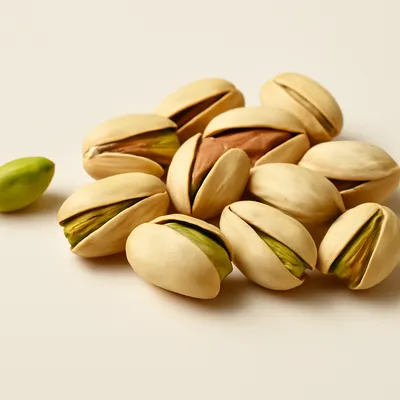
The plain butter-and-flour version is the classic. Pistachio, cocoa and chocolate-coated styles are widely sold, as are bundles studded with hazelnut or pistachio. Persian pashmak and Central Asian sugar-floss sweets share the same stretch-pull method with local flavorings. Industrial production now packages pişmaniye in airtight boxes to keep the threads from clumping.
On the Palate
Where Pişmaniye sits in the Turkish flavor cloud
Ingredients
Serves 8How it's made
5 steps · 1 hour active + 30 min waiting
- 120 min
Boil sugar with water (and a little acid) to a firm syrup, then pour onto a cooled surface and let it set to a workable mass.
Watch outBoil the syrup to a firm hard-crack — a drop in cold water should snap brittle; too soft and it won't pull into threads, it just sags.
- 210 min
Separately toast flour in butter over low heat until pale gold and fragrant.
- 315 min
Shape the set sugar into a ring and begin pulling, folding it back on itself again and again, dusting with the buttered roasted flour at each fold.
- 420 min
Keep stretching and folding through many cycles until the sugar pulls into a cloud of hair-fine threads.
Watch outKeep stretching and folding, dusting flour each fold, until it pulls into cloud-fine threads — the flour keeps the strands dry and separate so they don't fuse back into a lump.
- 55 min
Gather the floss into loose bundles and store sealed; serve fresh, plain or finished with crushed pistachio.
Archive tool suggestions — not reviewed
These legacy suggestions have not been evidence-reviewed and are not presented as required tools.