
Pernambuco's signature rolled cake: paper-thin layers of buttery sponge spread with guava paste and wound into a tight spiral, so a cut slice shows dozens of fine concentric rings. The sponge is baked in successive wafer-thin sheets, each painted with goiabada and rolled in turn. It is registered as intangible cultural heritage of the state of Pernambuco.



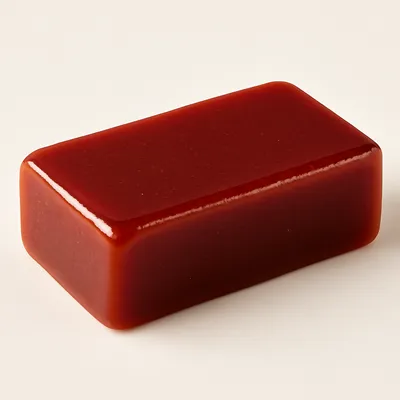
Bolo de rolo descends from the Portuguese colchão de noiva ("bride's mattress"), a rolled sponge filled with almonds that colonists brought to the Northeast. With almonds scarce and costly inland but guava abundant, cooks swapped the almond filling for goiabada (guava paste) and refined the sponge ever thinner and more buttery, yielding the dense, many-ringed spiral known today. Centered on the Pernambuco sugar region around Recife, it was declared cultural and intangible heritage of the state by Law No. 13,436 of April 24, 2008.
A slice no thicker than a finger reveals a tight whorl of pale cake and dark-red guava, ring after ring. The crumb is soft and buttery, almost moist, and dissolves quickly; the guava cuts through with a bright, jammy sweetness and faint acidity. Dusted with sugar, it is eaten with strong black coffee, a single slim slice at a time.
The whole effect hinges on baking the batter in extremely thin sheets: a thin layer of butter-rich sponge bakes in two to three minutes, stays pliable while warm, and is spread with goiabada and rolled at once, before it can set and crack. Each new sheet is rolled around the growing core, building the rings. The high butter and egg content keeps the crumb flexible enough to wind tightly; let a sheet cool or bake too long and it tears instead of rolling.
Variations
The classic filling is goiabada, but versions appear with dulce de leche, chocolate or coconut. Quality is judged by thinness: a true bolo de rolo demands many fine layers, while a thick-layered version is dismissed as merely a rocambole (jelly roll). Around Recife, established confeitarias sell it boxed as a regional gift.
On the Palate
Where Bolo de Rolo sits in the Brazilian flavor cloud
Bake each sponge sheet paper-thin and roll it the moment it comes out of the oven, while it is still hot and pliable, or it sets brittle and cracks instead of winding into rings.
Ingredients
Serves 10How it's made
6 steps · 50 min active + 25 min waiting
- 110 min
Cream softened butter with sugar until pale and fluffy, then beat in egg yolks one at a time.
- 28 min
Fold in sifted flour, then gently fold in egg whites whipped to soft peaks to keep the batter light.
- 35 min
Spread a very thin layer of batter onto a lined baking tray, edge to edge, and bake at 220C for 2-3 minutes until just set and still pliable.
Watch outPull the sheet the moment it looks just set and matte on top — still bendy, no colour on the edges.
- 44 min
Turn the hot sheet out onto a sugared cloth, spread immediately with a thin layer of softened guava paste, and roll up tightly from one edge.
Watch outThe sponge should still be hot to the touch when you roll — warm-but-cooling already means it's cracking.
- 518 min
Bake the next thin sheet, spread with guava paste, then roll it around the first core; repeat to build up the layers.
- 610 min
Let the finished roll cool, dust with sugar, and trim the ends before slicing thin to show the spiral.
Watch outSlice thin with a serrated knife so the spiral rings show clean instead of smearing.
Archive tool suggestions — not reviewed
These legacy suggestions have not been evidence-reviewed and are not presented as required tools.


