
The iconic confection of Aix-en-Provence: a smooth almond-and-candied-melon paste pressed onto a thin wafer base and topped with a hard layer of white royal icing, cut into a pointed, almond-shaped lozenge. The paste is faintly bitter-sweet and dense, perfumed with candied melon and a little orange, and the glaze gives a brittle, sugary snap over a tender centre. Made by the confiseurs of Aix and protected as a regional speciality, the calisson is to Aix what the navette is to Marseille.


The calisson is the celebrated confection of Aix-en-Provence, where the local confiseurs have made it for centuries and where it carries a protected regional designation. A much-repeated legend attaches its creation to the 1454 wedding of King René of Anjou and Jeanne de Laval — the bride's smile supposedly inspiring the sweet, the name read from a phrase meaning 'tender caresses' said at the table. This is folklore, not documented history, and is best told as legend; the more sober record places the confection's rise in the convents and confiseries of Aix in the following centuries. What is certain is the trio of almond, candied melon and royal icing that has defined it ever since.
The royal-icing glaze cracks first — a thin, sweet, brittle shell — then the centre yields, dense and slightly chewy, tasting of almond with the cool floral sweetness of candied melon and a whisper of orange. It is rich without being sticky, the bitterness of the almond keeping the sugar in check. Eaten in one or two bites off its little wafer, it is a confiserie sweet meant to be savoured slowly. A paste left too wet stays gummy; properly dried, it sets to a firm, sliceable lozenge.
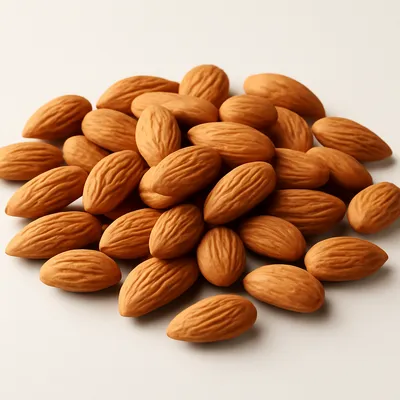
The craft is in the paste and its drying. Blanched almonds and candied melon are ground and cooked with sugar to a thick, low-moisture marzipan-like mass; driving off water is what lets it set firm rather than stay sticky, and the candied melon's own sugar acts as both flavour and humectant binder. The paste is spread on wafer, cut, and crowned with royal icing — egg white whipped with icing sugar — which is then dried in a low oven until it hardens to an opaque, brittle glaze. The wafer base keeps the moist paste from sticking and gives a clean bottom. Too hot a drying scorches the white icing; it must set slowly to stay pure white.
Variations
The traditional calisson is almond and candied melon with a touch of orange; modern confiseurs in and around Aix also make versions flavoured with lemon, chocolate or other candied fruits, though purists hold to the original. Some are sold unglazed. The pointed-oval shape and wafer base are constant. It is distinct from plain marzipan in its melon-perfumed paste, its icing and its lozenge form.
On the Palate
Where Calissons d'Aix sits in the French flavor cloud
Ingredients
Serves 12
How it's made
6 steps · 1 hour active + 1 hour 30 min waiting
- 115 min
Grind blanched almonds with candied melon and a little candied orange to a smooth paste.
- 225 min
Cook the paste with sugar over low heat, stirring, until thick and no longer sticky; cool.
Watch outCook the paste until it's thick and no longer sticky — driving off the water is what lets it set firm; leave it moist and the calissons stay tacky and won't hold shape.
- 310 min
Spread the paste evenly over sheets of edible wafer and let it firm up.
- 410 min
Whip egg white with icing sugar to a smooth royal icing and spread a thin layer over the paste.
- 520 min
Cut into pointed almond-shaped lozenges and dry in a very low oven until the icing hardens.
Watch outDry the royal icing in a very low oven until it hardens to an opaque glaze — too hot and the egg-white icing scorches and yellows instead of setting white and brittle.
- 630 min
Cool completely before packing.
Archive tool suggestions — not reviewed
These legacy suggestions have not been evidence-reviewed and are not presented as required tools.


