
The raspberry counterpart of the fraisier: two thin layers of génoise sponge enclosing a thick band of crème mousseline — pastry cream beaten with butter — packed with fresh raspberries stood upright around the rim so their cut faces show through the sides. The top is finished with a thin layer of marzipan, glaze, or more fruit. Cool, creamy, and sharply fruited, it is a centerpiece cake of French pâtisserie windows in raspberry season.





A direct variation on the fraisier, the classic French strawberry-and-mousseline gâteau that became a pâtisserie standard in the twentieth century; the framboisier simply swaps raspberries for strawberries and is not attributed to a single creator. Both belong to the modern French entremet family of sponge-and-cream cakes assembled in a ring, and the raspberry version is favored where the fruit's sharper acidity is wanted to balance the buttery mousseline. It is a seasonal staple rather than a dish with a fixed historical date.
A clean vertical slice: pale sponge top and bottom, a wide creamy middle studded red, and a ring of halved raspberries pressed to the glass-smooth sides. The mousseline is rich and silken, the raspberries burst tart and floral against it, and the sponge is soaked just enough to stay moist. It eats lighter than it looks — the fruit's acidity keeps the buttercream from cloying — and the contrast of cool cream and bright berry is the whole point.
Crème mousseline is the structural cream: pastry cream thickened by cooking flour or starch with egg and milk, then beaten with a roughly equal weight of butter so that, once chilled, the butter firms and the cream holds a tall, sliceable wall without gelatin. The raspberries are set cut-side out so capillary moisture and color show at the edge while the whole berries inside stay intact. Everything is built cold in a ring and chilled hard before unmolding, or the soft mousseline slumps.
Variations
A thin sheet of pink or white marzipan is the traditional top, though many modern versions use a clear glaze or a layer of fresh raspberries instead. The mousseline can be lightened with Italian meringue into a crème diplomate, or perfumed with vanilla, rose, or lychee — the rose-lychee-raspberry combination being a well-known modern pairing. A mixed berry version folds in redcurrants or blackberries.
On the Palate
Where Framboisier sits in the French flavor cloud
Ingredients
Serves 10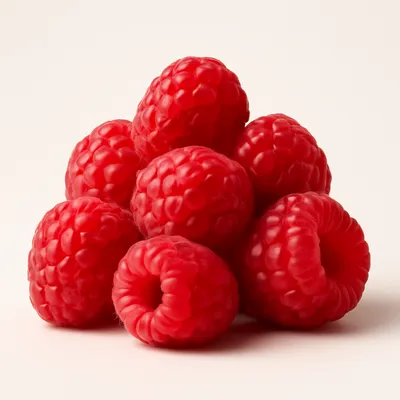

How it's made
7 steps · 1 hour 15 min
- 130 min
Bake a génoise sponge, cool, and slice it into two thin even layers.
- 215 min
Cook a pastry cream from milk, sugar, egg yolks, and flour, then cool it to room temperature.
- 38 min
Beat softened butter into the pastry cream in stages to make a smooth, light crème mousseline.
Watch outBeat the softened butter into the cooled pastry cream in stages — add it cold or all at once and the mousseline splits into a grainy mess.
- 45 min
Set a cake ring on a board, fit the bottom sponge, and brush it with raspberry syrup.
- 510 min
Line the inside of the ring with halved raspberries cut-side out, then pipe mousseline around and over them.
Watch outSet the raspberries cut-side out against the ring so the red shows at the edge, packed snug with no gaps for the cream.
- 67 min
Press whole raspberries into the cream, cover with more mousseline, and top with the second soaked sponge.
- 7240 min
Chill at least 4 hours until firm, unmold, finish with marzipan or glaze, and slice cold.
Watch outChill at least four hours until firm before unmolding — the soft mousseline slumps if you release the ring warm.
Archive tool suggestions — not reviewed
These legacy suggestions have not been evidence-reviewed and are not presented as required tools.


