
Loh teng tjien is a warm Chaoshan glutinous-rice sweet: glutinous-rice dough is cooked, then pounded and beaten until it turns soft, smooth and very stretchy, like mochi, before being pulled into pieces and rolled in ground toasted peanuts, sugar and sesame. Eaten hot, it is soft and sticky, sweet and deeply nutty, the chewy dough clinging under a dry, fragrant coat. Also called gao loh tjien or 'soft cake' in Teochew, it was an offering at the year's grain and deity rites. It is the Chaoshan cousin of the pounded rice cake, but its defining act is the pound-then-coat in peanut sugar.



Loh teng tjien is a traditional snack of the Chaoshan region of eastern Guangdong, rooted in folk ritual. By old Chaoshan custom it was a glutinous-rice offering: made for the birthday of the Grain Mother on the fifteenth of the tenth lunar month, and for the year-end sending-off of the gods on the twenty-fourth of the twelfth, the sticky rice meant — by one telling — to gum up the deity's mouth so she would say little of mortal failings to heaven. The name is read two ways: the pulled pieces resemble old copper coins (qian), and there is the auspicious play 'eat loh teng tjien and you will earn money'; loh teng, 'dropped into the soup,' also points to the boiling of the dough rounds in water. In Teochew it is also called gao loh tjien or 'soft cake.' In 2019 the making of loh teng tjien was listed as intangible cultural heritage of Chaozhou city. It is reckoned a gentle food, said to ease the spleen and nourish the stomach.
Warm and soft, it pulls and stretches as you bite, the dough chewy and yielding all the way through with a faint clinging stickiness that catches at the teeth and slows you down. Over it lies a dry, loose, nutty coat — ground toasted peanuts and sesame in sugar — that crackles faintly and perfumes every bite with roasted oil. The contrast is the pleasure: a soft, tacky, near-molten interior under a dry fragrant powder. It is sweet without being heavy, and must be eaten hot; once cool the dough firms and stiffens and the supple, stretchy quality is lost.
The stretch comes from glutinous rice, which is almost pure amylopectin — the heavily branched starch — with very little of the straight-chain amylose. When the dough is cooked, those branched starch molecules gelatinize and swell into a sticky, translucent, elastic mass. Pounding and beating it hard works that gelatinized starch into a smooth, cohesive, highly stretchy paste — the same mochi-like body as a pounded rice cake — far suppler than dough simply mixed by hand. It must be served warm because of what happens as it cools: the starch slowly retrogrades, its branched chains re-associating and recrystallizing, which firms and stiffens the dough and drives off its supple chew. The peanut-sugar coat is rolled on at the last moment, both for its dry nutty contrast and to keep the tacky pieces from sticking to each other and the plate.
Variations
The coat is the main variable: ground toasted peanuts and white sugar are the base, very often with toasted black and white sesame, and some add grated coconut or a richer mix of grains and nuts. The dough may be made from soaked, steamed glutinous rice that is then pounded, or more quickly from glutinous-rice flour mixed with warm water, shaped into coin-like rounds with a hole, boiled until they float, then beaten smooth. It is made across the Chaozhou, Shantou and Jieyang area, the cooking essentially the same. It is close kin to the pounded rice cake and to Hunan's sugar-oil patties, but its signature is the warm, pounded dough rolled in peanut sugar rather than fried.
On the Palate
Where Loh Teng Tjien sits in the Chinese flavor cloud
Ingredients
Serves 4How it's made
6 steps · 25 min active + 10 min waiting
- 110 min
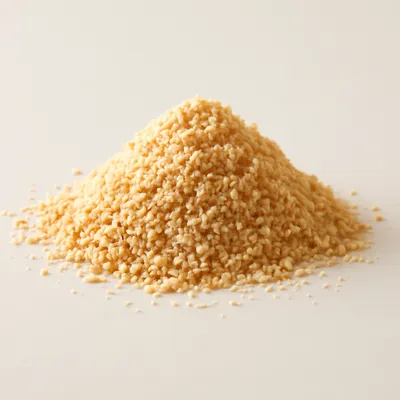
Toast the peanuts, rub off the skins and crush them coarsely; toast the sesame, then mix peanuts and sesame with white sugar into a dry coating and set aside.
- 26 min
Mix glutinous-rice flour with warm water (about 50°C) into a smooth dough, and divide it into small rounds, traditionally shaped like a coin with a hole in the middle.
- 35 min
Bring a pot of water to the boil and cook the rounds until they float to the surface and are cooked through.
- 46 min
Lift the cooked dough into a large bowl and beat it hard with a wooden pestle or rolling pin until the pieces come together into one smooth, glossy, very stretchy mass.
Watch outBeat the cooked dough hard until it comes together glossy and very stretchy — that pounding works the gelatinized starch into a smooth, elastic mass; under-beaten, it stays lumpy and short.
- 51 min
Pull or cut off warm bite-size pieces of the pounded dough.
- 63 min
Roll each piece in the peanut-sesame-sugar coating until evenly covered, and serve at once while hot and soft.
Watch outCoat and serve while still warm — as it cools the starch retrogrades and it turns hard, so it has to reach the table soft.


