
Goishicha is a rare twice-fermented tea from the mountain town of Otoyo in Kochi, on Shikoku — one of Japan's very few genuinely fermented teas, a black tea or kurocha in the true microbial sense rather than the oxidized sense of the English term. After steaming, the leaves are fermented first by mold under straw mats, then packed into wooden barrels under weights for a second, anaerobic lactic-acid fermentation, before being cut into small dark squares that resemble go stones laid out to dry — the source of the name. Historically it travelled by ship across the Seto Inland Sea to the Shiwaku islands, where it was simmered into chagayu, a savory tea-rice gruel. It is decocted rather than steeped, yielding a clear amber brew with a clean, almost sour edge.


Goishicha is made in Otoyo Town in Nagaoka District, Kochi, and historical records point to production by at least the 18th century. Once the everyday brew of the Setouchi region, it was carried by boat after the Edo period to the Shiwaku islands and beyond, prized there for the tea-rice gruel called chagayu. Its making nearly died out in the twentieth century before a local cooperative kept it alive. The Otoyo goishicha manufacturing technique was selected in 2018 as an intangible folk cultural property warranting documentation, and was designated an Important Intangible Folk Cultural Property in 2026, recognition of one of the last surviving lineages of fully fermented tea in Japan.
The brew pours a clear reddish amber and drinks light and smooth, with almost none of green tea's grassy astringency. In its place is a mellow, faintly sour note from the lactic fermentation, a soft earthiness from the mold stage, and a clean finish that lingers without bitterness. Hot, it is rounded and gentle; the dried squares themselves smell of hay and damp cellar, the quiet signature of a long double ferment.
Goishicha is defined by two microbial stages working in sequence. The steamed leaves are first spread under straw mats, where aerobic molds colonize them over roughly one to two weeks, breaking down leaf compounds and seeding the next stage; mold-driven enzyme action here is what classes it as a true post-fermented tea. The leaves are then packed tight into wooden barrels with their own steaming liquor and pressed under weights, sealing out air for some ten to twenty days while lactic-acid bacteria ferment them anaerobically, much like making pickles. This second stage drops the pH and is what gives the finished tea its clean sour note and low bitterness; catechins are largely consumed, so the harsh astringency of green tea is gone. Decocting the dried squares — simmering rather than steeping — extracts the deeper, fuller body this fermented leaf can give.
Variations
The defining traditional use is chagayu, the tea-rice gruel of the Setouchi islands, in which the squares are boiled hard and the strong tea is cooked with rice and sometimes vegetables into a thin, savory porridge. As a drink it is decocted by boiling a square or two in water; some brew it weak as an everyday cup, others strong and let it cool. It belongs to the small family of Japanese fermented kurocha alongside Tokushima's Awa bancha and Ehime's Ishizuchi kurocha, each made by its own fermentation route on Shikoku.
On the Palate
Where Goishicha sits in the Japanese flavor cloud
Ingredients
Serves 4How it's made
4 steps · 20 min
- 15 min
Bring water to a boil in a kettle or pot.
- 25 min
Add one to two squares of goishicha per litre of water and simmer, not steep, for several minutes until the brew turns clear amber.
Watch outSimmer the goishicha, don't steep it, until the brew turns clear amber — this post-fermented tea needs a real boil for a few minutes to give up its color and flavor.
- 32 min
Strain into cups and serve hot; brew longer or with more squares for a stronger cup.
- 440 min
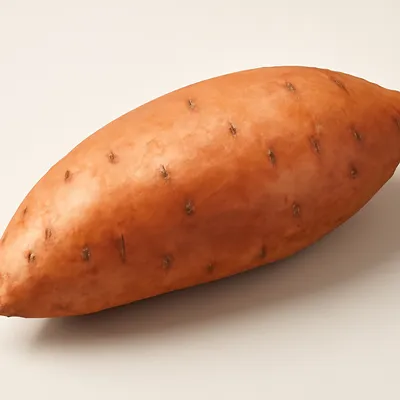
For chagayu, boil the squares hard to make a strong tea, then cook it with rice, a little salt and vegetables such as sweet potato into a thin savory gruel.
Archive tool suggestions — not reviewed
These legacy suggestions have not been evidence-reviewed and are not presented as required tools.


