The signature cold snack of Hunyuan county in Datong, Shanxi, at the foot of the sacred Northern Marchmount, Mount Heng. It is a silky, near-translucent jelly set from potato starch, sliced or cubed and served cold in summer (and warm in winter), drenched in a fragrant chili oil, garlic water and Hunyuan vinegar. What makes it Hunyuan jelly and nothing else is the trio of local toppings: lian-hua-dou (crisp fried fava beans), shredded firm tofu, and that distinctive chili oil, often with slivers of cucumber. The bite is the whole point — clear to the eye, quivering in the hand, slippery on the tongue, cooling to the stomach, with the sudden crunch of the fava beans cutting through.




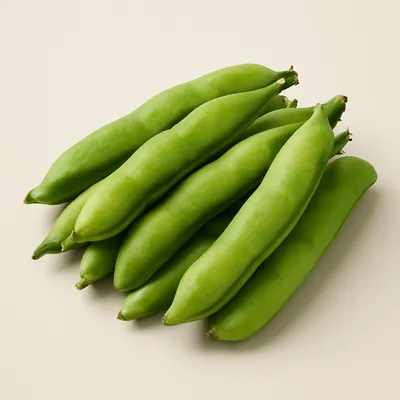
Hunyuan jelly belongs to Hunyuan, the county under Datong that sits below Mount Heng, the Northern Marchmount; the fava bean used for its lian-hua-dou is counted among the "three treasures of Mount Heng" and grows in the hills of southeastern Hunyuan. The dish has more than three hundred years of history and its craft is listed on the Datong municipal and Shanxi provincial intangible-cultural-heritage rolls. Local lore (相传) gives it an imperial name-tale: that Tang Emperor Taizong, campaigning north past Mount Heng one start-of-summer day and worn out with hunger and thirst, was served a jelly secretly made by the Xue household; pleased, he bestowed the name "Hunyuan jelly," after which the Xue family kept it as a festival and banquet dish that spread household by household. Because it is poured hot and left to set into a firm cake, it carries the homely second name fen-tuo, the "starch lump." It must not be confused with Sichuan's pea-starch jelly or rice-tofu: Hunyuan jelly is potato-starch through and through, and unthinkable without its fried fava beans.
On the eye it is clear and pale; in the hand the cake quivers and wobbles like skin-jelly; on the tongue it is cool and slick, sliding down almost without chewing. The jelly itself is nearly flavorless — a clean, springy, cooling base — so the dressing carries the dish: the chili oil comes up fragrant and warm rather than harshly dry-hot, the garlic water and vinegar sharpen it, and then the fried fava beans and shreds of firm tofu break the softness with crunch and chew. In high summer a bowl is pure relief; in the cold months the same jelly is gently warmed and the heat of the chili does the rest.
The texture is pure starch science. Potato starch is roughly four-fifths amylopectin and one-fifth amylose; cooked into a thin slurry and held just under the boil while stirred one direction, the granules swell and burst and the starch fully gelatinizes into a smooth, lump-free paste. Poured out and left to cool, it sets — and the set is retrogradation: the loose amylose chains, unstable in hot water, quickly re-bond by hydrogen bonds and recrystallize into an ordered network within hours, which is what gives the jelly its springy, sliceable, quivering body. Traditional recipes added a pinch of alum to raise the gelatinization point and firm and clarify the set, though alum has since been restricted in food for its aluminum, so many makers now leave it out or use less. Potato starch is what makes the jelly so clear and slippery; pea or mung-bean starch sets cloudier and firmer, which is why Sichuan and other regional jellies eat differently.
Variations
Hunyuan jelly comes both cold and hot: sliced cold with chili oil in summer, or warmed in a bowl against the northern winter. Beyond the canonical trio of fried fava beans, shredded firm tofu and chili oil, cooks add cucumber slivers, coriander, garlic water and the local vinegar to taste. Street stalls in Hunyuan and across Datong dice or ribbon the jelly to order; some shops guard a house chili-oil blend as their whole reputation. Cut thin into wide ribbons or small cubes, dressed light or heavy, it is the same potato-starch jelly — but locals insist the true Hunyuan taste, chili oil and all, is the one thing that cannot be reproduced once you leave Shanxi.
On the Palate
Where Hunyuan Cold Jelly sits in the Chinese flavor cloud
Ingredients
Serves 4

How it's made
8 steps · 20 min
- 110 min
Measure the starch: mix potato starch with cold water at roughly one part starch to five or six parts water, whisking until fully dissolved with no lumps.
- 28 min
Heat water: bring a separate pot of water to a boil, then ladle out and reserve a little of the boiling water.
- 35 min
Cook the slurry: lower the heat, pour the starch slurry into the pot in a thin stream while stirring constantly in one direction.
- 410 min
Stir to gelatinize: keep stirring just under the boil until the paste turns smooth, glossy and translucent with no white lumps; add a tiny pinch of alum only if using.
Watch outStir one direction just under the boil until the paste turns smooth, glossy and see-through with no white lumps — fully burst starch is what sets clear and springy, not cloudy.
- 5130 min
Set the jelly: pour the hot paste into a flat dish or basin, smooth the top, and leave to cool and set for at least two hours until firm and quivering.
Watch outCool undisturbed at least a couple of hours until the jelly sets firm and quivers — this rest is the retrogradation that gives it a sliceable, springy body; rush it and it's slack.
- 612 min
Make the chili oil and seasonings: pour hot oil over chili flakes for a fragrant chili oil, and prepare garlic water and seasoned vinegar.
Watch outPour the oil over the chili flakes when it just shimmers and wisps smoke — too cool and the chili stays raw, too hot and it scorches black and bitter.
- 75 min
Cut and plate: slice or cube the set jelly into a bowl and scatter over shredded firm tofu, fried fava beans and cucumber slivers.
- 83 min
Dress and serve: spoon over the chili oil, garlic water and vinegar, toss lightly and eat cold (or gently warmed in winter).
Archive tool suggestions — not reviewed
These legacy suggestions have not been evidence-reviewed and are not presented as required tools.