Hollow golden spheres of deep-fried glutinous rice dough from Jinshan Town in Wenchang, Hainan. Unlike the sesame-coated mainland versions, these balls are left plain, with an utterly smooth and crackled golden shell enclosing a completely empty cavity — every bite collapses with a resonant snap.



Jian dui (fried glutinous balls) trace back to the Tang dynasty: the early-Tang monk-poet Wang Fanzhi already names 'oil-fried dui' in his verse, evidence that the fried glutinous sweet existed by his time. As successive waves of Central Plains migrants moved south, the craft took root in Lingnan's glutinous-rice-growing regions. The late-Ming and early-Qing scholar Qu Dajun recorded in Guangdong Xinyu that Cantonese popped glutinous grain ('baogu') as a filling for jian dui used in offerings and gifts, while a folk rhyme—'jian dui rolling round, gold and silver fill the house'—carries its auspicious wish. Jinshan Town in Wenchang developed its own hollow, sesame-free variant, served for over a century as a customary gift and altar food at weddings and new-year celebrations across eastern Hainan.
Crack through the smooth golden shell and it collapses inward cleanly — the hollow interior amplifies every fracture into a satisfying resonant crunch. The glutinous rice skin tastes of mild sweetness and toasted starch, rich without heaviness, a rare combination of structural drama and simple flavor.
Glutinous rice flour is composed of nearly pure amylopectin — the branched starch that swells dramatically and gelatinizes rapidly on heating. During the two-hour fermentation, naturally occurring yeasts produce carbon dioxide bubbles distributed throughout the dough. When the shaped ball enters hot oil at around 160°C, the trapped moisture converts explosively to steam, driving outward pressure that inflates the ball. Simultaneously, the amylopectin-rich exterior gelatinizes and then rapidly dehydrates in the surrounding oil, setting into a rigid, glassy shell that locks the hollow structure in place. Continued frying dehydrates the shell fully, producing the characteristic crackled golden crust.
Variations
Some Wenchang households coat the dough balls in white sesame before frying, producing a nutty-crusted version closer to mainland jian dui. A miniature version (about 2 cm across) is made for temple altar offerings and children's snacks at festival markets. Across Hainan, coconut sugar or pandan juice are occasionally incorporated into the dough, adding tropical fragrance to the neutral rice base.
On the Palate
Where Jinshan Hollow Fried Rice Balls sits in the Chinese flavor cloud
Ingredients
Serves 12How it's made
7 steps · 30 min active + 2 hours waiting
- 115 min
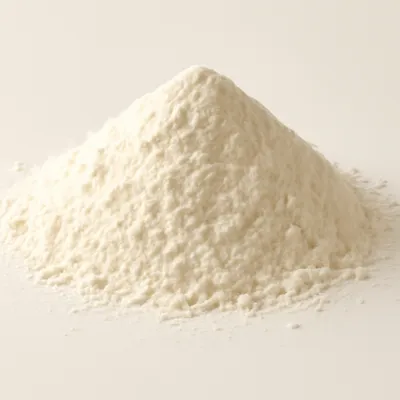
Combine 50 g glutinous rice flour with warm water (about 35°C) and knead into a smooth small starter dough ball. Add the starter to the remaining 450 g glutinous rice flour plus the rice flour and sugar. Add warm water gradually, kneading until the dough is smooth, soft, and just barely non-sticky.
- 2120 min
Place the dough in a bowl, cover with a damp cloth, and leave in a warm spot (25–28°C) to ferment for 2 hours until the dough is slightly puffed and small internal bubbles are visible when pulled apart.
- 35 min
Divide the fermented dough into portions of about 30 g each. Roll each portion between both palms into a perfectly smooth sphere — any surface cracks will allow steam to escape during frying, preventing the hollow from forming.
Watch outRoll each ball perfectly smooth and crack-free — any surface split lets the steam escape and the ball never puffs hollow.
- 45 min
Pour at least 1 litre of vegetable oil into a deep pot and heat to 160°C over medium heat (a wooden chopstick inserted should produce a steady stream of small bubbles).
- 52 min
Gently lower the dough balls into the oil — do not overcrowd. Leave undisturbed for the first minute until the outer shell sets, then use a spider skimmer to gently nudge the balls so they rotate freely and colour evenly.
Watch outLeave the balls undisturbed the first minute so the shell sets, then nudge them to roll — poke too early and you dent the soft skin flat.
- 615 min
Maintain oil temperature between 160–170°C. Fry for 12–15 minutes until the balls have puffed visibly and the skin is deep golden and glossy. Tap gently — a clear hollow resonance confirms they are done. Remove and drain on a wire rack.
Watch outDone when a tap gives a clear hollow ring and the skin is deep golden — a dull thud means still doughy inside.
- 75 min
Allow to cool for 3–5 minutes before serving. The crust is at peak crispness immediately after frying.
Archive tool suggestions — not reviewed
These legacy suggestions have not been evidence-reviewed and are not presented as required tools.


