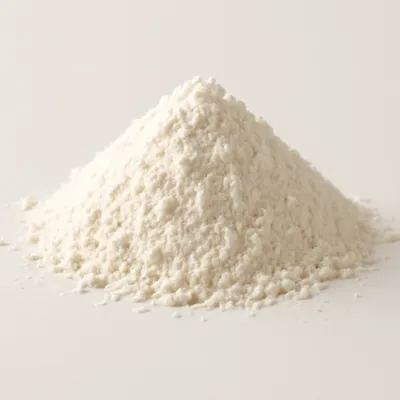


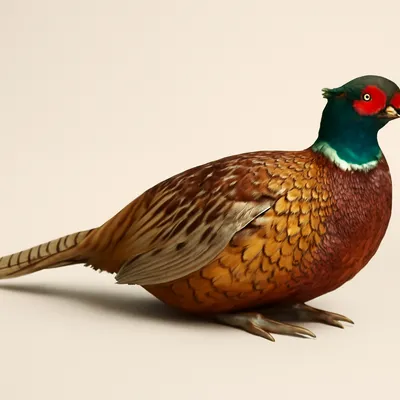
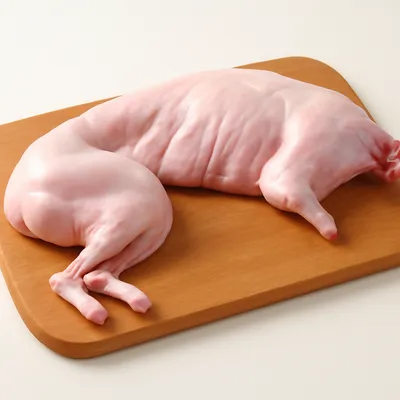
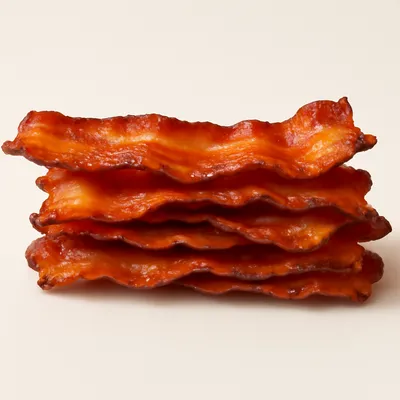
Game pie is one of the oldest centerpieces of English cooking, a raised pie of mixed wild game that dates to the medieval and Tudor great houses where hunting was a noble privilege and venison, pheasant, hare and rabbit were the trophies of the estate. The hot-water-crust pastry, made by melting lard and water into flour, is the technical breakthrough that allows a free-standing, hand-raised case tall enough to hold a large, layered filling and to keep for days without a tin. The filling was traditionally a mix of whatever the day's hunt provided, diced and layered with bacon, juniper, thyme and wine, baked until set, then sealed with a pour of rich stock that gels into the jelly layer as it cools. The jelly both preserved the pie and made it slice cleanly. Mrs Beeton gives several game pie recipes in 1861, and the dish remained the showpiece of the country-house and gentlemen's-club table well into the 20th century. Modern versions use farmed game, but the structure is unchanged.
A firm, slightly biscuity hot-water-crust casing giving way to layers of dark, winey game in a clear jelly that trembles and sets the meat so each slice holds its shape. Eat with a sharp knife and chutney.
Two techniques define the dish. First, the hot-water-crust pastry: lard and water are brought to the boil and poured into strong flour, the hot fat gelatinises the starch so the dough can be moulded warm into a free-standing case around a wooden mould or jar, a feat impossible with cold shortcrust. The case is built tall and thick to hold a heavy filling. Second, the jelly: the layered game filling is only partly submerged in stock before baking, and after baking, more hot seasoned stock is poured through the steam hole to fill every gap; on cooling, the high-collagen stock from the bones sets into a clear jelly that coats and preserves the meat, allowing the pie to be sliced cold into clean layers. The jelly is what distinguishes a game pie from an ordinary meat pie, and a long-simmered bone stock is its source.
Variations
Pork is often layered in to add fat and bind the filling. The Yorkshire 'game pie' tradition sometimes adds hard-boiled eggs in their shells. A raised pork pie uses the same pastry technique with a pork filling.
On the Palate
Where Game Pie sits in the British flavor cloud
Ingredients
Serves 8

How it's made
7 steps · 1 hour
- 18 min
Make hot-water-crust: melt 200g lard with 200ml water and a tsp salt, pour onto 500g strong plain flour and mix to a warm soft dough; keep warm, work while pliable.
Watch outWork the hot-water crust while it's still warm and pliable — let it cool and it cracks instead of moulding into a free-standing case.
- 27 min
Line a 20cm loose-bottomed tin or build freehand up the sides of a buttered mould, pressing the dough to 5mm thick, with a disc cut for the lid.
- 36 min
Layer the filling: 300g diced venison, 300g diced pheasant, 200g rabbit, 150g chopped bacon, seasoned with 1 tsp crushed juniper, thyme, salt and pepper, packing firmly.
- 45 min
Pour in 150ml of a strong gelatinous bone stock; wet the rim, fit the lid, and crimp to seal; make a central steam hole and decorate with pastry leaves.
- 58 min
Glaze with beaten egg and bake at 200 degrees C for 30 minutes, then reduce to 170 degrees C for 1 hour until the pastry is deep golden and the filling set.
- 66 min
Warm 300ml more of the strong stock, pour it slowly through the steam hole until the pie is full to the brim; cool completely, then chill overnight so the jelly sets.
Watch outPour the hot stock through the steam hole until it fills to the brim — under-fill and the jelly sets with hollow gaps inside.
- 75 min
Turn out, slice in wedges, and serve cold with chutney and pickles.
Archive tool suggestions — not reviewed
These legacy suggestions have not been evidence-reviewed and are not presented as required tools.
