A velvety, sweet Tunisian cream of ground sorghum cooked with equal parts milk and water, perfumed with orange-blossom water, and crowned with chamia sesame halva — served warm at the pre-dawn Ramadan sehour meal.
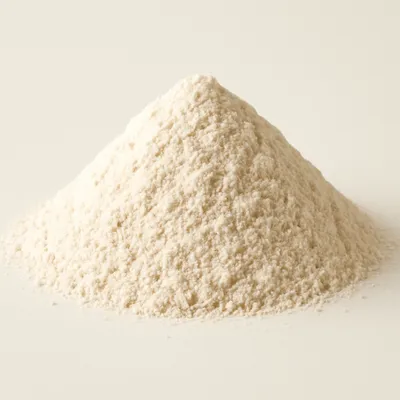




Droo draws on sorghum (droa), one of Tunisia's pre-wheat grains documented in Maghrebi agriculture since antiquity. While semolina dominates Tunisian savoury cooking, sorghum remained the grain of choice for sweet morning preparations in the Sahel and inland regions, traditionally ground by hand between stones. Tunisian recipe records confirm that the dish is specifically tied to the Ramadan s'hour — the pre-dawn meal taken before the fast begins — consumed warm because the grain's complex carbohydrates digest slowly and sustain energy through a day's fasting. Orange-blossom water, an essential perfume in Tunisian pastry, serves as the aromatic bridge between the sorghum's earthiness and the sweet chamia topping.
Warm, porridge-like texture — denser than rice congee, smoother than polenta; the sorghum carries an earthy, faintly nutty base note; chamia adds caramel-sesame crunch at the surface; orange-blossom water perfumes every spoonful.
Sorghum starch gelatinizes at 68–78 °C — a slightly higher range than wheat starch — requiring constant stirring to prevent lumping as granules swell and absorb liquid. Milk proteins (casein micelles and whey proteins) denature around 70–80 °C, contributing a silky body that prevents the graininess formed when sorghum is cooked in water alone. Dissolved sugar forms a dilute syrup coating starch granules and slowing retrogradation. Orange-blossom water is stirred in off the heat to preserve its volatile linalool and geraniol aromatics, which dissipate rapidly above 90 °C.
Variations
Some households blend a portion of barley flour (bsissa mix) with the sorghum for added nuttiness; a richer version uses all milk instead of half water; chamia can be replaced with date paste or honey for a more rustic sehour.
On the Palate
Where Droo sits in the Tunisian flavor cloud
Ingredients
Serves 4How it's made
8 steps · 5 min
- 13 min
Measure 200 g ground sorghum flour and sift to remove any coarse husks.
- 23 min
In a heavy-bottomed pot, combine 500 ml milk and 500 ml water; whisk in 4 tablespoons sugar until dissolved (pot still cold).
- 35 min
Gradually whisk in sorghum flour, sifting to prevent lumps, until a smooth slurry forms.
- 412 min
Place over medium heat and stir constantly with a wooden spoon; do not leave unattended.
- 512 min
Once the mixture reaches about 75 °C and begins to bubble and thicken, reduce to medium-low; continue stirring 10–12 minutes until the cream reaches a pourable porridge consistency.
Watch outStir constantly once it hits about 75°C and starts to thicken — sorghum starch lumps and scorches on the bottom fast, and a smooth silky body depends on never stopping.
- 61 min
Remove from heat; stir in 1 tablespoon orange-blossom water while still hot off the flame.
Watch outStir the orange-blossom water in off the heat — its aroma flashes off above 90°C, so add it once the pot's away from the flame or you'll lose the floral note entirely.
- 72 min
Ladle immediately into cups or bowls.
- 82 min
Top each serving with crushed chamia sesame halva and a pinch of ground sesame; serve warm.
Archive tool suggestions — not reviewed
These legacy suggestions have not been evidence-reviewed and are not presented as required tools.