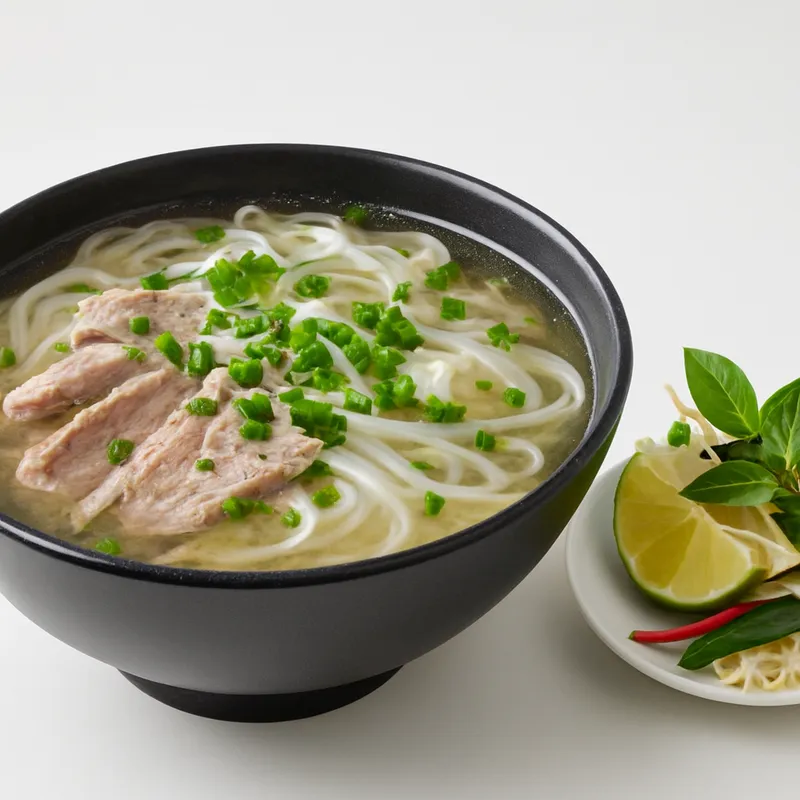
Nước Mắm is crafted by layering small fish, typically anchovies, with sea salt in large wooden barrels. The mixture ferments over several months, during which enzymes and natural bacteria break down the fish, creating a rich, amber liquid with a sharp aroma. A good Nước Mắm is judged by its clarity and deep, reddish-brown hue, indicating a well-aged product. Its flavor is an intense blend of salty and savory, with a hint of sweetness. In dishes like Pho and Bun Cha, Nước Mắm provides an essential depth, transforming the broth and dipping sauces with its complex umami. The moment a cook knows Nước Mắm has hit the right note is when the aroma subtly melds with the other ingredients, enhancing without overpowering, and the dish resonates with an authentic Northern Vietnamese taste.
Where it comes from
In the 11th century, along the coasts of Northern Vietnam, fishermen discovered that fermentation not only preserved fish but also concentrated its flavors into what we now know as Nước Mắm. The process was a natural response to the region's humid climate and abundant fish supply, where salt acted as a preservative, drawing out moisture and intensifying the savory notes of the fish. This alchemy of the sea was a staple long before the advent of refrigeration, providing essential umami to Northern Vietnamese diets. As Vietnam's trade routes expanded, Nước Mắm traveled southward and beyond, adapting to varying local conditions. While the core method stayed true, variations emerged—Southern Vietnam introduced additional sweeteners to balance the saltiness, whereas Thailand developed its own version, nam pla, with a slightly milder profile. Despite these adaptations, Northern Vietnam's Nước Mắm remains distinct for its unadulterated, robust flavor.
In the kitchen
Nước Mắm is the pungent, fermented fish sauce that defines Northern Vietnamese cuisine. 越南北部的菜肴因其浓郁的发酵鱼露而闻名。
Nutrition (per 100g)
Values are AI-estimated, not from a laboratory database