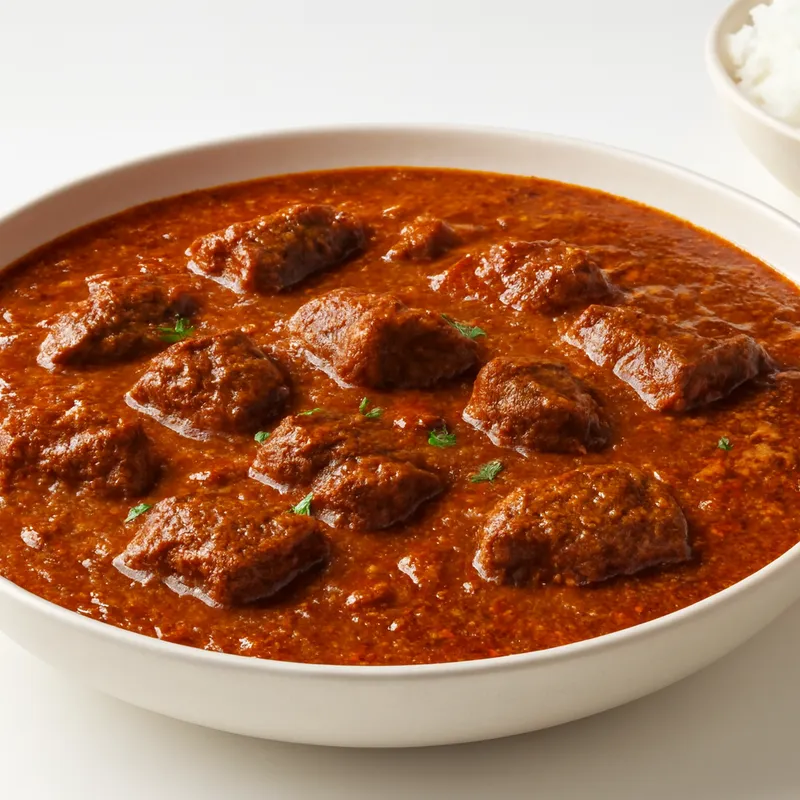
Beef cheek boasts a rich, beefy flavor with an incredibly tender texture when braised to perfection. The aroma is deeply savory, reminiscent of hearty, comforting dishes that warm the soul.
Where it comes from
Once considered a lesser cut, beef cheek has gained popularity in modern cuisine, especially in French and Latin dishes. Its use showcases a shift towards appreciating all parts of the animal.
In the kitchen
Beef cheek is best braised or slow-cooked, allowing it to become melt-in-your-mouth tender. It’s often used in tacos, stews, or served alongside creamy polenta for a luxurious experience.
Across cuisines
Beef cheek is a cut known for its rich, beefy flavor and tender texture when braised. It is often used in slow-cooked dishes where the connective tissue breaks down, resulting in a melt-in-the-mouth experience. Popular in French and Italian cuisines, it appears in dishes like daube and guanciale di manzo.
Nutrition (per 100g)
AI-estimated; model and run unavailable.