The defining dish of Rovato in Franciacorta: a whole cappello del prete cut of beef larded with anchovy fillets and garlic, browned in olive oil, then slowly braised in olive oil for two to three hours. The cooking liquid is thickened with breadcrumbs and grated Grana Padano and finished with capers into a savory sauce served over sliced beef with polenta.
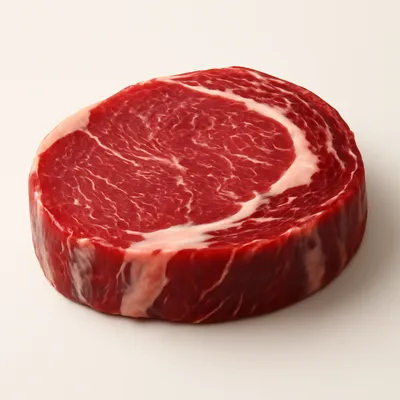




Written references to this recipe date to the second half of the 16th century, when the Rovato noblewoman Veronica Porcellaga (1554-1593), of a family of cattle merchants, is credited in local tradition with recording the pairing of inland olive oil and salted anchovies with beef, ingredients drawn to the town by its weekly Monday cattle market. The dish carries De.Co. (Denominazione Comunale) recognition from Rovato under a formal production standard, safeguarded by the Confraternita del Manzo all'Olio di Rovato founded in 2018.
The beef slices fall into tender layers with the touch of a fork; the sauce is dense, savory, and faintly briny — the anchovy loses all fishiness and becomes a deep umami undertone beneath the fruity olive oil. Polenta absorbs every drop of the sauce.
Olive oil braising operates at lower water activity than water-based braising, concentrating rather than diluting flavors; its fatty acids dissolve fat-soluble aromatic compounds from both the beef and the aromatics. Anchovies supply glutamate and inosinate, which synergize with the beef's natural inosinate for pronounced umami amplification — the fish note vanishes entirely while savory depth multiplies. Over 2-3 hours of gentle simmering, collagen in the cappello del prete — a heavily worked shoulder cut with high connective tissue content — fully hydrolyzes into gelatin, naturally thickening the braising liquid. Added breadcrumbs and Grana Padano complete the thickening via starch gelatinization and protein binding.
Variations
Modern restaurants sometimes substitute brisket or eye-round for cappello del prete. The De.Co. specification requires Franciacorta or Garda extra-virgin olive oil. Inland valley versions add salted capers or crushed dried chili. A sparkling variant deglazes with Franciacorta wine in place of still white.
On the Palate
Where Manzo all'olio di Rovato sits in the Italian flavor cloud
Ingredients
Serves 4

How it's made
7 steps · 20 min
- 115 min
Use a thin boning knife to pierce deep transverse pockets across the beef; stuff each pocket with a rolled anchovy fillet and a thin sliver of garlic.
- 215 min
Dust the beef lightly with flour; sear in a deep heavy pot in olive oil over medium-high heat, turning to brown evenly on all sides.
Watch outPush the anchovy and garlic deep into each pocket — buried in the meat the fish note melts away entirely and just leaves savory depth; left near the surface it stays fishy.
- 310 min
Add roughly chopped onion, carrot, and celery; deglaze with a splash of white wine and allow the alcohol to evaporate fully.
- 4150 min
Pour in enough olive oil to come halfway up the beef; cover tightly and braise over the lowest possible heat for 2 to 2.5 hours.
Watch outKeep it at the barest tremble under a tight lid for the full two-plus hours — a real bubble toughens the meat instead of melting the collagen.
- 510 min
Remove the beef and allow it to rest; strain and reserve the cooking liquid.
- 610 min
Gently reduce the cooking liquid; stir in fine breadcrumbs and grated Grana Padano to thicken; finish with rinsed capers and chopped flat-leaf parsley.
Watch outStir in the crumbs and cheese only until the sauce coats a spoon — push it too far and it turns pasty.
- 710 min
Slice the beef and arrange on a serving platter; spoon the sauce generously over the top and serve with soft polenta or boiled potatoes.
Archive tool suggestions — not reviewed
These legacy suggestions have not been evidence-reviewed and are not presented as required tools.



