The Emilian feast of seven boiled meats — brisket, short rib, capon, tongue, cotechino and zampone — simmered in separate pots and carved tableside from a heated trolley; the broth that results first cooks the tortellini; the six or seven condiments from salsa verde to mostarda are as essential as the meat itself.

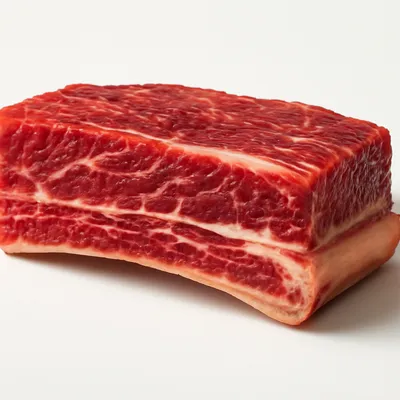


Bollito misto grew from Emilian peasant practice: aged cattle slaughtered in autumn required prolonged cooking to tenderise their collagen-heavy cuts. The festive meal was prepared for weddings, feast days and New Year, always with the same logic — the meats simmered for hours produced the broth that became the tortellini soup served first. The Italian Academy of Cuisine codifies the 'rule of seven' — seven meat cuts, seven 'accessories' (offal and sausages), seven vegetable sides and seven condiments — as the ideal form. The theatrical carrello dei bolliti (heated trolley service) traces its origins to the scalchi, the professional banqueting stewards of the Renaissance Este court in Ferrara, where the ceremonial display of abundance was central to court culture. At the Trattoria Da Bertino on Via delle Lame in Bologna, the carrello has rolled through the dining room without interruption since 1957. The Bolognese Academy of Cuisine deposited a notarised recipe for 'Gran Bollito alla Bolognese' at the Bologna Chamber of Commerce in 2006.
A plate of bollito presents with quiet abundance: each meat has its own grain and depth — the capon falls apart in shreds while the tongue is silky-firm; the cotechino, sliced last, lets its gelatinous fat seep across the plate. A spoonful of salsa verde, applied over the meat, cuts through the fat with herbal acid sharpness and anchovy salt, completing the balance.
The science of bollito rests on collagen hydrolysis. Collagen-rich cuts — brisket, short rib, tongue, cotechino rind — contain type I collagen that begins converting to gelatin at around 70 °C; maximum conversion requires maintaining 75–80 °C for 3–4 hours. The gentle simmer, never a rolling boil, prevents muscle fibres from seizing due to excessive protein denaturation at high heat. The cotechino must be cooked in a separate pot because its spices and fat would cloud and overpower the main broth. The gelatin released during cooking suspends emulsified fat droplets in the broth, producing the characteristic slightly opalescent golden stock prized for tortellini. Acids in the condiments — the capers in salsa verde, the vinegar in mostarda — cleave the gelatin's mouth-coating richness and provide palate contrast.
Variations
Piedmontese version: seven specific beef cuts plus seven accessories, served with pearà (Veronese bread-crumb and bone-marrow sauce), horseradish cream (cren) and grape-must mustard (cugnà). Ferrara variation: salama da sugo replaces or supplements the cotechino. Modern 'bollito non bollito': sous-vide method at 75 °C for 20–36 hours per cut, retaining more moisture while fully converting collagen. New Year service: lentils and zampone are always added to the carrello.
On the Palate
Where Bollito misto (carrello dei bolliti) sits in the Italian flavor cloud
Ingredients
Serves 8


How it's made
8 steps · 1 hour
- 120 min
Bring a very large pot of cold water to a boil with a halved onion studded with cloves, a roughly chopped carrot and celery stalk, two bay leaves and a handful of black peppercorns; salt generously.
- 225 min
Add the beef brisket and short rib to the boiling water; skim the grey foam that rises continuously for the first 20 minutes; reduce to a steady, low simmer.
Watch outSkim the grey foam off patiently for the first 20 minutes — that scum is what clouds the broth; then drop to the barest simmer so the meat stays tender.
- 3210 min
After 1 hour, add the capon; after a further 45 minutes add the veal tongue; continue simmering for 2–2.5 more hours, skimming occasionally, until all meats are very tender but hold their shape.
- 4240 min
In a separate pot, place the cotechino or zampone in cold water; bring to a bare simmer of 85 °C; cook for 3–4 hours without letting the water boil hard; run this pot concurrently with the main one.
- 520 min
While the meats simmer, pound flat-leaf parsley, anchovy fillets, salted capers, a hard-boiled egg yolk, a clove of garlic and a pinch of dried chilli in a mortar; work in olive oil gradually until a coarse, vivid green sauce forms; adjust with a squeeze of lemon.
- 630 min
Remove each meat as it reaches full tenderness — a skewer should meet no resistance; peel the tongue immediately while still warm and trim; keep all meats in a deep pan moistened with a ladleful of broth over the lowest possible heat.
Watch outPull each cut the instant a skewer slides in with no resistance — past that point the lean meats dry and shred instead of slicing clean.
- 710 min
Strain the cooking broth through a fine sieve into a clean pot; taste and correct salt; this is the broth for tortellini or passatelli — serve it first in small cups if desired.
- 810 min
Slice each meat across the grain; arrange on a warmed board or wide platter; bring to the table alongside salsa verde, salsa rossa, mostarda di Cremona and giardiniera in separate bowls.
Archive tool suggestions — not reviewed
These legacy suggestions have not been evidence-reviewed and are not presented as required tools.



