Soft, flourless almond macaroons from Basso Monferrato whose bittersweet depth comes from armelline (apricot kernels) blended with sweet almonds — individually wrapped in fringed tissue paper to seal in moisture.
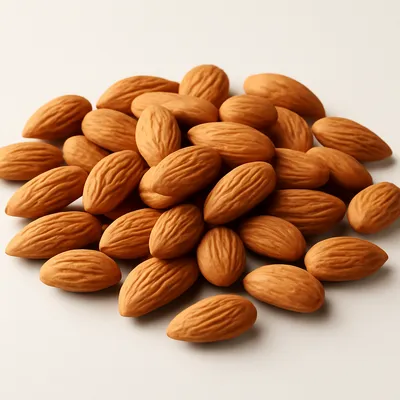


A late-18th-century tradition attributed to Francesco Moriondo, a steward of the House of Savoy said to have brought a recipe learned from a Sicilian pastry cook back to his home village of Mombaruzzo (Asti). The Moriondo family has produced the biscuits continuously since; the product is listed in Italy's Traditional Agri-food Product (PAT) registry for Basso Monferrato.
A slight crisp skin yields to a dense, moist interior — almost fudge-like — perfumed with bitter almond and followed by long sweet-floral warmth; far more yielding than the hard Saronno type.
Armelline (apricot kernels) retain benzaldehyde volatiles after baking — responsible for the characteristic bitter-almond perfume — while amygdalin enzymes are denatured by heat, eliminating toxicity. Sweet almonds supply oleic acid: fat molecules coat protein particles during grinding, acting as a built-in tenderizer. Egg-white proteins denature and coagulate at 160°C, trapping nut oils into a firm exterior skin. Without flour, the crumb lacks gluten scaffolding; retained nut oil keeps the interior dense and moist, necessitating individual paper wrapping to prevent post-cooling surface hardening.
Variations
Lemon zest added for brightness in some Asti versions; the sweet-almond to armelline ratio is adjusted to control bitterness; some makers sandwich pairs with raspberry jam; crumbled amaretti serve as a base layer in Piedmontese torte and semifreddo.
On the Palate
Where Amaretti di Mombaruzzo sits in the Italian flavor cloud
Ingredients
Serves 6How it's made
7 steps · 15 min
- 110 min
Combine sweet almonds and armelline (apricot kernels) in a food processor; pulse to a fine flour
- 25 min
Stir almond flour together with granulated sugar until evenly blended
- 310 min
Add egg whites gradually, folding with a spatula until a soft, sticky paste forms
Watch outFold the egg whites in gradually just until a soft, sticky paste forms — without flour there's no gluten to fall back on, so overworking or too much white makes them spread flat instead of doming.
- 430 min
Cover and refrigerate for 30 minutes to let the almond oils and sugar meld
- 510 min
Roll into walnut-sized balls; place on parchment-lined baking sheets with generous spacing
- 622 min
Bake at 160°C for 18–22 minutes until lightly golden on the surface but still soft when pressed
Watch outBake at 160°C eighteen to twenty-two minutes until lightly golden on top but still soft when pressed — the retained nut oil keeps the middle moist; bake them dry and they turn hard.
- 715 min
Cool completely on a rack; wrap each piece individually in fringed tissue paper to maintain moisture
Watch outWrap each one in tissue paper the moment it's cool — the paper seals in moisture so the surface doesn't harden after cooling.
Archive tool suggestions — not reviewed
These legacy suggestions have not been evidence-reviewed and are not presented as required tools.


