Baicoli are Venice's signature twice-baked wafer biscuits — paper-thin, bone-dry ovals shaped to recall the baìcolo, the small grey mullet of the lagoon. Made from a lean leavened dough of flour, butter, egg white and sugar, they undergo two rounds of fermentation and two oven sessions: first baked as a log, then sliced to 2 mm and toasted until all moisture is gone. The result keeps for months in a tin and exists to be dipped — in hot chocolate, zabaione or Marsala — not eaten alone.


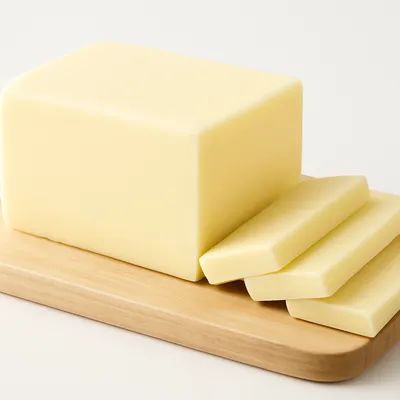


Baicoli are the refined descendants of Venice's 'biscottare' tradition — double-baking bread to create durable provisions for the Serenissima's merchant and naval fleets. The scaleteri, Venice's guild of pastry bakers, progressively lightened the sailor's hard-tack into a salon biscuit through the 18th century. In 1829 linguist Giuseppe Boerio defined 'baicolo' in his Venetian dialect dictionary as 'a sugared, spongy, twice-baked dough soaked in coffee or similar beverages', confirming the biscuit's established place in Venetian social life. In the early 20th century the Colussi family industrialised production — Angelo Colussi opened his first Venice factory in 1911 — popularising the decorated gift tins that fixed the product's modern commercial image. The name derives from the Venetian fishermen's term for the small grey mullet whose slender shape the biscuit mimics. Recognised as a Veneto PAT traditional agrifood product.
Baicoli shatter at the first touch, dissolving into a fine crumb with a whisper of butter and mild sweetness — deliberately restrained on their own. Dunked for three seconds in thick hot chocolate or zabaione, the outer layer softens instantly while the interior retains a ghost of crunch; the sweet liquid floods through and the two merge into something the biscuit alone could never achieve.
The first bake sets the leavened dough's open crumb, trapping CO₂ pockets created during fermentation and fixing the gluten network. The cooled loaf firms and dries uniformly, making it possible to slice 2 mm thin. The second low-temperature bake (around 140°C) drives off all residual moisture, pushing water activity below 0.3 — low enough to suppress microbial growth for months. Maillard reactions proceed gently on the exposed surfaces, producing pale gold colour and a light nutty fragrance without darkening. The extreme thinness of each slice ensures rapid, even heat penetration so no part remains soft or chewy.
Variations
Traditional accompaniments are zabaione, hot chocolate, Marsala or other sweet wine — the biscuit is a vehicle, not a destination. Some Venetian artisan bakeries add a fine strip of lemon or orange zest to the dough for fragrance. Home bakers occasionally adjust sugar levels upward, though the lean formula is intentional. Factory-produced versions differ from hand-crafted ones in thickness consistency and crispness; the hand-sliced artisan product is markedly more irregular and fragile.
On the Palate
Where Baicoli sits in the Italian flavor cloud
Ingredients
Serves 6How it's made
7 steps · 30 min
- 110 min
Combine flour, sugar and salt in a large bowl; dissolve yeast in 120 ml warm water and add to the flour together with softened butter and lightly beaten egg white; knead until the dough is smooth and springy, about 10 minutes.
- 260 min
Shape the dough into a cylinder about 5 cm in diameter; place on a lightly floured baking sheet; cover with a clean cloth and proof in a warm place until slightly risen, about 60 minutes.
- 320 min
Bake the loaf at 180°C for 20 minutes until the surface is dry and pale golden; remove from the oven and cool completely on a wire rack.
Watch outFirst bake: pull the loaf when the surface is dry and just pale gold — it should stay light, not brown, so it firms without over-colouring.
- 4120 min
Rest the baked loaf uncovered at room temperature for at least 2 hours until completely firm throughout — this makes clean, paper-thin slicing possible.
Watch outRest the loaf uncovered until it's firm all the way through — only a fully cooled, set loaf slices paper-thin without crumbling.
- 515 min
Using a thin, sharp knife, cut the loaf across into rounds 2 mm thick; arrange in a single layer on parchment-lined baking sheets without overlapping.
- 620 min
Bake at 140°C for 15–20 minutes, turning the slices once halfway through, until every slice is completely dry, pale gold, and crisp all the way through.
Watch outSecond bake low and slow until each slice is bone-dry and pale gold right through — any bendy centre means it won't stay crisp.
- 710 min
Cool fully on a wire rack before storing; seal airtight in a decorative tin to preserve crispness for up to several weeks.
Archive tool suggestions — not reviewed
These legacy suggestions have not been evidence-reviewed and are not presented as required tools.


