The emblematic fresh pasta of Viterbo and the Tuscia: thick hand-rolled strands of flour and water only, shaped by palm pressure until each resembles a fat earthworm. Dressed alla viterbese with pork sausage slowly simmered in red wine and tomato.





Lombrichelli belong to the central Italian family of egg-free hand-rolled pastas—relatives of Tuscan pici and Umbrian umbricelli. Popular tradition traces the form to Etruscan times: a banquet fresco in the Tomb of the Leopards at Tarquinia (early 5th century BCE) shows servants bearing food, a scene gastronomic writers link to an ancestor of hand-rolled pasta—though the identification is culinary lore rather than established archaeology. Across the Tuscia, the same pasta carries dozens of village names—'Culitonni' in Vignanello, 'Ghighi' in Bagnaia, 'Scifulati' in Bomarzo, 'Pisciarelli' in Bagnoregio—fixing in Viterbo as lombrichelli, named for the earthworm (lombrico) the strands resemble. The volcanic fields around Viterbo yield mineral-rich durum wheat; the soft spring water of Lake Bolsena gives the dough exceptional elasticity. Recipe transmission was domestic women's work: homemakers taught girls to roll while waiting for men to return from the fields.
A muscular, satisfying chew from thick, hand-rolled strands whose rough surface captures every drop of sauce; the sausage ragù brings pork fat richness, tannic depth from the wine and a long slow sweetness from the tomato simmer.
Without eggs, gluten forms purely through mechanical kneading: extended hand-rolling aligns gliadin and glutenin proteins lengthwise, developing tensile strength comparable to enriched egg pasta. The rough hand-rolled surface carries microscopic grooves; during boiling, released starch creates a cloudy, viscous cooking water that acts as a natural emulsifier when pasta and sauce are tossed together, binding fat and tomato without cream. Maillard browning of sausage proteins in the hot pan produces heterocyclic flavour compounds that persist through the subsequent 20-minute simmer, forming the ragù's backbone.
Variations
Autumn and winter game ragù (hare or wild boar marinated in red wine and juniper, long-braised); spring artichoke and mint; sugo finto (meatless sauce of olive oil, tomato, celery and carrot); a sweet holiday variant dressed with ricotta, sugar and cinnamon, likely of older origin.
On the Palate
Where Lombrichelli alla Viterbese sits in the Italian flavor cloud
Ingredients
Serves 4

How it's made
8 steps · 1 hour 10 min
- 110 min
Mound the flour on a board, make a well in the centre, pour in salted water gradually and work into a firm, smooth dough; knead by hand for 10 minutes.
Watch outKnead the eggless dough a full 10 minutes until firm and smooth — without eggs, only this hand-work builds the gluten that keeps the strands from breaking.
- 220 min
Cover the dough with a cloth and rest for 20 minutes.
- 330 min
Pinch marble-sized pieces of dough and roll each against the board with both palms, working back and forth to form irregular strands 3-4 mm thick and about 15 cm long.
- 4120 min
Spread the lombrichelli on a cloth and leave to dry for at least 2 hours.
- 525 min
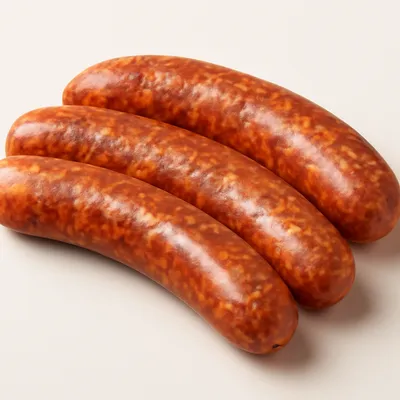
Heat olive oil in a wide pan over medium-high heat; add sliced sausage and brown well; pour in red wine and reduce by half, then add crushed tomatoes, a bay leaf and dried chili; simmer 20 minutes.
- 612 min
Cook lombrichelli in vigorously boiling, heavily salted water for 10-12 minutes until just tender with good bite; reserve a cup of starchy cooking water before draining.
Watch outPull the pasta while it still has real bite and save a cup of the starchy water — that cloudy water is what emulsifies the sauce onto the noodles.
- 73 min
Drain pasta and toss into the sauce over medium heat, adding cooking water a splash at a time to emulsify.
- 81 min
Serve immediately with a generous grating of pecorino romano.
Archive tool suggestions — not reviewed
These legacy suggestions have not been evidence-reviewed and are not presented as required tools.


