
A soup of Romagna and eastern Emilia in which short, thick, soft strands made from breadcrumbs, grated Parmigiano-Reggiano and egg are cooked in a good meat broth. The dough — bound only by egg, with no flour beyond the bread, and scented with nutmeg and lemon zest — is pressed through a perforated die so it drops in stubby worms straight into simmering capon or beef broth, where it sets and rises in minutes. It is served in its broth as a primo, the strands tender and the broth clouded faintly with cheese.


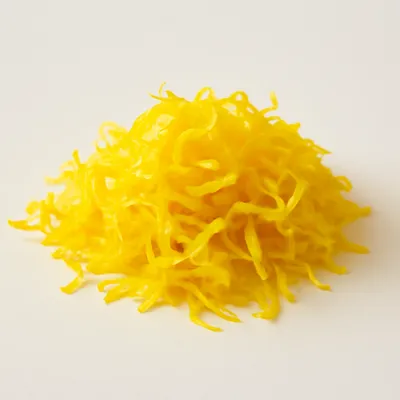
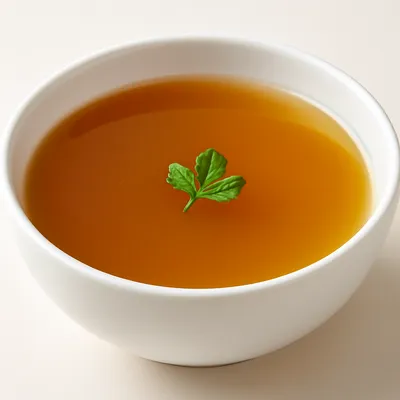
Passatelli is a dish of the cucina povera of Romagna and the bordering Emilian provinces, built to turn the household's stale bread and the dry ends of a Parmigiano wheel into a festive soup; because cheese was costly, it was long made chiefly for high days — Christmas, Easter, weddings and christenings. The name comes from passare, «to pass through», after the perforated iron (the ferro or stampo da passatelli) the dough is forced through. Two recipes for «minestra di passatelli» appear in Pellegrino Artusi's 1891 La scienza in cucina e l'arte di mangiar bene; the dish is often considered a relative of the lighter stracciatella egg-soups of central Italy and the Marche.
The strands are soft and porous, somewhere between a dumpling and a noodle — they drink up the broth and almost dissolve toward the spoon, never al dente, never firm. The flavour is all savoury depth: sweet meat broth, the salt and umami of aged Parmigiano, a warm lift of nutmeg and a clean note of lemon zest cutting the richness. Good passatelli holds together yet yields completely; too little cheese or egg and the strands disintegrate into mush in the pot, too much breadcrumb and they turn dense and pasty. It must be eaten hot, straight from the broth.
Passatelli is bound by egg and cheese, not by flour gluten. The breadcrumbs give body and absorb liquid, the grated Parmigiano supplies fat, salt and protein, and the egg is the true glue: on contact with hot broth its proteins coagulate and lock the soft paste into a strand that holds its shape. That is why the broth is kept at a bare simmer, never a hard boil — a rolling boil would tear the fragile strands apart before the egg has set. The mixture is dense and barely cohesive on purpose, just firm enough to push through the die in short lengths; the moment they firm and float, they are done, after only a couple of minutes. A clear, well-flavoured broth matters because the strands carry little seasoning of their own beyond cheese and nutmeg.
Variations
Artusi gives the broth version and a richer one, and even a passatelli made with semolina; the classic seasoning is debated, some cooks using lemon zest, others nutmeg, many both. Older and richer recipes work beef bone marrow into the paste for added fat. Beyond the broth, the modern passatelli asciutti are served drained and dressed with a sauce — ragù, mushrooms, or seafood on the Adriatic coast — instead of in soup. The cross-border kinship with the Marche means the dish is claimed by both Romagna and the northern Marche, with small differences in cheese and crumb ratios from family to family.
On the Palate
Where Passatelli in Brodo sits in the Italian flavor cloud
Ingredients
Serves 4How it's made
6 steps · 30 min active + 10 min waiting
- 110 min
Bring a good capon or beef broth to a gentle simmer and check its seasoning.
- 28 min
Mix fine dry breadcrumbs with an equal weight of grated Parmigiano-Reggiano, a grating of nutmeg and a little lemon zest.
- 38 min
Work in the eggs to form a stiff, dense, barely cohesive paste, and let it rest a few minutes.
Watch outWork the mix to a stiff, barely-cohesive paste — the egg is the only glue here, so it needs to be dense enough to hold a strand when pushed through.
- 46 min
Press the paste through the perforated passatelli die (or a wide-holed potato ricer) so short thick strands drop directly into the simmering broth.
- 53 min
Cook at a bare simmer for two to three minutes until the strands firm and rise to the surface.
Watch outKeep the broth at a bare simmer, never a hard boil — a rolling boil tears the fragile strands apart before the egg sets them.
- 62 min
Ladle the passatelli and their broth into warm bowls and serve at once with extra grated Parmigiano.
Archive tool suggestions — not reviewed
These legacy suggestions have not been evidence-reviewed and are not presented as required tools.


