
A Roman soup of egg beaten with grated Parmigiano or Grana, often a little semolina, nutmeg and lemon zest, then drizzled into simmering meat broth while stirring so it sets into fine shreds — the «stracci» (rags) that name the dish. It is a clear, light soup, the egg cooking on contact into soft threads suspended in the broth. Quick and frugal, it was a way of enriching leftover broth, and is still served as a first course, especially at holidays. It is unrelated to the soft Apulian stracciatella cheese or to stracciatella gelato, which share only the «shredded» name.



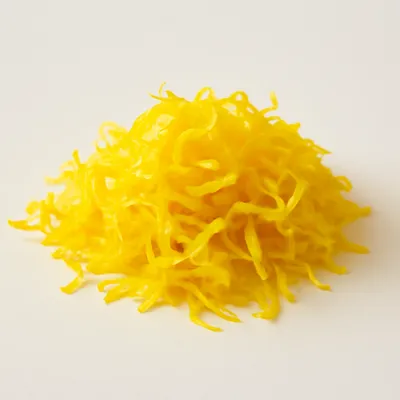
Stracciatella belongs to the home cooking of Rome and Lazio, where it was a thrifty way to turn leftover chicken or beef broth into a nourishing soup by stirring in beaten egg and cheese; it spread across central Italy and is also traditional in the Marche, Abruzzo and Emilia-Romagna. The name comes from «stracciare», to tear or shred, after the ragged threads of cooked egg. Soups of egg beaten into broth are old in Italy — a spiced version called «zanzarelli» was already recorded in the 15th-century cookbook of Maestro Martino da Como — but the modern Roman recipe with Parmigiano and nutmeg is not tied to a single documented date or author.
A clear, golden broth carrying soft, feathery curds of egg and cheese — tender little threads, not a smooth custard and not tough scrambled lumps. The taste is gently savoury and rounded: the meat stock, the salty Parmigiano, a warm trace of nutmeg and a lift of lemon zest. It is light and comforting, eaten hot. Stirred well, the egg stays in delicate rags; poured in all at once or into broth too cool, it clumps into coarse pieces or clouds the soup.
Egg proteins begin to set from about 60°C and firm fully by around 70°C, so the trick is to add the beaten egg slowly into broth that is simmering, not boiling, while stirring: the thin stream hits the hot liquid and coagulates instantly into fine threads instead of one solid mass. The grated cheese and a little semolina thicken the mixture and give the curds more body, so they hold as defined «rags» rather than dissolving into a cloud. Constant gentle stirring keeps the shreds small and separate; a hard boil or a single pour produces coarse lumps and a muddy broth.
Variations
Recipes differ on whether to include semolina (the Marche version typically does, for a fuller texture), lemon zest or a little chopped parsley, and some bind the egg with breadcrumb instead. The broth may be chicken, beef or a mix. Egg-and-broth soups recur across Italy and the Mediterranean — the central-Italian «stracciatella» is the same idea everywhere, while Roman cooks keep it simplest with broth, egg, Parmigiano and nutmeg. The dish should not be confused with two unrelated foods of the same name: the creamy Apulian stracciatella cheese (the filling of burrata) and stracciatella gelato (vanilla shot with chocolate shards), a flavour created in 1961.
On the Palate
Where Stracciatella alla Romana sits in the Italian flavor cloud
Ingredients
Serves 4
How it's made
6 steps · 15 min active + 5 min waiting
- 18 min
Bring a good chicken or beef broth to a gentle simmer in a pot.
- 24 min
In a bowl, beat the eggs with the grated Parmigiano, a little semolina, grated nutmeg, lemon zest and a pinch of salt.
- 32 min
Whisk a ladle of the hot broth into the egg mixture to loosen and warm it.
- 42 min
Stirring the simmering broth steadily with a whisk or fork, pour in the egg mixture in a thin, slow stream.
Watch outPour the egg in a thin, slow stream while stirring the simmering (not boiling) broth — a single dump or a hard boil gives coarse lumps and a muddy soup.
- 52 min
Keep stirring for a minute or two as the egg sets into fine shreds.
Watch outKeep stirring a minute or two as the egg sets into fine threads — that steady stir is what keeps the shreds small and separate.
- 62 min
Taste and adjust the salt, then serve at once in warm bowls, with extra grated cheese if you like.
Archive tool suggestions — not reviewed
These legacy suggestions have not been evidence-reviewed and are not presented as required tools.


