The Christmas Day soup of Abruzzo, built in stages over a day or two: cardoons, the thistle cousin of the artichoke, trimmed, blanched, and simmered until their bitterness softens, then bathed in a long-cooked hen or turkey broth with tiny hand-rolled veal meatballs (pallottine) and a stracciatella of beaten egg and grated cheese that sets into soft rags. In the Chietino around Lanciano and across the Teramano, a table without cardone is said not to be Christmas at all.
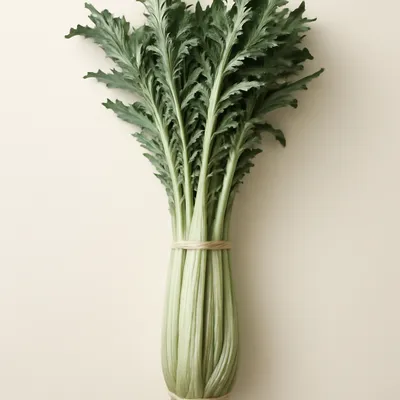


Il Cardone belongs to the festive kitchens of two Abruzzese heartlands, the Frentano and Chietino around Lanciano and the Teramano to the north, where it opens Christmas lunch as the primo. Its base is the humble cardoon, a cultivated thistle in the artichoke family long grown in Abruzzo's kitchen gardens and valued for the way its bitterness yields to patient boiling. The soup layers three separate preparations that give it its reputation for labour: a rich meat broth simmered for hours (hen or turkey in the Chietino, sometimes beef or capon in the Teramano), pallottine, meatballs no larger than a chickpea rolled by hand in the hundreds, and a stracciatella of egg and grated Parmigiano or pecorino stirred in at the finish, a technique the region shares with the broths of Rome, Romagna and Le Marche. Its very abundance carried meaning: a full pot of cardone was read as an omen of the coming year's prosperity, and the labour it demanded marked the day as exceptional. It is listed among Abruzzo's traditional agri-food products.
Spooned up, the broth is deep and golden, savoury with long-simmered poultry and rounded by melted cheese. The cardoon pieces are tender and faintly bitter, closer to a mild celery-artichoke than to anything sharp, giving the soup its backbone. The pallottine are soft and yielding, small enough to catch several on a spoon, and the egg sets into delicate, tender curds that thicken the broth without weighing it down.
Cardoons carry water-soluble bitter compounds (sesquiterpene lactones such as cynaropicrin) and tough fibrous ribs; blanching and long simmering leach much of the bitterness into the cooking water while hydrolysing pectin and softening the cellulose, turning the stalks tender. Cut surfaces brown fast because the plant's polyphenol oxidase reacts with air, so the trimmed stalks are held in acidulated lemon water to slow oxidation before cooking. The broth's body comes from collagen in poultry bones and connective tissue converting to gelatin over hours of gentle simmering, which also extracts glutamates for savouriness. The stracciatella works by egg-drop coagulation: beaten egg mixed with grated cheese is stirred into broth held just below a boil (around 85–90 ℃), where the egg proteins set on contact into fine soft rags rather than a solid mass, while the cheese's fat and glutamate deepen the broth.
Variations
The broth shifts by zone: hen or turkey in the Chietino and Frentano, with beef or capon added in the Teramano for a heavier base. The finishing cheese may be Parmigiano or a local pecorino, and some cooks fold in fine strands of home-made pasta or escarole alongside the cardoons. The pallottine are usually veal, though mixed beef-and-pork versions are common; a few households fry them lightly before adding them to the pot for extra depth. Where the plain cardoon is scarce, the closely related Abruzzese 'gobbo' cardoon is used interchangeably.
On the Palate
Where Cardone sits in the Italian flavor cloud
Ingredients
Serves 8


How it's made
8 steps · 2 hours
- 115 min
Trim the cardoons: strip the tough outer ribs and strings, cut into 5–6 cm pieces, and drop them into water acidulated with lemon to stop browning.
Watch outDrop the trimmed cardoons straight into lemon water — the cut surfaces brown within minutes once they hit the air.
- 225 min
Blanch the cardoons in salted boiling water for 20–30 minutes until a knife passes through easily; drain and discard the bitter cooking water.
Watch outBlanch until a knife slides through easily, then throw the water out — that cloudy cooking water carries off the cardoons' bitterness.
- 3150 min
Make the broth: simmer a hen or turkey with aromatics gently for 2–3 hours; skim, strain, and season lightly with salt.
- 420 min
Roll the pallottine: mix ground veal with egg, grated cheese, breadcrumbs, salt, and a little nutmeg; roll into chickpea-sized meatballs.
- 510 min
Cook the pallottine directly in the simmering broth for 8–10 minutes until firm and cooked through.
- 612 min
Add the blanched cardoons to the broth and simmer together 10–15 minutes so they take on the broth's flavour.
- 75 min
Beat the eggs with grated Parmigiano or pecorino; with the broth held just below a boil, stir the egg mixture in slowly to form soft rags.
Watch outHold the broth just below a boil and drizzle the egg in slowly to form soft rags — at a rolling boil it seizes into hard lumps.
- 83 min
Rest off the heat for a minute, adjust the salt, and serve hot as the Christmas primo.
Archive tool suggestions — not reviewed
These legacy suggestions have not been evidence-reviewed and are not presented as required tools.



