
Su filindeu, "the threads of God" in the Sardo of Nuoro, is among the rarest pastas in the world: a hand-pulled angel-hair of durum semolina, water and salt, finer than ordinary capelli d'angelo, served in a hot sheep (mutton) broth and finished with fresh pecorino sardo that melts into soft strings. The dough is repeatedly stretched and doubled until a single piece divides into 256 hair-thin threads (roughly 400 microns across), which are laid in three crisscrossed layers on a round frame and sun-dried into a gauzy disc, then broken into the bowl. It is the food of the San Francesco pilgrimage to Lula, in the Barbagia, where for centuries pilgrims have eaten it on the feast of Saint Francis. Slow Food lists it on the Ark of Taste and runs a Presidium to keep it from vanishing, since it survives in the hands of only a few makers, the Abraini women of Nuoro foremost among them. No machine has managed to reproduce it; the work goes entirely by feel.


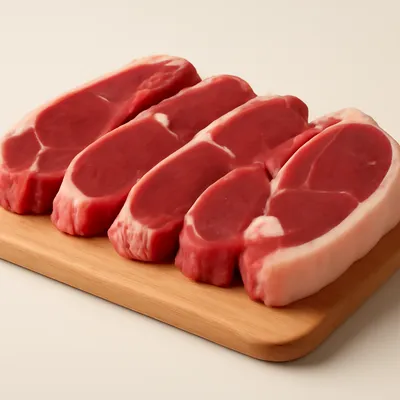

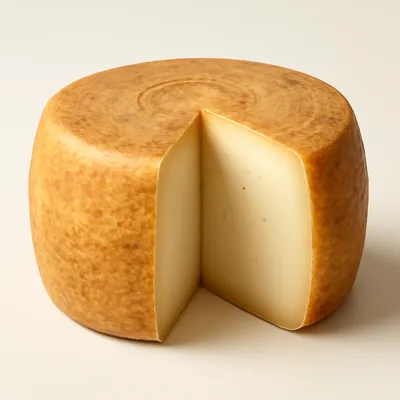
Su filindeu belongs to Nuoro and the surrounding Barbagia in central Sardinia, where it is tied to the cult of Saint Francis at the sanctuary of Lula. By tradition a 17th-century Nuorese accused of banditry built a small church there as an ex-voto after being cleared, and on the nights of 1 May and 4 October pilgrims have since walked some 30 kilometres overnight from Nuoro to Lula, where the priors serve them the filindeu in mutton broth. The pasta is documented as a Nuorese speciality and is recorded by Slow Food, which lists it on its Ark of Taste and maintains a Presidium for it as the rarest and most endangered of all pastas; among the few who still make it, Paola Abraini and the women of her family in Nuoro are the best known, a recipe said to have stayed in the family for some 300 years. The claim sometimes repeated that "only three women in the world" can make it is romanticised, but the circle of makers is genuinely tiny, and an attempt by the pasta firm Barilla to build a machine that could reproduce the threads failed. The name is read as filu / fili "de Deus", the threads of God, after the fine gauze the dried sheets resemble.
In the bowl the threads turn soft and silky, almost dissolving, with a faint chew where the layers were thickest, and they carry the broth rather than sit apart from it. The mutton stock is deep, fatty and gently gamey, just short of greasy, with a savoury weight that coats the mouth. Over the top the fresh pecorino sardo turns molten and pulls into fine elastic strings, lending a milky, lightly sour-salty tang that cuts the richness of the sheep. It eats as one warm, comforting whole — thread, broth and melted cheese — rather than as pasta and soup kept separate.
Everything turns on gluten. Semolina is high in protein, and instead of rolling, the maker develops the dough by stretching and doubling it again and again, aligning the gluten strands lengthwise so the dough can be drawn out without snapping; salt water is worked in at intervals to tighten and strengthen the network, plain water to relax and hydrate it, and the cook judges the elasticity entirely by feel. Each fold halves the thickness while doubling the count, so after about eight rounds one piece becomes 256 threads near 400 microns wide. Laid in three crossing layers and dried, the threads set into a stiff lattice; the same surface starch and the very fine gauge let them cook through in seconds in the broth, softening fast and thickening it slightly. The broth itself relies on collagen from the sheep's bones and connective tissue dissolving into gelatin over a long simmer, giving body and a clinging mouthfeel. The cheese is the last lever: a young, moist pecorino still holds enough acidity and moisture that, when heated, its casein protein mesh loosens as calcium is freed, letting the curd flow and stretch into strings instead of seizing into rubbery clumps the way an aged, drier cheese would.
Variations
The dish is fixed by ritual more than by recipe, so variation is narrow. The broth is classically mutton or sheep, though some cooks lighten it or use a mixed meat stock, and the cheese is always a fresh Sardinian pecorino, sometimes the soft peretta or casu axedu rather than a grating wheel, chosen precisely because young cheese melts to strings. Outside the festival the pasta is occasionally served drier, dressed only with grated pecorino, or treated as a fine soup noodle in other broths. A separate, unrelated family of thin Sardinian pastas — findeus and similar fregola-adjacent or vermicelli-style threads — shares the root of the name but not the woven-and-dried lattice, which is what makes su filindeu itself singular and so hard to reproduce.
On the Palate
Where Su Filindeu sits in the Italian flavor cloud
Ingredients
Serves 4How it's made
7 steps · 2 hours 30 min active + 1 hour 30 min waiting
- 190 min
Make the broth ahead: simmer mutton or sheep on the bone with an onion, gently and for a long time, skimming the foam, until the stock is rich and savoury and the collagen has melted into it; strain and keep it hot. Season lightly with salt.
- 230 min
Make the dough: work durum semolina with water and a little salt into a firm, smooth, very elastic dough. Knead it well, then keep stretching and folding it on itself, dipping the fingers into salt water to firm the dough and into plain water to soften it, judging the elasticity by feel rather than sight. This stage takes patience and practice.
Watch outDevelop the dough by stretching and folding, judging the elasticity by feel — dip fingers in salt water to firm it, plain water to relax it; it's ready when it draws out thin without snapping.
- 330 min
Pull the threads: take a small piece and stretch it, then double it back on itself and stretch again, halving the thickness each time. Repeat for about eight rounds until the single piece has divided into hundreds of hair-thin strands, near 400 microns across.
Watch outHalve the thickness with each stretch-and-double, about eight rounds, down to hair-thin strands — pull too fast or too hard at any round and the threads snap short of the count.
- 420 min
Lay the lattice: drape the strands across a round frame or flat tray, then cross a second and a third layer over the first at angles so they bond into a thin, even, gauze-like sheet. Set it in the sun (or a warm, airy place) until completely dry and stiff.
- 53 min
To serve, bring the mutton broth to a brisk simmer. Break the dried filindeu sheet into rough pieces and drop them into the broth.
- 62 min
Cook only briefly: the fine threads soften and cook through in a minute or two and lightly thicken the broth. Do not overcook.
Watch outDrop the dried sheet into the broth and cook only a minute or two — the fine threads soften almost at once and lightly thicken the broth; leave them longer and they bloat to paste.
- 73 min
Ladle the filindeu and its broth into hot bowls and scatter plenty of fresh grated pecorino sardo over each. Stir gently so the young cheese melts into soft strings through the hot soup, and serve at once.
Archive tool suggestions — not reviewed
These legacy suggestions have not been evidence-reviewed and are not presented as required tools.


