Mandorlato di Cologna Veneta is a snow-white, tooth-crackingly hard Christmas confection from Cologna Veneta in the province of Verona, made from just four ingredients: almonds, honey, sugar and egg white. After eight or more hours of slow-cooked reduction, the mixture is pressed between thin wafer sheets and left to set into its characteristic glassy brittleness. Unlike Cremona and Benevento torrone — which blends almonds with hazelnuts — the Cologna product uses whole almonds exclusively, a defining constraint that sets it apart. Recognised as a Veneto PAT traditional agrifood product.
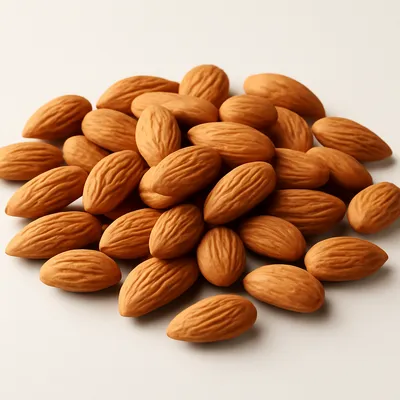



Cologna Veneta entered the Venetian Republic in 1406 and remained under the Serenissima until 1797; local fair records from this period attest to almond sweet trading in the area. The earliest written reference to 'mandorlato' appears in the work of the Venetian playwright Lodovico Dolce in 1540. By 1564 a Vicentine nobleman's account book recorded the purchase of 'four boxes of mandolàto', and an 1778 letter praised its celebrated extreme hardness. Modern standardisation came in the 19th century through two local figures: apothecary Antonio Finco developed a refined recipe that became widely sought-after across the region, and entrepreneur Italo Marani established industrial-scale production around 1852. The confection's prestige was confirmed in 1905 when Pope Pius X received it as a gift and personally wrote to acknowledge it. Today the town celebrates it annually at the Festa del Mandorlato.
One bite requires genuine effort: the confection cracks with an audible snap and its shards dissolve slowly, releasing layered sweetness — first the floral warmth of honey, then the toasted oil of almonds, finally a lingering caramel depth. The wafer base provides a papery, neutral counterpoint that keeps the sweetness from overwhelming.
The eight-hour slow cook drives two simultaneous transformations. First, honey's endogenous invertase and sustained heat-hydrolysis cleave sucrose into glucose and fructose (invert sugars); these two monosaccharides have different crystallisation tendencies and together suppress large crystal formation, yielding an amorphous glassy matrix rather than coarse granular sugar on cooling. Second, prolonged heating concentrates the syrup toward the hard-crack stage (150–160°C), reducing water content to around 2% and creating the rigid, brittle structure. The whipped egg-white albumin, folded into the hot syrup, denatures under heat and forms a fine protein network of dispersed microscopic air cells that turns the candy opaque white and introduces a characteristic crackling brittleness rather than a fully transparent glassy texture. Maintaining temperature below 150°C throughout prevents caramelisation reactions that would darken and yellow the confection.
Variations
A softer version (mandorlato morbido) incorporates more egg white and uses a shorter cook time, achieving a texture closer to soft nougat. Family recipes sometimes add a pinch of cinnamon or a strip of lemon zest to the syrup, though the four-ingredient canon is strict in commercial production. The wafer sandwich (ostia) is traditional; some producers omit it for retail box presentation. Unlike Cremona torrone, which habitually blends almonds and hazelnuts, the Cologna product's almond-only identity is non-negotiable.
On the Palate
Where Mandorlato di Cologna Veneta sits in the Italian flavor cloud
Ingredients
Serves 20How it's made
8 steps · 30 min
- 115 min
Spread the whole almonds on a baking tray and roast at 160°C for 12–15 minutes, shaking once, until lightly golden; remove and cool completely.
- 210 min
In a clean, grease-free bowl, whip the egg whites to stiff peaks; set aside at room temperature.
- 35 min
Combine honey and sugar in a large heavy copper or stainless-steel pot; begin heating over the lowest possible heat, stirring gently until the sugar fully dissolves.
- 4480 min
Cook the honey-sugar mixture on the lowest heat for 6–8 hours, stirring every 20–30 minutes; use a candy thermometer to monitor and never exceed 150°C; test readiness by dropping a small amount into cold water — it should snap cleanly (hard-crack stage).
Watch outDrop a bead of syrup into cold water — it should snap clean at the hard-crack stage; pull it too soon and the mandorlato stays sticky and chewy, but never let it top the safe ceiling or it scorches bitter.
- 515 min
With the pot still on the lowest heat, slowly fold the whipped egg whites into the hot syrup in three additions, stirring vigorously after each until fully incorporated; the mixture will turn opaque white.
Watch outFold the whipped whites in off any strong heat, stirring hard — the mass turns opaque snowy white; that lightening is the albumin aerating the candy.
- 65 min
Stir in the roasted almonds and fold until every almond is evenly distributed and coated throughout the mixture.
- 710 min
Lay wafer sheets (ostie) on a clean work surface; pour the hot mixture onto them, smooth to about 1.5 cm thickness with a dampened spatula, then press a second layer of wafer sheets on top.
Watch outWork fast once you pour onto the wafers — the syrup sets as it cools, and a slow hand leaves you unable to spread it level.
- 8180 min
Press down firmly with a flat board weighted with a heavy object; allow to cool and set at room temperature for at least 3 hours until completely rigid; cut into rectangles with a strong, heavy knife.
