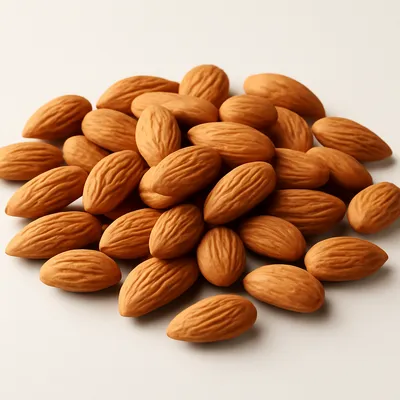
Cremona's iconic hard nougat: honey, whipped egg white and toasted almonds simmered together in a caldron for eight to twelve hours until dense and white, then pressed between wafers and sliced into brittle ivory bars. Documentary records of its production in Cremona reach back to 1543.




Local tradition attributes torrone's creation to the wedding banquet of Francesco Sforza and Bianca Maria Visconti, celebrated at Cremona's church of San Sigismondo on 25 October 1441, where a sweet modelled on the form of the city's great bell-tower — the Torrazzo — was said to have been served, giving rise to the name 'torrone' from 'Torrione'. Food historians have established, however, that this episode is largely a 20th-century folk invention. The earliest firm documentary evidence dates to 1543, when the Comune di Cremona purchased torrone to present as gifts to Milanese dignitaries. The confection grew into a festive staple, and Cremona celebrates it each November at the Festa del Torrone. Today Torrone Classico di Cremona carries a PAT designation and a Denominazione Comunale; principal producers include Sperlari and Vergani.
The first snap is brittle and resonant; ivory shards dissolve slowly on the tongue, releasing layered floral honey, toasted almond earthiness and a subtle lightness from the egg-white matrix. Wafer layers add a delicate papery contrast throughout.
Honey and beaten egg whites are cooked together in a copper caldron; albumin proteins in the egg whites coagulate under heat and form a continuous foam matrix that traps air and anchors the honey's supersaturated sugar solution. Continuous stirring over eight to twelve hours drives off moisture, concentrating the mixture and determining final texture — the longer the cooking, the harder and more friable the result. Maillard reactions between reducing sugars in honey and amino acids in egg white produce the characteristic ivory color and subtle caramel notes. Toasted almonds folded in at the end preserve their crunch by avoiding prolonged moisture exposure.
Variations
The classic hard (friabile) version defines Cremonese torrone; a softer (morbido) variant results from shorter cooking. Both may be wrapped in wafer paper or coated with dark chocolate in modern production. Hazelnuts, pistachios and candied fruit are common additions outside the classic almond version.
On the Palate
Where Torrone di Cremona sits in the Italian flavor cloud
Ingredients
Serves 20How it's made
8 steps · 11 hours active + 4 hours waiting
- 110 min
Toast almonds in a dry pan over medium heat, stirring, until golden and fragrant; spread on a tray to cool.
- 210 min
Whip egg whites to stiff peaks in a stand mixer.
- 35 min
Warm honey in a heavy copper caldron over low heat until fluid; add the whipped egg whites and stir immediately to incorporate.
- 4600 min
Cook over the lowest possible heat, stirring continuously with a wooden paddle, for 8 to 12 hours until the mixture is very thick, white and pulls cleanly away from the sides of the pan.
Watch outIt's done when the mass turns thick, chalk-white, and pulls cleanly off the pan sides — before that the honey's still too wet to set hard.
- 55 min
Test for doneness by dropping a small amount into cold water — it should form a firm, hard ball that does not stick.
Watch outThe cold-water drop must form a firm hard ball — if it flattens or dissolves, the sugar needs more time or the nougat stays sticky.
- 65 min
Fold the toasted almonds evenly into the nougat during the final minutes of cooking.
- 75 min
Immediately pour the nougat between two sheets of wafer paper in a rectangular frame; press firmly with a weighted tray to an even thickness of about 2cm.
Watch outPour and press fast while it's molten — once it starts to set it tears instead of spreading, and you lose the even slab.
- 8240 min
Cool at room temperature for at least 4 hours until fully set; cut into bars with a heavy, sharp knife.
Archive tool suggestions — not reviewed
These legacy suggestions have not been evidence-reviewed and are not presented as required tools.



