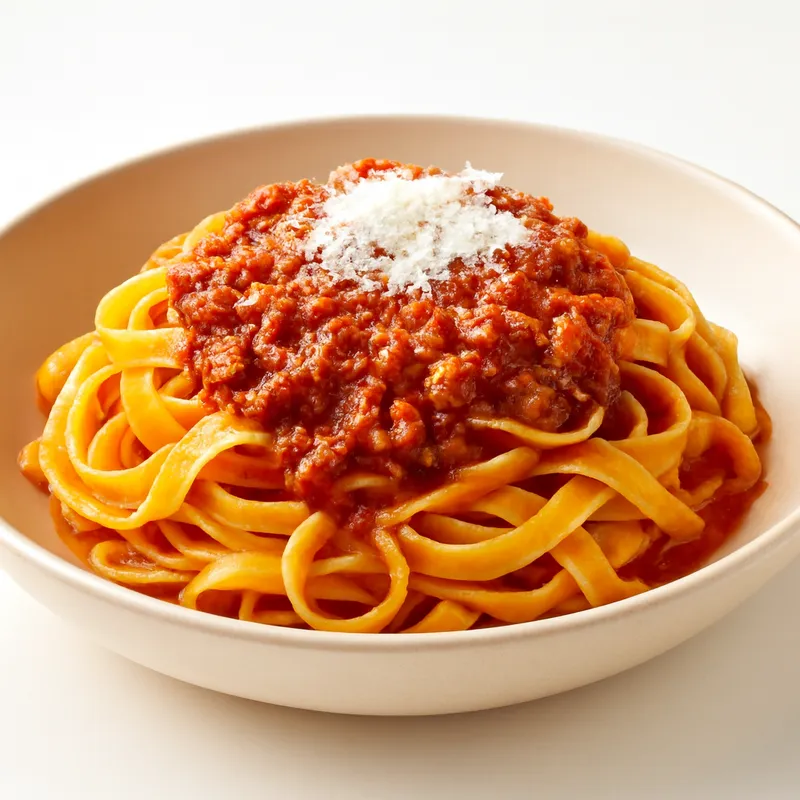
A hand-shaped fresh egg pasta of Civitella del Tronto, in the province of Teramo: thick 15-cm bucatini made by rolling a strip of flour-and-egg dough around a thin rod, once a smooth wooden twig called the 'ceppa', and sliding it out to leave a hollow core. Boiled and dressed with a slow mixed-meat ragù and grated pecorino, or with porcini in season, they rank among the most demanding pasta shapes in Italy and are now increasingly rare.




The ceppe take their name from the tool that shapes them: the 'ceppa', a thin smooth stick, originally a wooden twig and today usually a fine steel rod or knitting needle, around which a strip of egg dough is wound to form a fat, hollow bucatino. The pasta belongs specifically to Civitella del Tronto, the hilltop town in Teramo province crowned by one of the last great Bourbon fortresses of the Kingdom of the Two Sicilies. Local legend traces the shape to a military cook during a siege of that fortress, who, lacking proper tools, wrapped his dough around a wooden peg to feed the defenders. Recognised among Abruzzo's traditional agri-food products, the ceppe are counted among the most laborious pasta shapes in the Italian repertoire, and the skill passes down with difficulty; in the first half of each September Civitella devotes a food festival to keeping the tradition alive.
Thick-walled and hollow, the ceppe have a substantial, springy chew that holds up to a heavy ragù. The central channel and the slightly rough, hand-rolled surface trap the sauce, so each length carries meat and fat inside and out. The egg dough tastes rich and faintly sweet beneath the savoury ragù, and the grated pecorino adds a sharp, salty edge that cuts the richness.
Egg pasta differs from water-and-flour pasta in structure: the egg proteins coagulate on cooking and reinforce the gluten network built during kneading, so the dough can be rolled thin and wound around a rod without tearing, and the cooked strand holds a firm, elastic bite. Egg-yolk lecithin emulsifies fat through the dough, giving richness and a tender surface. Wrapping the strip around the ceppa and sealing the seam leaves a central tube once the rod slides out; the hollow, thick wall means the pasta needs a long boil, about 15 minutes, for heat to penetrate, and the tube plus the porous hand-made surface hold far more sauce than a smooth solid strand. A short rest before boiling lets the gluten relax so the tubes keep their shape rather than shrinking closed.
Variations
The dressing is most often a mixed-meat ragù, beef and pork, sometimes with a little lamb or a piece of pork rib for depth, finished with local pecorino; in autumn the ceppe are served with porcini instead. The dough is traditionally flour, egg, and a little water, though some makers use egg alone for a richer result. The shaping rod has shifted from the original wooden 'ceppa' to a thin steel knitting needle, which slides out more cleanly. Lengths and thickness vary by hand, but the classic strip is cut roughly 1.5 cm wide and 15 cm long before rolling.
On the Palate
Where Ceppe di Civitella del Tronto sits in the Italian flavor cloud
Ingredients
Serves 6


How it's made
8 steps · 1 hour 30 min
- 115 min
Make the dough: mound the flour, make a well, add eggs and a little water, and knead 8–10 minutes until smooth and firm; wrap and rest 30 minutes.
- 2180 min
Meanwhile start the ragù: soften onion in oil, brown mixed ground beef and pork, add red wine, then tomato passata, and simmer gently 2–3 hours.
- 315 min
Roll the rested dough into sheets a few millimetres thick; cut into strips about 1.5 cm wide and 15 cm long.
- 430 min
Lay a thin steel rod or knitting needle along a strip and roll the dough around it, pressing the seam to seal.
Watch outWind the strip round the rod and press the seam shut — a loose seam splits open in the long boil and the tube unravels.
- 530 min
Slide the rod out carefully to leave a hollow tube; set the shaped ceppe on a floured cloth and repeat with the rest.
- 615 min
Boil the ceppe in plenty of salted water for about 15 minutes until tender but firm at the centre; drain.
Watch outThese are thick, hollow tubes — give them the full 15 minutes so the heat reaches the centre; the wall should be tender but the core still has bite.
- 73 min
Toss the drained ceppe with the meat ragù until every tube is coated inside and out.
- 82 min
Finish with a generous grating of pecorino and serve at once.
Archive tool suggestions — not reviewed
These legacy suggestions have not been evidence-reviewed and are not presented as required tools.