
A dense baked savoury cake from Trentino, made from a pourable batter of flour, milk, eggs and lard, studded with coins of fresh luganega sausage and baked in a wide pan until set and browned. It is a classic Carnival dish of the region, hearty and filling — the name comes from the local dialect for «hunger-killer». The traditional batter is built on buckwheat flour, which gives it a dark colour and nutty taste, though plain-wheat and mixed-flour versions are also made. It is cut into thick squares and eaten warm, on its own or as a substantial first course.






Smacafam is a peasant dish of the Carnival season, when households cooked something rich and substantial before Lent. Its dialect name — read as smaca fam, «smash hunger» — places it squarely in the family of Italian ammazzafame, the cheap, belly-filling foods of country kitchens. Buckwheat, an old crop of the poor Alpine soils, and lard and luganega, the everyday fat and sausage of Trentino, are exactly the larder of a mountain farmhouse. The dish is region-wide across the Trentino valleys rather than tied to one town, and it carries no protected designation; it survives as a living Carnival tradition rather than a codified product.
Smacafam is firm and close-textured, somewhere between a thick frittata and a baked polenta — sliceable, with a browned, slightly crusted top and a moist, dense crumb. The buckwheat batter is mild and earthy, the lard makes it rich, and the coins of luganega sit through it in savoury, faintly garlicky pockets that release their fat into the surrounding cake. The top edge is the best part, dark and a little chewy where it has caught the heat. It is filling food, eaten in generous squares and meant to satisfy more than to refine.
The batter works like a baked custard thickened with flour: the eggs and milk carry the starch, and in the oven the egg proteins coagulate and the starch gelatinises to set the whole thing into a firm, sliceable mass. Buckwheat has no gluten, so the cake holds together by egg and starch alone and stays dense and tender rather than springy. The lard, melted through the batter, coats the starch and keeps the crumb moist and short. Raw sausage coins are laid in so they cook through as the cake bakes, seasoning the batter with their rendered fat; baking in a wide, shallow pan maximises the browned surface, where Maillard reactions build the toasty crust that is the dish's signature.
Variations
The buckwheat version is the traditional one, but many cooks use part or all wheat flour for a paler, lighter cake. Diced pancetta or a little grated cheese sometimes joins the sausage, and the batter can be loosened with broth as well as milk. Without the meat it becomes a plain buckwheat bake closer to a polenta. Similar lard-and-sausage Carnival bakes appear across the wider Alpine arc, but the buckwheat smacafam is particular to Trentino.
On the Palate
Where Smacafam sits in the Italian flavor cloud
Ingredients
Serves 6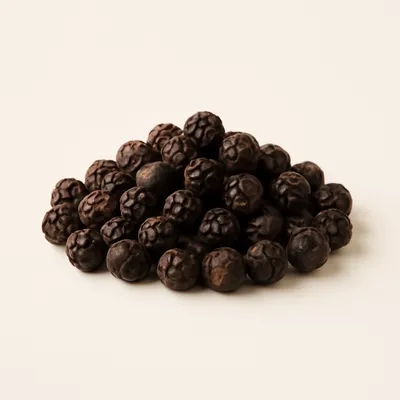
How it's made
6 steps · 20 min active + 50 min waiting
- 110 min
Whisk the buckwheat flour with milk, eggs and salt into a smooth, pourable batter, working out any lumps; let it rest 20–30 minutes.
- 25 min
Melt some of the lard and stir it through the batter; grease a wide, shallow baking pan with more lard.
Watch outMelt the lard first, then stir it into the batter while it is still fluid, so the fat threads evenly through and keeps the dense buckwheat crumb moist and short.
- 32 min
Pour the batter into the pan to a depth of about two centimetres.
- 45 min
Slice the fresh luganega into coins and press them evenly over the surface; dot with a little more lard.
- 550 min
Bake at 200°C for about 45–50 minutes until set, golden and crusted on top and the sausage is cooked through.
Watch outBake until the top is golden and set firm to the touch and the sausage coins have cooked through, telling you the egg has coagulated and the whole cake will slice cleanly.
- 65 min
Rest a few minutes, then cut into thick squares and serve warm.
Archive tool suggestions — not reviewed
These legacy suggestions have not been evidence-reviewed and are not presented as required tools.


