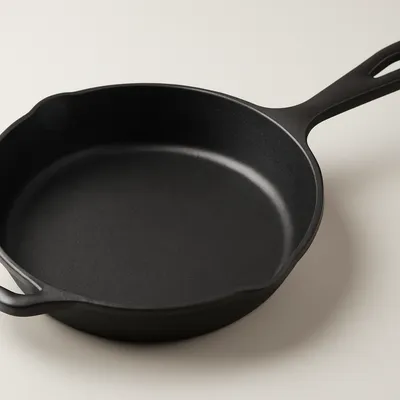
An unleavened griddled flatbread of Romagna, the south-eastern half of Emilia-Romagna. A simple dough of soft wheat flour, water, salt and fat — lard or olive oil — is rolled into a thin disc and cooked dry on a hot flat griddle (the testo or a metal plate), blistered on both sides. It is eaten hot, folded around fillings, the classic being squacquerone, a soft fresh cheese, with prosciutto crudo and rocket. Since 2014 it carries European Protected Geographical Indication (PGI/IGP) status.



The piadina is the everyday bread of Romagna, an unleavened flatbread of the cucina povera baked when raised bread was a luxury. It became a regional emblem after the poet Giovanni Pascoli, a son of Romagna, wrote of it around the turn of the 20th century, calling it «the bread, indeed the national food of the Romagnoli». Piadina Romagnola was recognised as a European Protected Geographical Indication in 2014, with the registration published in the EU Official Journal that October; the certified zone covers the provinces of Rimini, Forlì-Cesena and Ravenna and part of Bologna. The product specification names just flour, water, salt and fat, and recognises two forms — a thicker inland piadina and the thinner, wider piadina alla riminese of the coast.
Hot off the griddle it is soft and pliable, just dry enough to fold without cracking, freckled with brown-black blisters that taste faintly of toast. The inland version is thicker (about 4 to 8 mm) and a touch crumbly from the lard; the Rimini version is thin (up to 3 mm), wide and more supple, usually made with olive oil. The classic filling plays warm bread against cool, milky-tart squacquerone, salty prosciutto and peppery rocket. A good piadina is tender and faintly chewy; left too long it stiffens to a cracker, and underbaked it tastes of raw flour.
This is a flatbread with no leavening — no yeast, at most a little baking soda or baking powder in some recipes — so it stays thin and dense rather than rising, and is cooked fast and dry on a very hot surface. The fat, traditionally rendered lard (strutto) and on the coast olive oil, coats the flour's proteins and shortens the gluten, which is why the dough rolls out without snapping back and why a lard piadina eats more tender and crumbly while an oil one is more pliable. On the hot testo the surface dehydrates and browns through the Maillard reaction, giving the toasted flavour and the dark blisters, while steam trapped inside keeps the crumb soft for the brief cooking time. It must be eaten quickly: as it cools the starch firms and it loses its suppleness.
Variations
The product specification itself recognises two forms — the thicker inland piadina of Forlì, Cesena and Ravenna, and the thin, wide piadina alla riminese of Rimini. The cassone (or crescione) is a piadina folded over a filling and sealed before cooking, often stuffed with wild greens, pumpkin, or tomato and mozzarella. Fat varies between lard and olive oil by zone and by household, and the everyday fillings range from the classic squacquerone, prosciutto and rocket to cooked greens, sausage, or Nutella for children. It is a Romagnolo sibling of Italy's other griddled flatbreads such as the testaroli of Lunigiana.
On the Palate
Where Piadina Romagnola sits in the Italian flavor cloud
Ingredients
Serves 4
How it's made
7 steps · 45 min
- 15 min
Mix the soft wheat flour with the fat — lard or olive oil — rubbing it in, then add salt.
- 28 min
Add water a little at a time and work to a smooth, firm dough.
- 330 min
Cover the dough and rest it for about 30 minutes.
- 410 min
Divide it into balls and roll each into a thin disc, thinner for the Rimini style, a little thicker inland.
- 55 min
Heat a flat griddle or terracotta testo until very hot, with no fat on the surface.
Watch outHeat the griddle until very hot with no fat on it — a cool or oiled surface steams the dough pale instead of browning it fast and dry.
- 66 min
Cook the piadina dry, pricking any large bubbles, until it is freckled with brown blisters, then flip and cook the other side.
Watch outCook it dry, pricking big bubbles, until freckled with brown blisters, then flip — those toasted spots are the flavor; pull it pale and it tastes of raw flour.
- 72 min
Fold the hot piadina around squacquerone, prosciutto crudo and rocket, and serve at once.
Archive tool suggestions — not reviewed
These legacy suggestions have not been evidence-reviewed and are not presented as required tools.