
Pearà is Verona's traditional bread-and-marrow pepper sauce, the inseparable companion to bollito misto (mixed boiled meats). It is built from grated stale bread, beef bone marrow and a generous dose of coarse black pepper, all cooked down very slowly in good beef or capon broth until the sauce turns thick, pale and creamy. Some cooks finish it with a handful of grated Grana Padano. Despite having only a few humble ingredients, it depends almost entirely on a long, patient simmer at the lowest possible heat, traditionally in an earthenware pot. In and around Verona it is winter and festive food above all, and a fixture of the Christmas table.


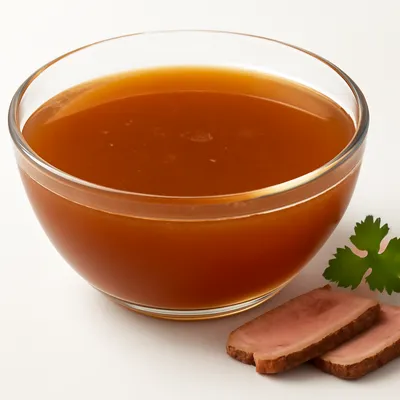



Pearà belongs to the cooking of Verona and the surrounding Veronese, where it has long been served with lesso (the local word for boiled meat) as the dish lesso e pearà, found almost nowhere else. Its name comes straight from the Veronese dialect word for pepper — péar or pever — so pearà means simply "peppered," a reminder that ground black pepper is its defining note. Food writers commonly trace its distant ancestor to the Roman puls, a legionaries' porridge of flour, water, salt, pepper and wine, with the sauce taking its later shape in the Middle Ages: pepper first carried it into aristocratic kitchens, and the addition of bone marrow drew it into popular, thrifty cooking that put stale bread to use. A persistent local legend dates it to 572 AD, claiming a cook at the court of the Lombard king Alboin devised it to coax the grieving queen Rosmunda back to eating; this tale has no documentary basis and is best treated as folklore. The abundant pepper is itself often read as an echo of the spice trade that Venice funnelled onto its mainland, of which Verona was a part.
Pearà eats like a warm, savoury porridge rather than a pourable sauce: pale grey-gold, thick enough to mound on the spoon, smooth and a little grainy from the bread. The first taste is mellow bread and rich, beefy broth, with the melted marrow lending a soft, almost buttery roundness on the tongue. Then the pepper arrives — a slow, building heat at the back of the throat that lingers and warms, never sharp but unmistakably present. Spooned over a slice of hot boiled beef or tongue, it turns plain lesso into something comforting and deeply flavoured, the gentle bread cushioning the meat while the pepper cuts its fattiness.
The sauce thickens the way a panada does: in the hot broth the starch granules of the bread absorb liquid, swell and gelatinise, releasing starch that binds the broth into a creamy, spoon-coating body without any added flour. The beef bone marrow, almost pure fat, melts at well below a simmer and disperses through the starchy, protein-rich liquid, where it is held as a fine emulsion — this is what gives pearà its silky, rich mouthfeel rather than a greasy one. The point of the very low, very long cook is twofold: the bread must hydrate and break down completely so the texture turns smooth, and the heat must stay gentle enough that the starch never scorches or sticks — which is why a thick earthenware pot, prized for spreading and buffering heat, is traditional, sometimes set over a fioretta spark-guard. The pepper's pungency comes from piperine, a fat-soluble alkaloid that dissolves readily into the marrow fat and so spreads its slow warmth evenly through the sauce; the long, slow cooking also lets the flavours marry rather than taste raw.
Variations
The bread-marrow-pepper-broth core is fixed, but details vary from kitchen to kitchen. Many Veronese cooks finish the sauce with grated Grana Padano or Parmigiano for added savour, while purists leave the cheese out; the quantity of pepper, and whether it is coarsely cracked or finely ground, is a point of family pride. The broth may be beef, capon or a mix, and a little butter or olive oil is sometimes added with the marrow for extra richness. Some toast the bread first for a deeper flavour, and the final thickness is adjusted with broth to taste — looser for spooning, stiffer to mound beside the meat. Whatever the version, it is served warm and only ever alongside bollito misto.
On the Palate
Where Pearà sits in the Italian flavor cloud
Ingredients
Serves 6
How it's made
9 steps · 20 min active + 2 hours 30 min waiting
- 110 min
Grate or finely crumble enough stale, crustless white bread to fill about four cups; set aside.
- 25 min
Warm the beef (or capon) broth in a pot and keep it gently hot throughout.
- 38 min
In a heavy earthenware or thick-bottomed pot, melt the beef bone marrow over very low heat until it has fully rendered to liquid fat.
Watch outMelt the marrow fully to clear liquid fat over very low heat — it has to render completely so it can emulsify into the sauce for that silky, not greasy, body.
- 43 min
Stir the breadcrumbs into the melted marrow so every crumb is coated, letting them toast lightly for a minute or two.
- 54 min
Ladle in enough hot broth to make a loose porridge, stirring well to break up any lumps.
- 63 min
Add a generous amount of coarsely ground black pepper and a little salt, then bring to the barest simmer.
- 7150 min
Cook very gently, uncovered, for about 2.5 hours, stirring often and topping up with hot broth so it stays creamy and never sticks or scorches.
Watch outCook very gently for hours, stirring often and never letting it scorch — the bread must break down completely into a smooth cream, and a scorched bottom ruins the lot.
- 84 min
Taste and correct the pepper and salt; if liked, stir in grated Grana Padano in the last few minutes.
- 93 min
Let it rest briefly off the heat, then serve warm, spooned over the meats of a bollito misto.
Archive tool suggestions — not reviewed
These legacy suggestions have not been evidence-reviewed and are not presented as required tools.


