
Tortellini panna e prosciutto is a quick, comforting Italian primo: little meat- or cheese-filled tortellini in a silky cream sauce with strips of cooked ham and grated Parmigiano-Reggiano, often with a handful of peas. It is fast family and trattoria food, especially beloved by children, and reliably on the table in under half an hour. It should not be confused with the austere Emilian classic tortellini in brodo, where the same pasta is served simply in a clear capon broth; this is the rich, creamy, modern cousin.
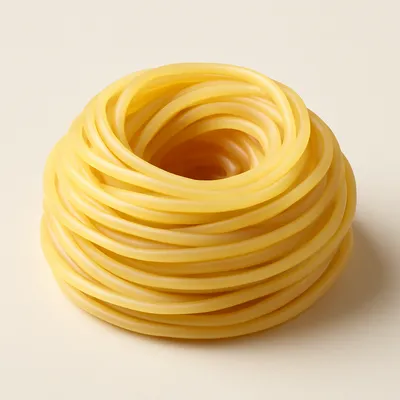

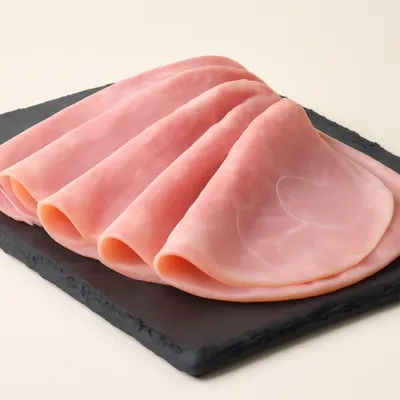



Tortellini themselves are a documented treasure of Emilia, claimed by both Bologna and Modena, where the navel-shaped, filled pasta has been made for centuries; the well-known tale that the shape was modelled on Venus's navel is folklore, not history. The filling has an official codification: on 7 December 1974, the Dotta Confraternita del Tortellino and the Italian Academy of Cookery registered a recipe by notarial deed in Bologna, specifying pork loin, prosciutto, mortadella, Parmigiano-Reggiano, egg and nutmeg, and stipulating that the traditional dish be tortellini in brodo, served in capon broth. The cream-and-ham sauce, by contrast, is a modern and pan-Italian home treatment, not an ancient Bolognese tradition. Its lineage is usually traced to tortellini alla panna, said to have been created at the Ristorante La Cesarina in Bologna in the 1940s; the addition of cooked ham came later, and the dish became a national favourite during the postwar boom and especially the 1980s, the heyday of cooking cream in Italy, carried by the spread of fresh and dried packaged tortellini.
The tortellini give first: a yielding, tender pasta skin, then a savoury, faintly sweet filling of cured meats and cheese. Around them the sauce is pure comfort — warm, velvety cream rounded with melted Parmigiano, threaded with soft, salty ribbons of ham. Sweet peas pop here and there for contrast, a grate of nutmeg lifts the dairy, and the whole bowl is mild, rich and gently coating, the kind of plate that disappears fast.
The sauce is built on a gentle cream reduction. Cream is simmered with butter just long enough for some water to evaporate and the remaining fat and milk solids to thicken into a coating sauce; pushed too hard it would break into greasy curds, so it is kept at a bare simmer, not a rolling boil. The cooked ham is only warmed through, never fried hard, which would toughen it and drive off its delicate flavour. Parmigiano is stirred in off the heat: below roughly 82°C its proteins and fat melt smoothly into the cream, whereas direct high heat makes the cheese seize into rubbery strings. The filled tortellini are the delicate part — boiled briefly, since fresh ones cook in two to three minutes, and kept at a soft simmer rather than a violent boil, because hard agitation tears the thin pasta and bursts the seams, spilling the filling. They are finished directly in the sauce with a little starchy pasta water, whose dissolved amylose helps the cream emulsify and cling to every parcel. Nutmeg is the classic partner to cream and cheese, its warm aroma cutting the richness.
Variations
The two near-universal add-ins are peas, stirred in for sweetness and colour, and the ham itself, which can be diced or cut in ribbons; some cooks render a little of it in the butter for deeper savour. A splash of white wine cooked off before the cream, or a softened shallot, gives the sauce more backbone, and a grind of black pepper sharpens it. Tortellini can be swapped for the larger tortelloni or for ravioli, and cheese-filled versions stand in happily for meat-filled. The dish's true counterpart, and its opposite in spirit, is tortellini in brodo: the same pasta served austerely in clear capon broth, the registered traditional Emilian preparation — where this cream-and-ham version is the modern, indulgent everyday treatment.
On the Palate
Where Tortellini Panna e Prosciutto sits in the Italian flavor cloud
Ingredients
Serves 4

How it's made
6 steps · 18 min active + 2 min waiting
- 13 min
Bring a large pot of well-salted water to a boil for the tortellini. Cut the cooked ham into short ribbons or small dice.
- 22 min
Melt the butter in a wide pan over medium-low heat. Add the ham and warm it through for about a minute without letting it crisp; stir in the peas if using.
- 34 min
Pour in the cream and bring to a bare simmer, stirring, for 3-4 minutes until it thickens slightly into a coating sauce. Season with a little salt, a grind of pepper and a small grate of nutmeg.
Watch outKeep the cream at a bare simmer, never a rolling boil — pushed too hard it breaks into greasy curds; it should just thicken to a coating sauce.
- 43 min
Meanwhile, drop the tortellini into the boiling water and cook at a gentle simmer, not a hard boil, until just done — usually 2-3 minutes for fresh. Reserve a cup of the cooking water.
- 52 min
Lift the tortellini straight into the sauce with a slotted spoon, adding a splash of pasta water. Toss very gently for a minute so the sauce coats them without tearing the parcels.
- 62 min
Take the pan off the heat and stir through the grated Parmigiano-Reggiano until the sauce is glossy and clinging, loosening with a little more pasta water if needed. Serve at once with extra cheese.
Watch outStir the Parmigiano in off the heat — below about 八十度 it melts smoothly into the cream; direct high heat seizes it into rubbery strings.
Archive tool suggestions — not reviewed
These legacy suggestions have not been evidence-reviewed and are not presented as required tools.


