
The almond biscuit of Prato, in Tuscany — small, hard and dry, eaten at the end of a meal dipped in sweet wine. A simple dough of flour, sugar, eggs and whole unpeeled almonds (the historic Prato recipe adds pine nuts) is shaped into long loaves, baked once, sliced on the diagonal while still warm, then returned to the oven so the cut faces dry to a deep crispness. They keep for weeks. The classic way to eat them is to dunk them in Vin Santo, the Tuscan sweet wine; coffee is the everyday alternative. They are also known as biscotti di Prato or simply cantuccini.


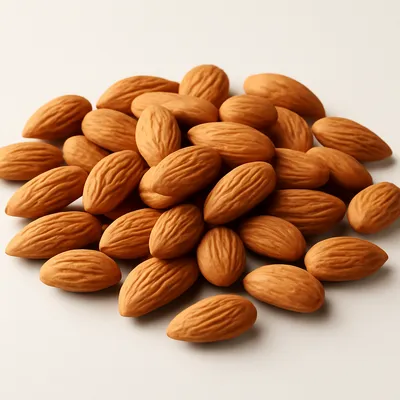


Cantucci are the almond biscuit of Prato. The standard modern recipe is credited to the Prato baker Antonio Mattei, who opened his shop in 1858 and whose biscotti di Prato won notice at exhibitions in Florence (1861), London (1862) and Paris (1867); his original formula of flour, sugar, eggs, almonds and pine nuts is still the reference. The word biscotto comes from the medieval Latin biscoctus, 'twice-cooked', describing the double bake. Earlier twice-baked almond biscuits existed in Tuscany before Mattei codified the famous version, and the broader category 'Cantuccini Toscani' was registered as a European Protected Geographical Indication (PGI) in 2016. The PGI specification is wider than Mattei's classic recipe — it permits honey and butter and sets a minimum almond content — so a strict Prato cantuccio and a PGI cantuccino are not always identical.
Hard and dry by design, knobbly with whole almonds, pale gold with a toasted edge. Bitten cold they are genuinely crunchy, almost brittle — meant to crack, not yield — with the wheaty sweetness of the dough and the rich, faintly bitter snap of toasted almond. That hardness is the point: dipped a few seconds in Vin Santo, the cut face softens just enough to bite cleanly while the centre stays firm, and the biscuit drinks up the sweet wine. The flavour is restrained — not very sweet, no butter in the classic version — which is why the wine completes it. Eaten without dunking they can feel tooth-testingly hard; that is intended, not a fault.
The crispness comes from the second bake. The loaf is first baked through, then sliced and the slices laid cut-side down and returned to a moderate oven; with so much surface now exposed, the remaining moisture drives off and the starch and sugars at the cut faces dry and lightly caramelize, leaving a low-moisture, rigid biscuit that resists going stale and keeps for weeks. The whole almonds, unpeeled and unroasted in the dough, toast during baking for flavour and give the structure its bite. Because there is little or no fat in the classic recipe, the texture is hard and snappy rather than short and crumbly — fat would tenderize it. That same dryness is what lets the biscuit absorb Vin Santo without immediately falling apart: the firm, baked-out crumb takes up the wine slowly from the dipped end.
Variations
The Prato classic stays plain — almonds, sometimes pine nuts, no chocolate, no butter. Beyond it, Tuscan and Italian bakers make many cousins: versions with hazelnuts, with candied orange or lemon zest, with chocolate, with anise, or with the almonds left out. The PGI 'Cantuccini Toscani' allows honey and butter, giving a slightly softer, richer biscuit than the austere Prato original. Cantucci are part of a wider family of twice-baked Italian biscuits called biscotti; the very hard, almond-rich Tuscan style is the one most often dipped in Vin Santo, while in much of the world the word 'biscotti' has come to mean any such crunchy twice-baked cookie.
On the Palate
Where Cantucci sits in the Italian flavor cloud
Ingredients
Serves 8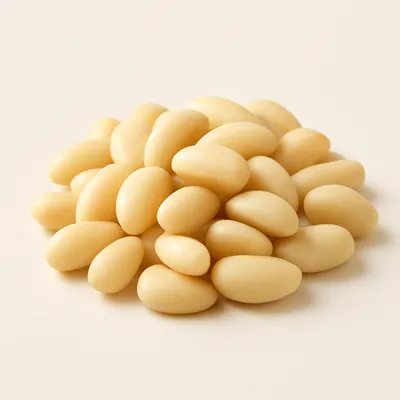
How it's made
7 steps · 20 min
- 110 min
Beat the eggs with the sugar, then work in the flour, a pinch of salt and the whole unpeeled almonds (and pine nuts) to a stiff, sticky dough.
- 28 min
Divide the dough and shape it on a lined tray into long, flattened loaves a few centimetres wide.
- 322 min
Brush the tops with beaten egg and bake at about 180°C until set and lightly golden.
Watch outFirst bake just until set and lightly golden — you're only cooking the loaf through here; the crisping comes in the second bake.
- 45 min
Take the loaves out and let them cool just enough to handle, a few minutes.
- 58 min
Slice each loaf on the diagonal into finger-thick biscuits while still warm.
- 618 min
Lay the slices cut-side down on the tray and return them to the oven to dry and crisp, turning once.
Watch outLay the slices cut-side down and bake again to dry them out — this second bake drives off the moisture and lightly caramelizes the cut faces into that hard, snappy biscuit.
- 730 min
Cool completely on a rack until hard, then serve with Vin Santo for dipping.
Archive tool suggestions — not reviewed
These legacy suggestions have not been evidence-reviewed and are not presented as required tools.


