A wide, thin disc of crumbling almond pastry from the Marca Trevigiana, made by rubbing flour, sugar, butter, and a generous quantity of chopped almonds into a sandy dough and baking until golden — so friable it is broken by hand at the table, never cut with a knife.



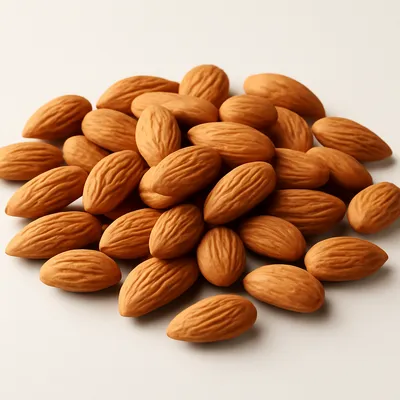

Fregolotta takes its name from 'fregola', the Veneto dialect word for crumb, a direct reference to its unboundedly friable texture. The modern recipe was popularised from the early 1920s by the Zizzola bakery-trattoria at Salvarosa di Castelfranco Veneto: Angelo Zizzola opened the establishment around 1924, and his sister Evelina prepared the fregolotta according to a recipe she had received from the cook of a local noblewoman. The Venetian gastronome Giuseppe Maffioli brought it to wider attention in his writings, and the Toulà restaurant chain of Alfredo Beltrame disseminated it across northern Italy and beyond. Today it is recognised as a traditional product of the Marca Trevigiana. It is a close cousin of the Mantuan sbrisolona, which uses coarse cornmeal alongside wheat flour and a smaller share of almonds; fregolotta uses only wheat flour and a markedly higher proportion of chopped almonds.
Shatters at the slightest hand pressure into coarse, sand-textured crumbs releasing a warm almond-butter fragrance; the crumbs dissolve slowly on the tongue, and are best chased with a sip of passito or grappa.
Fregolotta's signature crumb exploits the short-dough principle to an extreme: butter and ground almonds both coat flour particles before any liquid is incorporated, physically blocking gluten strand formation. The dough is assembled by rubbing, never kneading, so fat-flour aggregates remain loosely bound. During baking at 150°C, butter moisture evaporates, the almond proteins and reducing sugars undergo Maillard reactions yielding the golden-brown colour and roasted flavour, and the low even temperature allows the centre to cook through before the edges over-colour. On cooling, solidifying fat locks the loose crumb structure in place; cutting with a knife collapses the network, which is why hand-breaking is traditional.
Variations
The Zizzola original is plain almond; some modern versions add a tablespoon of grappa or rum to the dough. Lemon zest is occasionally incorporated. Industrial versions often include whole eggs and more butter for a firmer texture that withstands packaging. The Mantuan sbrisolona replaces some flour with coarse cornmeal and uses a smaller almond share. In restaurants it is served cold with a glass of passito di Gambellara, or warm from the oven with a scoop of vanilla gelato.
On the Palate
Where Fregolotta sits in the Italian flavor cloud
Ingredients
Serves 8How it's made
7 steps · 20 min
- 15 min
Preheat the oven to 150°C fan-assisted; butter and lightly flour a 28 cm round baking tin.
- 25 min
Roughly chop 200 g of blanched almonds into uneven pieces, keeping some larger shards for texture; set aside.
- 33 min
In a wide bowl combine 250 g plain flour and 150 g caster sugar; add 125 g cold unsalted butter cut into small cubes.
- 45 min
Rub the butter into the flour and sugar with your fingertips until the mixture resembles coarse, slightly clumped breadcrumbs — work quickly so the butter stays cold.
Watch outRub the butter in only until it looks like coarse, clumpy crumbs — keep it cold and stop before it comes together, or you lose the sandy crumble.
- 52 min
Add the chopped almonds and 1 egg yolk; mix briefly with fingertips until just combined; the mixture must remain very loose and crumbly, not cohesive.
- 633 min
Scatter the mixture loosely into the prepared tin; do not press or smooth — the rough, uneven surface is intentional; bake in the centre of the oven for 30 to 35 minutes until uniformly golden.
Watch outScatter it into the tin loose and don't press — the rough, bumpy top is the point; packed down, it bakes into a solid cake.
- 710 min
Cool completely in the tin before lifting out; serve at room temperature, broken into irregular shards by hand at the table alongside a glass of passito wine or grappa.
Archive tool suggestions — not reviewed
These legacy suggestions have not been evidence-reviewed and are not presented as required tools.


