
A crumbly almond-and-cornmeal cake from Mantua in Lombardy, baked as a thin, rugged disc that is broken by hand rather than cut into slices. It is made from roughly equal parts of wheat flour, cornmeal (yellow flour) and sugar with whole and chopped almonds, butter, egg yolks and lemon zest, worked into a sandy, barely-cohering dough. Baked until deep golden and very dry, it shatters into coarse, buttery crumbs. It is a traditional agrifood product (PAT) of Lombardy, classically served with a sweet wine for dipping.



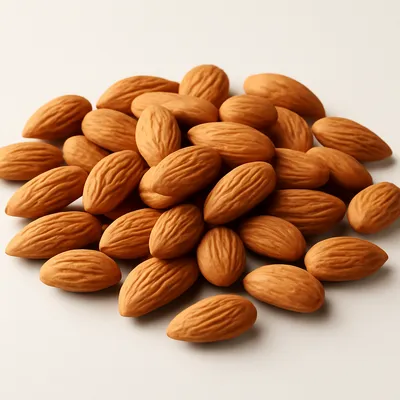


The sbrisolona began as a humble Mantuan country cake, made by peasant families from cheap, local ingredients — cornmeal, lard and hazelnuts — and is documented as predating the 1600s. It is said to have risen to the table of the Gonzaga court, where the recipe was refined with finer ingredients, the lard giving way to butter and the hazelnuts to almonds. Its old name was «torta delle tre tazze», the three-cup cake, for the roughly equal cupfuls of flour, sugar and almonds (the wheat flour later joining the original cornmeal). The name sbrisolona comes from the Mantuan dialect brisa, a crumb, after the cake's defining friability.
Dry, sandy and intensely crumbly — it is not meant to hold together, and snaps into coarse, uneven shards the moment you press it. The texture is granular from the cornmeal and crunchy from the almonds, somewhere between a biscuit and a streusel, rich with butter and faintly scented with lemon. The flavour is nutty, buttery and not too sweet, with the toasted-corn graininess underneath. Dipped in a sweet wine it softens just enough. A good sbrisolona is shatteringly short and dry; a bad one is dense, soft or chewy, which means too much binding or too little baking.
Crumbliness is engineered by starving the dough of gluten and water. The mix is high in fat and almost without liquid, with only egg yolk and butter to moisten, so the wheat flour's gluten barely develops and the cornmeal — which has no gluten at all — and the ground almonds break up the structure into sand. The dough is rubbed, not kneaded, and pressed loosely into the tin rather than packed, leaving it full of fault lines. A long bake at moderate heat drives off what little moisture there is and toasts the butter, sugar and almonds (Maillard and caramelization) to a deep golden, brittle crumb that fractures cleanly. Pressing it firm or adding more egg would make it cohere and defeat the point.
Variations
Recipes vary in the ratio of wheat flour to cornmeal — more cornmeal makes it grainier and more rustic — and in whether lard, butter or both are used; some keep a portion of lard for the old flavour. Almonds are standard, but the older country versions used hazelnuts, and many bakers add vanilla or a little grappa. The cake is found across Lombardy and into neighbouring Emilia and the Verona area, and modern pastry-shops sell richer, more compact versions, though the traditional Mantuan one stays deliberately dry and crumbly.
On the Palate
Where Sbrisolona sits in the Italian flavor cloud
Ingredients
Serves 8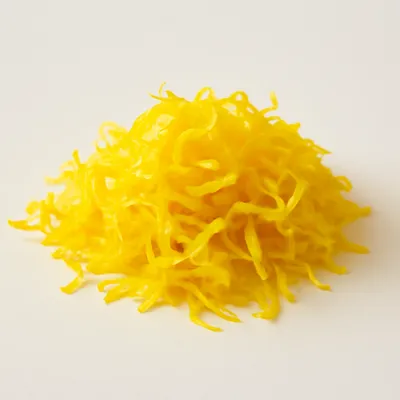
How it's made
7 steps · 25 min active + 45 min waiting
- 110 min
Toast and roughly chop most of the almonds, leaving some whole, and grind a portion fine.
- 25 min
In a bowl combine the wheat flour, cornmeal, sugar, ground and chopped almonds and lemon zest.
- 38 min
Rub in cold butter and the egg yolks with your fingertips until the mix forms coarse, sandy crumbs that just hold when pressed.
Watch outRub the butter and yolk in only until it forms coarse, sandy crumbs that just hold when pressed — do not knead; you are starving it of gluten to get that sand.
- 45 min
Scatter the crumb dough loosely into a buttered, low tin without pressing it flat, and stud the top with the reserved whole almonds.
Watch outScatter the crumb loosely into the tin without pressing flat — leaving it full of fault lines is what makes it break into that brittle, sandy crumb.
- 540 min
Bake at moderate heat (about 170 to 180 degrees) until deep golden and dry, roughly 35 to 45 minutes.
Watch outBake at 170-180 degrees to deep golden and dry — the long bake drives off the little moisture and toasts the butter, sugar and almonds to that brittle snap.
- 630 min
Cool completely in the tin so the cake sets firm and brittle.
- 72 min
Break it into rough pieces by hand and serve, traditionally with a sweet wine.
Archive tool suggestions — not reviewed
These legacy suggestions have not been evidence-reviewed and are not presented as required tools.


