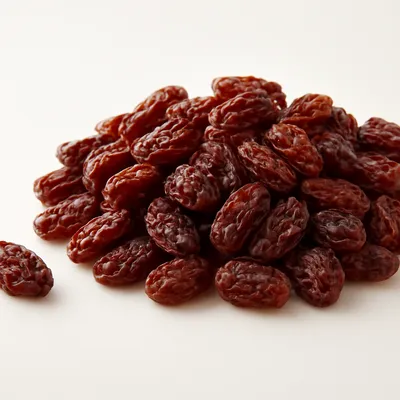
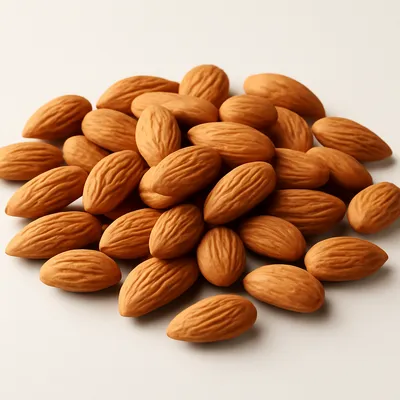
Dense Roman-Jewish celebration cake—unleavened, packed with almonds, raisins, candied citron, and pine nuts—baked at high heat until the exterior crisps and cracks while the interior stays slightly moist and studded with fruit. Distributed in small squares at brit milah ceremonies, it has been made at the Boccione bakery in Rome's former Ghetto for over two centuries.




Pizza di Beridde (also called pizza ebraica) is rooted in the Sephardic migration into Rome following the Spanish expulsion of 1492 and the subsequent expulsion of Sicilian Jews in 1493. Scholars theorize that these communities, carriers of Arab-influenced culinary traditions from the Iberian Peninsula, introduced the combination of dried fruits, nuts, and candied citron into the Roman Ghetto's baking. 'Beridde' is the Judeo-Roman phonetic rendering of the Hebrew Brit Milah (covenant of circumcision), the ritual occasion at which small squares of the cake are handed to guests in commemorative sweet bags called kavodde. In medieval Italian, 'pizza' denoted any flat baked item regardless of sweetness. The Boccione bakery on Via del Portico d'Ottavia has maintained a secret family recipe for more than 200 years.
A caramelized, crackly crust gives way to a dense, chewy interior studded with plump raisins, slivers of candied citron, crunchy almonds, and tender pine nuts—powerfully sweet, faintly tart, and ancient in flavor.
The absence of eggs and leavening produces a dense, compact crumb with minimal gas expansion. High oven temperature (220–230°C) accelerates sugar caramelization on the surface, overlapping with Maillard browning between reducing sugars and trace proteins in the flour, forming a hard, dark crust. The brief bake (under 20 minutes) leaves the interior slightly underbaked—moist and sticky from the raisins' natural sugars and candied fruit's syrup. Almonds' lipids (oleic and linoleic acids) migrate outward during baking, permeating the interior matrix and preventing complete desiccation.
Variations
Some bakers add dark chocolate chips or a pinch of cinnamon; fat varies between olive oil and vegetable oil by household. Roman pastry shops occasionally roll the same dough thinner for a crispier biscuit version sold as Jewish biscuits.
On the Palate
Where Pizza di Beridde sits in the Italian flavor cloud
Ingredients
Serves 10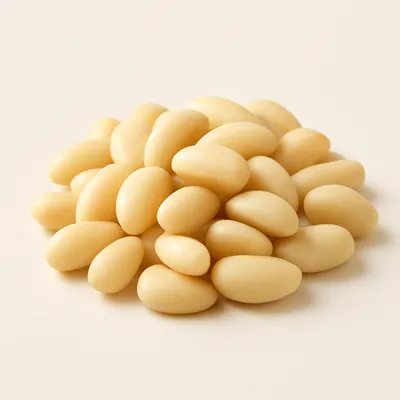

How it's made
6 steps · 15 min
- 110 min
Preheat oven to 220°C with a baking stone or heavy sheet pan inside.
- 25 min
Combine flour, sugar, pine nuts, raisins, whole and ground almonds, and diced candied citron in a large bowl.
- 35 min
Add olive oil and a splash of dry white wine; mix briefly until a crumbly, dense mass forms—do not over-knead.
Watch outMix just until it forms a crumbly, dense mass — don't knead it; there's no leavening, so overworking develops gluten and turns the compact crumb tough and bready.
- 45 min
Press the dough onto a parchment-lined baking sheet into a rough rectangle about 1.5 cm thick; the surface should be irregular.
- 518 min
Slide into the hot oven and bake 15–18 minutes until the exterior is deeply golden-brown and cracked.
Watch outBake at a hot 220°C fifteen to eighteen minutes until deeply golden-brown and cracked — the short, hot bake caramelizes the crust hard while leaving the fruit-and-nut center moist and sticky.
- 620 min
Cool completely before cutting into small squares or rectangles to serve.
Archive tool suggestions — not reviewed
These legacy suggestions have not been evidence-reviewed and are not presented as required tools.


