'Grey cheese' of the Valle Aurina, an acid-curdled farmhouse cheese made without a drop of rennet from milk skimmed clean for butter. One of the leanest cheeses in the world, under 2% fat yet close to 35% protein and with almost no lactose, it ripens in two to three weeks under a grey-green bloom of surface moulds that give it both its name and its pungent bite. A Slow Food Presidium and long the food of the poor, it is eaten sliced with onion, oil and vinegar, or melted into canederli and cheese dumplings.


Graukase belongs to the ancient Tyrolean family of sour-milk cheeses, acid-set with no rennet; a grey cheese of the area is recorded as early as 1325. It was the classic thrift cheese of high-mountain farms: the cream was churned to butter and sold, and the near-fatless milk left over was soured into cheese for the household, which is why its fat stays under 2% while its protein reaches some 35%. In the Valle Aurina and its side valleys it is still made entirely by hand as it has been for centuries and carries a Slow Food Presidium, while the Austrian Tiroler Graukase holds a separate protected designation of origin. It is most often eaten as Saurer Graukase, sliced and marinated with onion, vinegar and oil.
Sliced thin, it is dry, crumbly and almost chalky on the tongue, with a sharp lactic tang and a barnyard pungency from the grey rind that builds as it warms. Dressed as Saurer Graukase, the onion and vinegar meet its acidity head-on while the oil rounds the lean, faintly ammoniac finish; on dark bread it is bracing, salty and clean.
With no rennet, coagulation is driven purely by acid: lactic-acid bacteria ferment the milk sugar into lactic acid, dropping the pH toward casein's isoelectric point near 4.6, where the casein proteins lose their charge and clump into a soft curd. Because the milk is fully skimmed first, almost no fat is trapped in that curd, and the souring bacteria consume most of the lactose, which is why the finished cheese is so lean and low in milk sugar. The brief ripening is a surface job: grey-green moulds and bacteria colonise the rind and secrete enzymes that break the proteins down into peptides, amino acids and ammonia, driving the pungent aroma inward from the outside. The high, fat-free protein content is what leaves the paste dry, firm and crumbly rather than creamy.
Variations
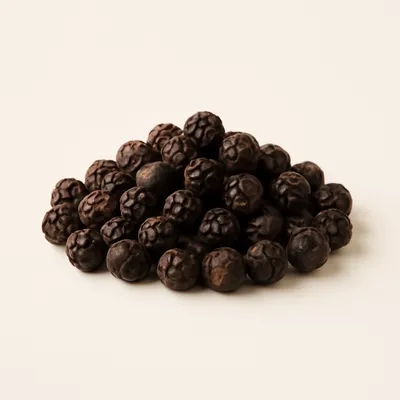
The everyday preparation is Saurer Graukase, thin slices marinated with sliced onion, wine vinegar, oil, salt and pepper and eaten with dark rye bread as a Marende. It is also crumbled or melted into canederli and Kasknodel, or into the local cheese Krapfen. Ripening length shifts the character: young, it is mild and moist; held longer it grows dry, sharp and strongly ammoniac. The related Austrian Tiroler Graukase, ripened up to ten weeks and protected, is a firmer, longer-aged cousin of the same sour-milk method.
On the Palate
Where Graukäse della Valle Aurina sits in the Italian flavor cloud
Ingredients
Serves 6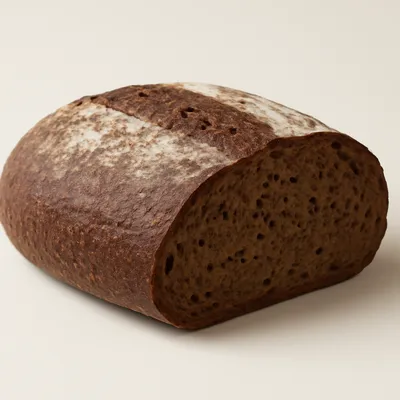
How it's made
6 steps · 20 min
- 110 min
Skim the cooled cow's milk completely, taking off all the cream for butter and leaving the near-fatless milk behind.
- 21440 min
Leave the skimmed milk in a warm place to sour on its own lactic bacteria for a day or two, until it thickens and curdles without any rennet.
Watch outLet the skimmed milk sour and thicken on its own — no rennet; wait until it clabbers into a soft curd, or the lean paste won't hold together.
- 330 min
Warm the curdled milk gently over low heat to help the lean curd firm and separate, then ladle or drain off the whey.
- 420 min
Salt the drained curd and work it by hand until smooth, then pack it firmly into small molds or a cloth and press to shape.
- 520160 min
Ripen the cheeses in a cool, humid cellar for two to three weeks, turning them now and then, until a grey-green mould coats the rind and the paste turns pungent and translucent at the edges.
Watch outRipen until a grey-green mould coats the rind and the edges turn pungent and translucent — that surface bloom is what breaks the paste down; a bare rind means it's not ready.
- 610 min
To serve, slice thin and dress as Saurer Graukase with sliced onion, wine vinegar, oil, salt and pepper, or crumble into dumplings; eat with dark bread.


