A golden, crispy crust around tender veal — bone-in and butter-fried, the Milanese classic.






Recorded in Milan as early as 1134 in a Sant'Ambrogio monastery document ("lumbolos cum panitio"), Milanese tradition claims it predates the Austrian Wiener Schnitzel, per a popular legend that the Habsburg field marshal Radetzky carried the recipe back to Vienna in 1857 — but historians dispute this: the dish was first linked to Radetzky only in an 1869 Italian gastronomy book, and breaded veal cutlets appear in earlier Austrian cookbooks, so primacy is genuinely contested. Milanese versions stay bone-in and use butter, not lard or oil; Vienna switched to boneless veal in lard.
Bone-in veal rib pounded thin, breaded, fried in clarified butter — not oil. 1134 records at the Basilica di Sant’Ambrogio mention «lombolos cum panitio», predating Wiener Schnitzel by seven centuries. The bone stays.
A bone-in veal chop, pounded thin then breaded and fried, the bone sticking out like a handle. Coating goes deep gold, almost orange-edged from butter. Inside, the veal is barely past pink. The crunch is dry and shattering; lemon wedge on the side, that's it. Done right, the breading shouldn't separate from the meat — if it lifts off in a sheet, the egg wash was uneven.
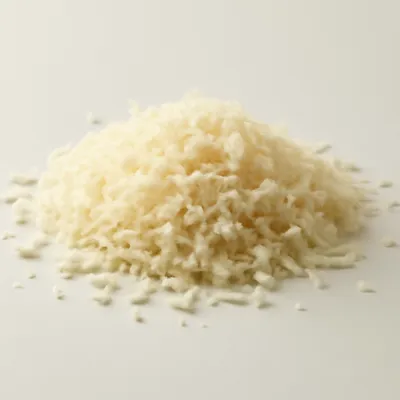
Butter, not oil: the milk solids brown and that's where the color and nuttiness come from. Frying butter scorches above ~150°C, so the temperature is lower than schnitzel oil — the cutlet must be pounded to ~5mm so it cooks through before the breading darkens. Breadcrumbs should be fresh, not panko; the finer crumb welds tight to the egg.
Variations
Cotoletta milanese (bone-in, fried in butter, on the bone); cotoletta orecchia d’elefante (boneless, pounded thinner, oil-fried); Viennese Wiener Schnitzel is the boneless veal cousin; cotoletta alla bolognese tops with prosciutto and Parmigiano.
On the Palate
Where Cotoletta alla Milanese sits in the Italian flavor cloud
Ingredients


How it's made
5 steps · 25 min
- 15 min
Pound the veal cutlets to a uniform thickness of about 1/4 inch. Season both sides with salt and a light crack of black pepper.
Watch outEnsure the cutlets are of uniform thickness to promote even cooking.
- 27 min
Beat the egg in a shallow dish. Dip each cutlet in the egg, letting the excess drip off, then press firmly into the breadcrumbs to coat evenly.
Watch outEnsure the breadcrumbs adhere well; press them firmly onto the meat to avoid them falling off during cooking.
- 33 min
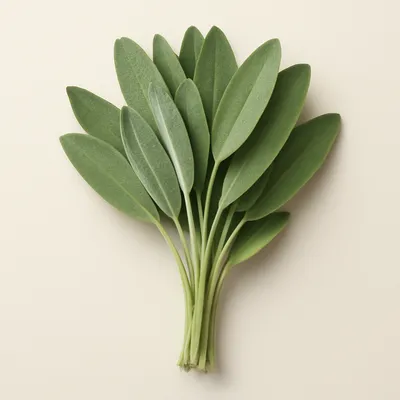
Melt the butter in a large skillet over medium heat until it foams and begins to smell nutty. Add a few sage leaves to infuse the butter with aroma.
Watch outDo not let the butter burn; watch for a nutty aroma as a cue to add the sage.
- 48 min
Gently lay the cutlets into the pan, frying until golden brown and crisp, about 3-4 minutes per side. Listen for a gentle sizzle as they cook.
Watch outAvoid overcrowding the pan, which can lower the temperature and lead to soggy cutlets.
- 52 min
Transfer the cutlets to a paper towel-lined plate to drain. Serve immediately with a wedge of lemon for squeezing over the top.
Archive tool suggestions — not reviewed
These legacy suggestions have not been evidence-reviewed and are not presented as required tools.

The simplest tool in any kitchen: a heavy bowl and a club to bash things in it. Different cuisines use different stones — Thai cooks pound green papaya in a tall granite mortar (krok hin); pesto Genovese requires the soft-pored Carrara marble; Indian masalas grind down on rough basalt. The bash-don't-cut motion releases volatile oils that a blade keeps sealed in the cell wall.
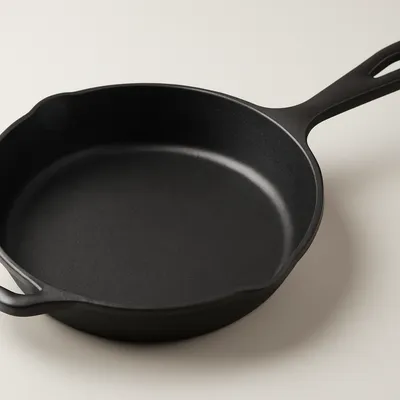
A heavy, single-piece cast iron pan, 25-30 cm across, weighing 1.5-2.5 kg. Once preheated, the thick mass holds 230°C+ even when a cold steak hits the surface — that's the secret to a deep crust. A well-seasoned skillet (multiple thin layers of polymerized oil baked into the iron) is essentially nonstick, gets better with use, and lasts a century. Lodge skillets from Tennessee have been in continuous production since 1896.