




Pain perdu — 'lost bread' — is the medieval French use for stale loaves, recorded as far back as the 14th century in Le Ménagier de Paris. The Norman version uses brioche enriched with butter and milk, fitting the region's dairy. Hazelnut cream is a 20th-century pâtissier addition — Normandy isn't a hazelnut region, but praliné from the Lyonnais entered northern bistro menus through professional pastry training.
Literally «lost bread» — Paris cafés and home kitchens use day-old brioche or pain de mie soaked in egg-milk-vanilla, pan-fried in butter. The recipe predates the English «French toast» by centuries; Le Ménagier de Paris (1393) has a version.
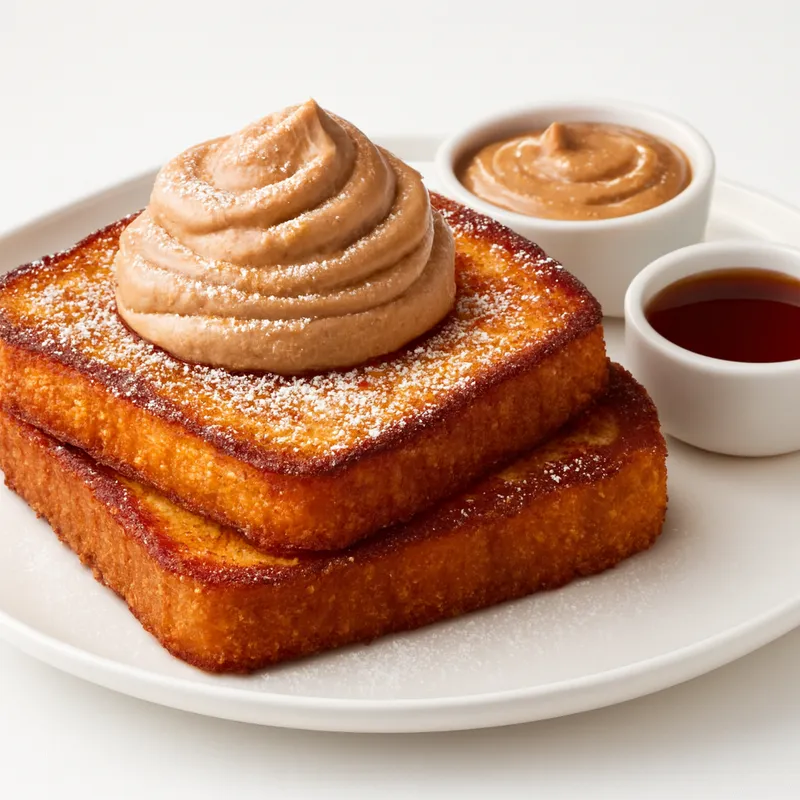
Thick brioche or pain de mie soaked in custard and pan-fried in butter until the edges go lacquer-dark and the inside stays just-set, almost a savory bread pudding. A spoon of warm hazelnut cream — pralinéd nuts blended with cream and a touch of sugar — slumps over the top. Salt cuts in just before serving; without it the dish reads cloying.
The bread must be a day or two old — fresh brioche turns to paste in custard. Soak too short and the inside is dry; too long and the slice falls apart in the pan. Butter, not oil, in the pan: milk solids brown the crust as the custard sets. Hazelnut cream goes on at service, never baked in — heat splits the praliné and the dish becomes greasy.
Variations
Pain perdu sucré (sweet, with sugar and cinnamon); pain perdu salé (savory, with cheese and ham); New Orleans pain perdu uses French bread and is closer to American French toast; Spanish torrija is the Lent cousin.
On the Palate
Where Pain Perdu sits in the French flavor cloud
Use brioche a day or two stale and fry in butter, not oil — day-old bread drinks the custard without turning to paste, and butter's milk solids brown the crust as the custard sets inside.
Ingredients





How it's made
5 steps · 23 min
- 15 min
Slice the French bread into thick slices, about 1 inch each. Heat vegetable oil in a large frying pan over medium-high heat until it sizzles when a drop of batter is added.
- 23 min
In a bowl, whip the eggs with vanilla and hazelnut-flavored creamer until frothy. The mixture should be well combined and slightly airy.
- 35 min
Dip each bread slice into the egg mixture, ensuring both sides are well coated. Let any excess drip off before placing it in the pan.
Watch outCoat both sides fully, then let the excess drip off — a slice dripping with custard steams instead of browning and stays soggy in the middle.
- 48 min
Fry the coated bread slices in the hot pan until golden brown on each side, about 3-4 minutes per side. The slices should be crisp on the outside and soft inside.
Watch outFry until each side is deep golden and the crust feels crisp, about 3-4 minutes a side — pale bread means the custard inside is still raw and wet.
- 52 min
Transfer to a plate and garnish with powdered sugar and chopped hazelnuts before serving.
Archive tool suggestions — not reviewed
These legacy suggestions have not been evidence-reviewed and are not presented as required tools.